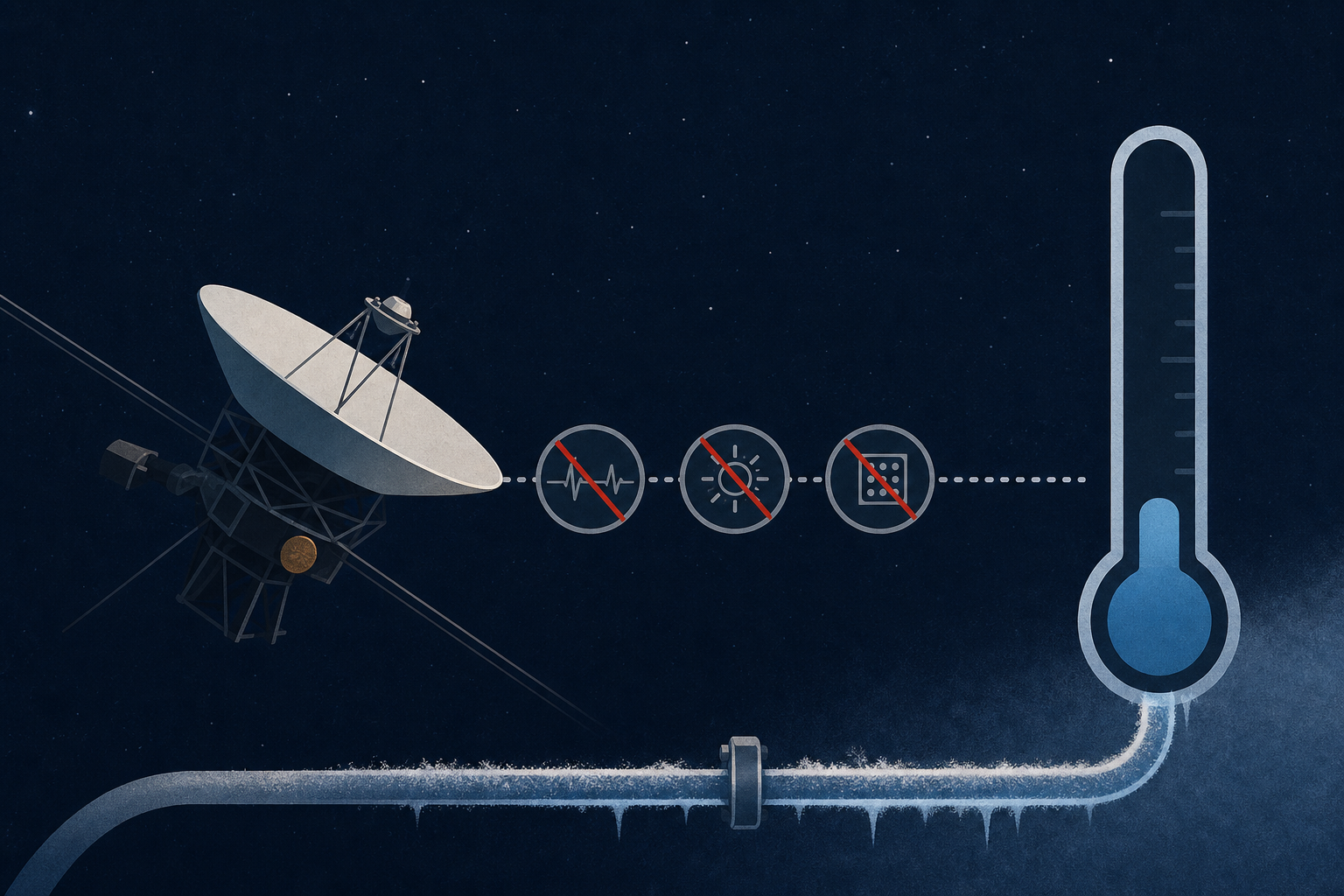
AI Generated Image
NASA is keeping Voyager 1 alive by switching off instruments and heaters one by one—but it cannot let the spacecraft become so cold that its fuel lines freeze. If those lines fail, Voyager could lose
Space Daily • • science
Key Points:
- Voyager 1, nearly 50 years after launch, is kept operational by carefully shutting down instruments and heaters to conserve its diminishing power supply from a radioisotope thermoelectric generator.
- Engineers must balance power savings with maintaining enough heat to prevent hydrazine fuel lines from freezing, which would disable the thrusters that keep its antenna pointed at Earth.
- The spacecraft’s thrusters are essential for precise antenna alignment, as even a half-degree pointing error would lose communication due to Voyager 1’s extreme distance of over 25 billion kilometers.
- In 2025, a critical fuel line clog threatened thruster functionality, but engineers successfully reactivated the primary roll thrusters previously thought dead by correcting a power switch error.
- Communication delays of about 46 hours round-trip complicate troubleshooting, and while power conservation extends mission life, the goal is to maintain contact and data transmission into the 2030s until the spacecraft can no longer operate.


