AI Generated Image
NASA just found a planet 'hiding' in TESS spacecraft data, all thanks to Einstein
Yahoo • • science
Key Points:
- NASA's TESS spacecraft has adopted a new method, gravitational microlensing, based on Einstein's general relativity, to detect exoplanets that are difficult to find using its usual transit method.
- The exoplanet Gaia23bra b, located 40,000 light-years away and orbiting an orange dwarf star, was initially hinted at by the Gaia telescope through microlensing, which causes a slight brightening of a background star.
- TESS's traditional transit method is less effective for distant planets like Gaia23bra b, which is similar in orbit to Jupiter but much farther away, prompting the use of microlensing to confirm its existence.
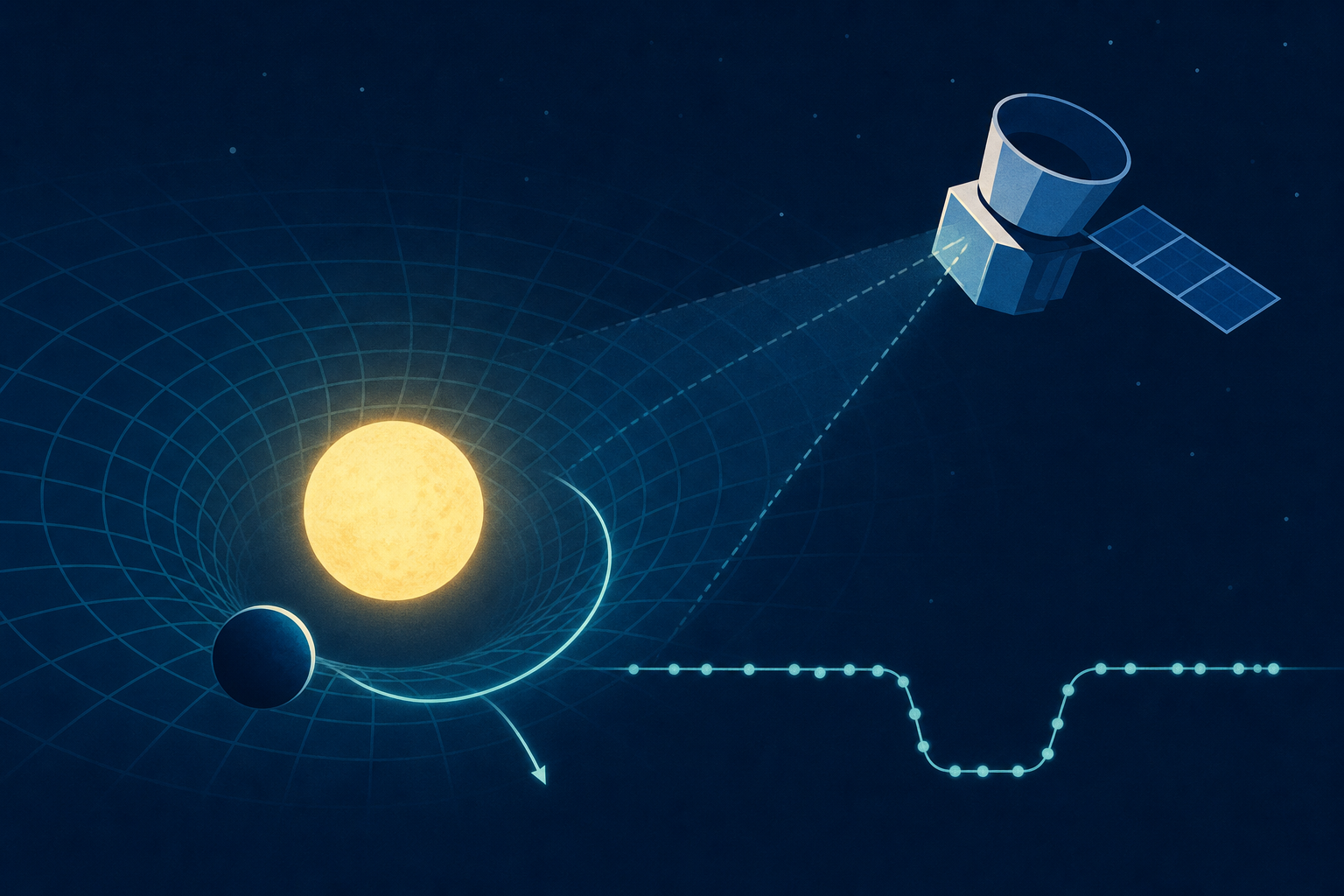
- Microlensing detects planets by observing the bending and amplification of light from background stars caused by a planet's gravitational field, enabling the discovery of smaller and more distant planets, including those in habitable zones.
- This successful use of microlensing by TESS suggests many more such planets may be hidden in its data, offering a complementary approach to transit detection and potentially leading to the discovery of Earth-like planets.


