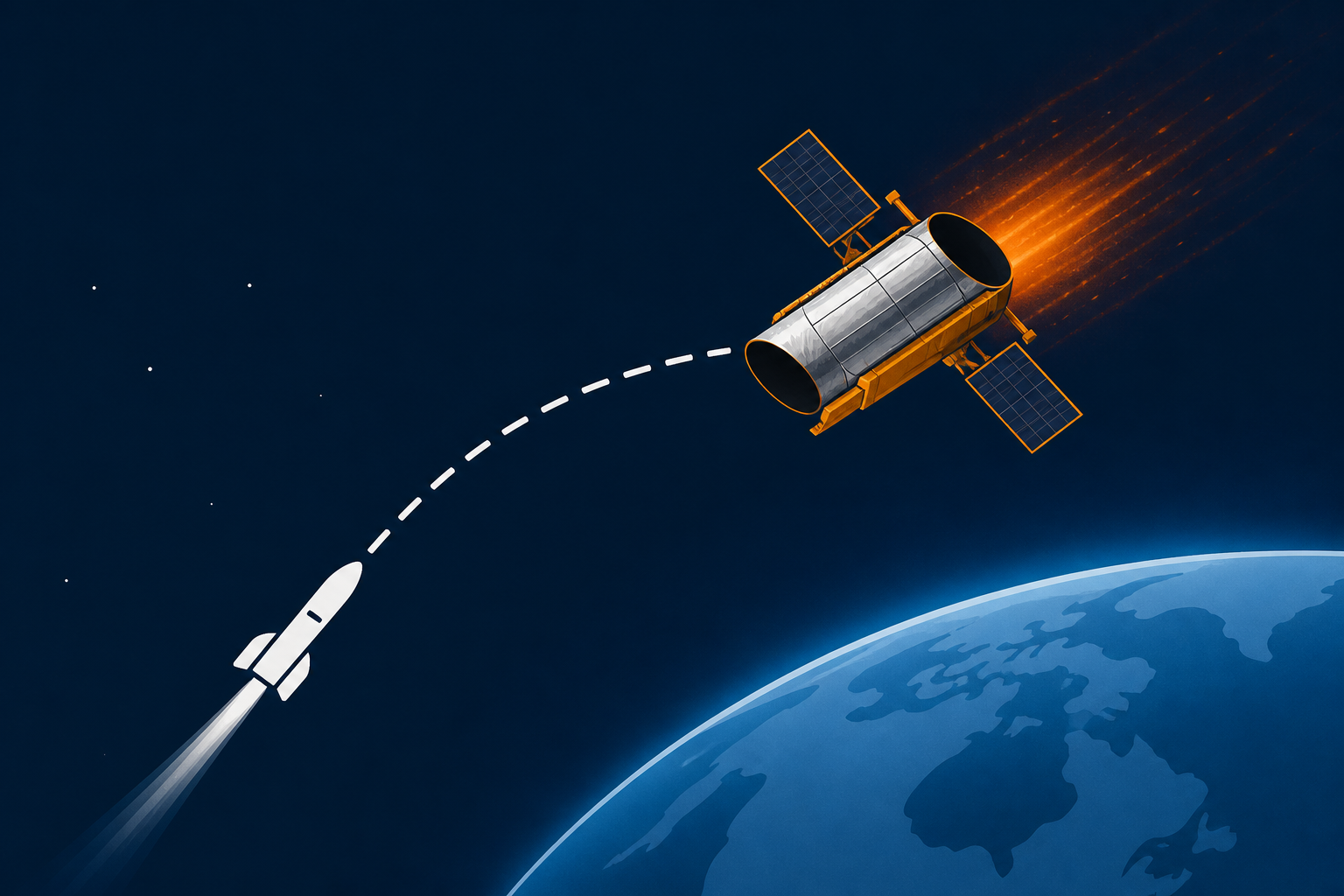
AI Generated Image
NASA to launch rescue mission June 30 to save Swift space telescope from burning up in Earth's atmosphere
Space • • general
Key Points:
- The Northrop Grumman Pegasus XL rocket is set for its final flight on June 30, launching the LINK satellite to rescue NASA's Neil Gehrels Swift Observatory from orbital decay.
- LINK, built by Katalyst Space Technologies, will grapple the Swift telescope and use ion thrusters to raise its orbit, extending the observatory's operational life.
- Pegasus is an air-launched, three-stage solid rocket capable of delivering up to 1,000 pounds to low-Earth orbit, with a unique ability to reach challenging orbital inclinations.
- The Swift Observatory, launched in 2004 to study gamma-ray bursts, is losing altitude due to increased atmospheric drag and was not designed for self-servicing or orbit raising.
- NASA's $30 million Swift Boost mission demonstrates a cost-effective, innovative approach to satellite servicing, potentially extending Swift's scientific contributions for several more years.


