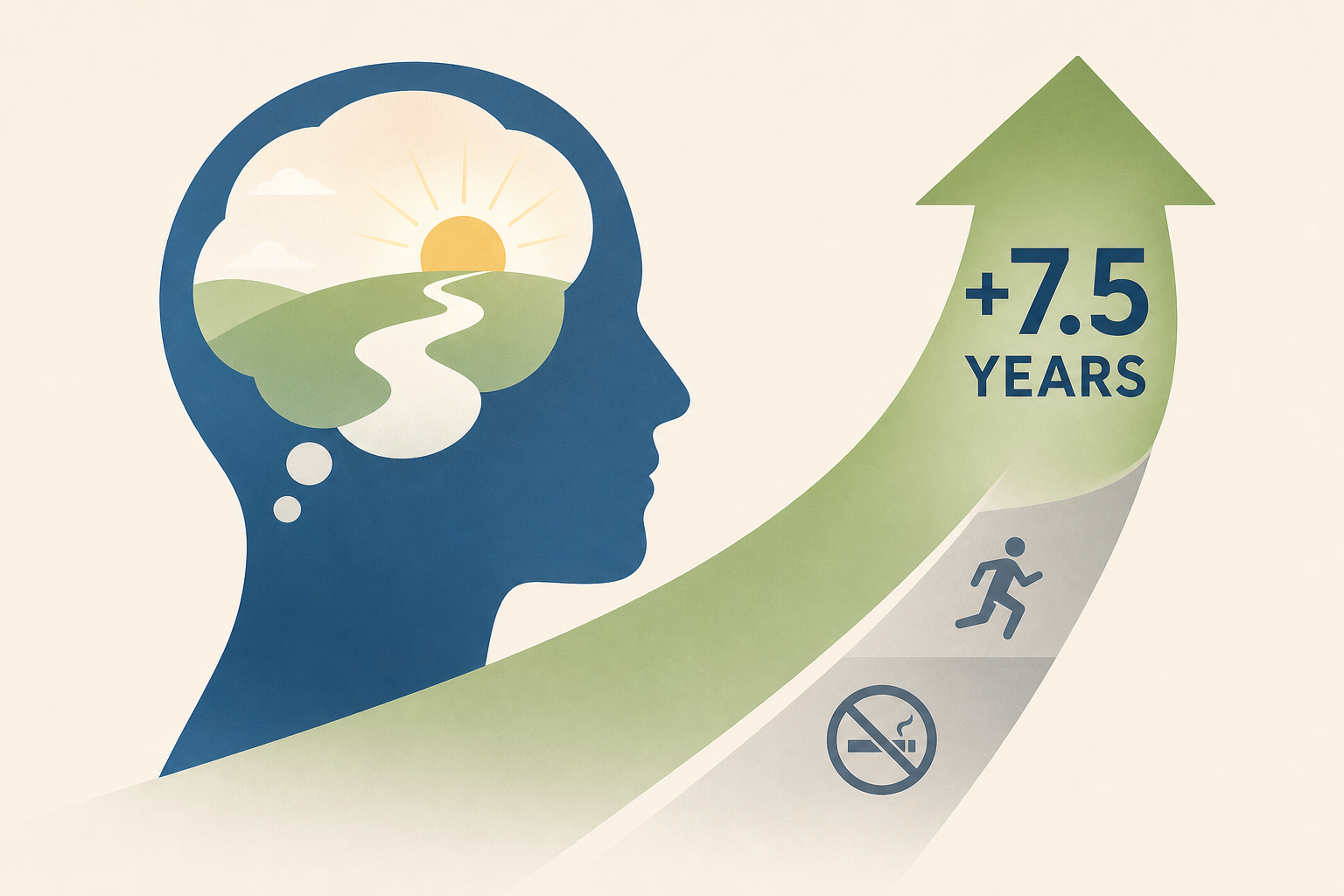
AI Generated Image
A Yale study found that how you think about getting older may add 7.5 years to your life, more than exercise and more than not smoking
Space Daily • • health
Key Points:
- A 2002 Yale study by Becca Levy found that older adults with more positive self-perceptions of ageing lived on average 7.5 years longer than those with negative views, a result that persisted after adjusting for various health and demographic factors.
- The study measured attitudes toward ageing through a questionnaire assessing acceptance and expectations about growing older, distinct from current health status, indicating that mindset independently predicted longevity.
- This finding, replicated in multiple countries, suggests that positive ageing attitudes correlate with better health outcomes such as lower hospitalization rates, faster recovery, and less cognitive decline, though exact causal mechanisms remain unclear.
- Attitudes about ageing are largely shaped by lifelong cultural stereotypes and internalized ageism, making late-life interventions challenging and highlighting the importance of addressing ageism earlier in life.
- The research does not imply individual blame for poor ageing outcomes but points to a population-level pattern where having a positive, engaged outlook on one’s older self is linked to longer, healthier lives.


