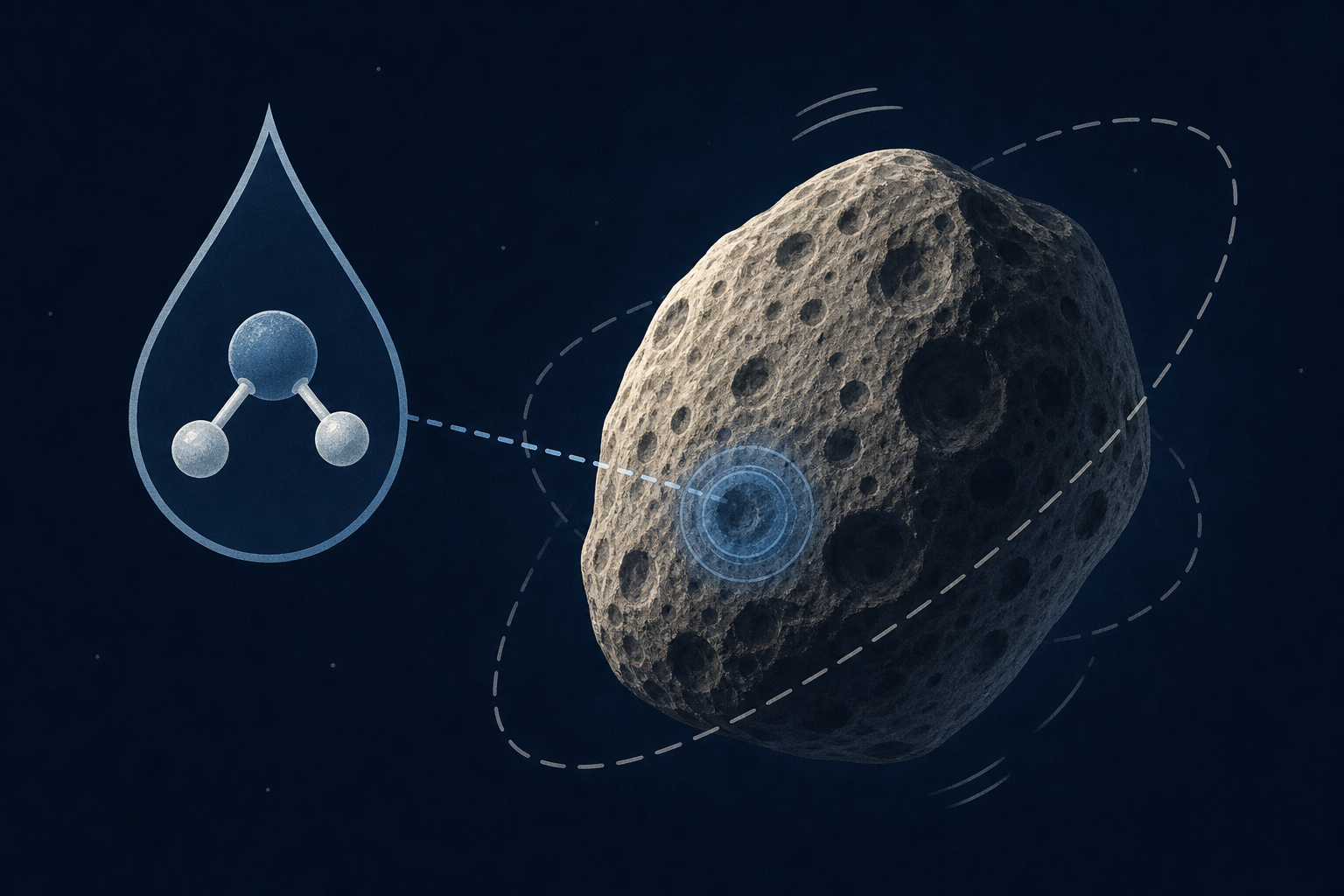
AI Generated Image
NASA’s Lucy Uncovers Ancient Water Clues on a Weirdly Wobbling Asteroid
SciTechDaily • • science
Key Points:
- NASA’s Lucy spacecraft conducted a close flyby of the peanut-shaped asteroid Donaldjohanson on April 20, 2025, revealing it to be a bilobate object with a tumbling, wobbling rotation involving two separate rotational movements.
- The asteroid, approximately 5 miles wide, formed about 155 million years ago from fragments of a violent collision and has since experienced a slowdown in rotation due to the YORP effect, a process driven by sunlight altering its spin over millions of years.
- Lucy’s instruments detected iron-rich clay minerals on Donaldjohanson’s surface, indicating the brief presence of liquid water on its parent body, contrasting with longer water exposure on similar asteroids Bennu and Ryugu.
- Donaldjohanson's younger age and retention in the main asteroid belt differentiate it from Bennu and Ryugu, which are older and have migrated closer to Earth, providing scientists with valuable comparative insights into asteroid evolution and solar system history.
- The flyby served as a rehearsal for Lucy’s primary mission to explore Jupiter’s Trojan asteroids, aiming to deepen understanding of planetary formation and migration in the early solar system.


