AI Generated Image
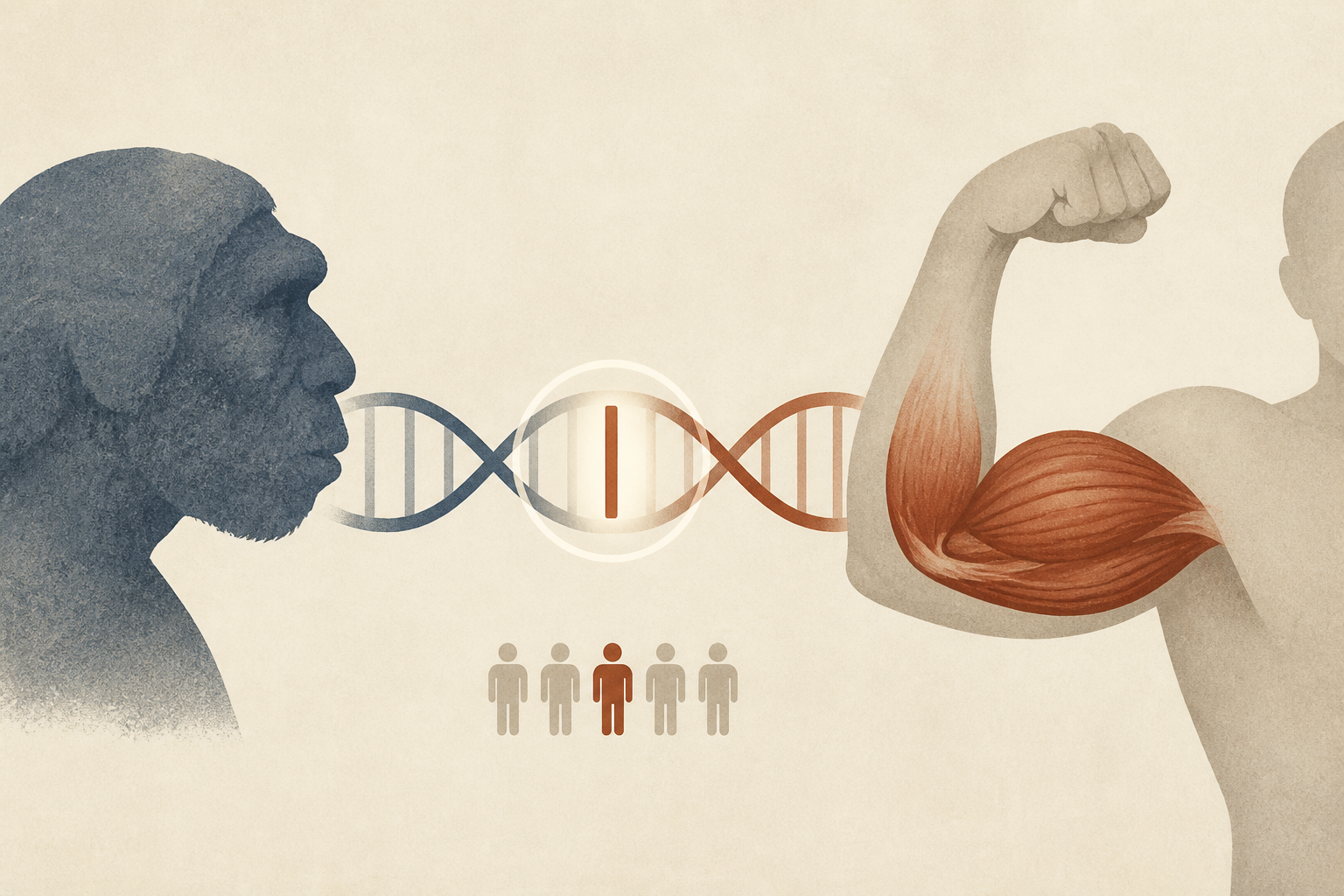
Neanderthals passed on a gene that helps modern humans pack on more muscle - but only a few people have it
Yahoo • • science
Key Points:
- A gene variant inherited from Neanderthals, related to the growth hormone receptor, enables modern humans to develop increased muscle mass, potentially adding over half a kilogram in individuals with two copies of the gene.
- This Neanderthal gene variant entered the modern human gene pool around 47,000 years ago through interbreeding and is present in about 10% of modern humans, with higher prevalence in Southern and Southeast Asian populations and almost absent in those of African ancestry.
- Laboratory studies showed cells with the Neanderthal variant respond 40% more to growth hormone, but physical differences in people carrying the gene are subtle, including slight changes in jaw shape and tooth root length resembling Neanderthal traits.
- The gene variant's effects appear primarily after puberty, influencing growth hormone response from the pituitary gland rather than fetal growth hormone from the placenta, meaning Neanderthal babies were similar in size at birth but grew faster afterward.
- The uneven distribution of this gene variant across populations suggests more complex early human migration and interbreeding patterns than previously understood, warranting further research.


