AI Image
New Research Reveals a Hidden Weakness Inside Electric Vehicle Batteries
SciTechDaily • • science
Key Points:
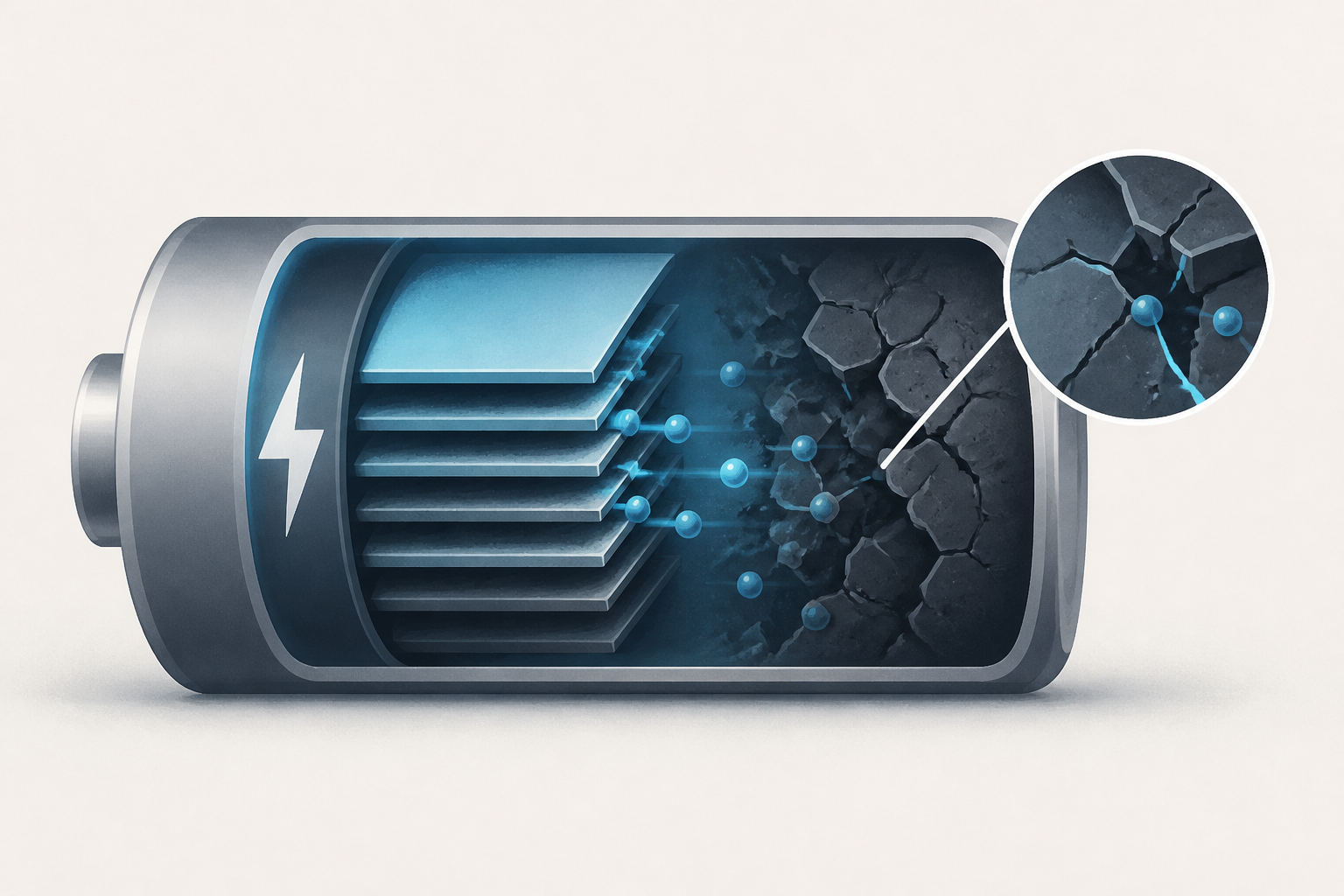
- Researchers found that a small number of rapidly aging cells in an EV battery pack can significantly shorten the overall battery lifespan, leaving a substantial portion of the pack’s energy capacity unused.
- The study analyzed real-world driving data over more than three years from EVs using nickel-manganese-cobalt (NMC) and lithium-iron-phosphate (LFP) batteries, revealing that differences in cell aging become more pronounced after about 170,000 kilometers (105,600 miles).
- Uneven cell aging reduced usable battery capacity by 6.2% in passenger cars and 7.5% in buses, resulting in battery pack lifetimes that were 17.7% and 22.8% shorter, respectively, compared to the average potential lifespan of individual cells.
- Variations in internal resistance among cells also decreased available power output by up to 15.1%, while differences in state of charge had minimal impact under current balancing strategies.
- The researchers suggest improvements such as enhanced cell manufacturing consistency, better cell grouping, advanced balancing controls, thermal management, and reconfigurable battery systems to mitigate the impact of weak cells and extend overall battery life.


