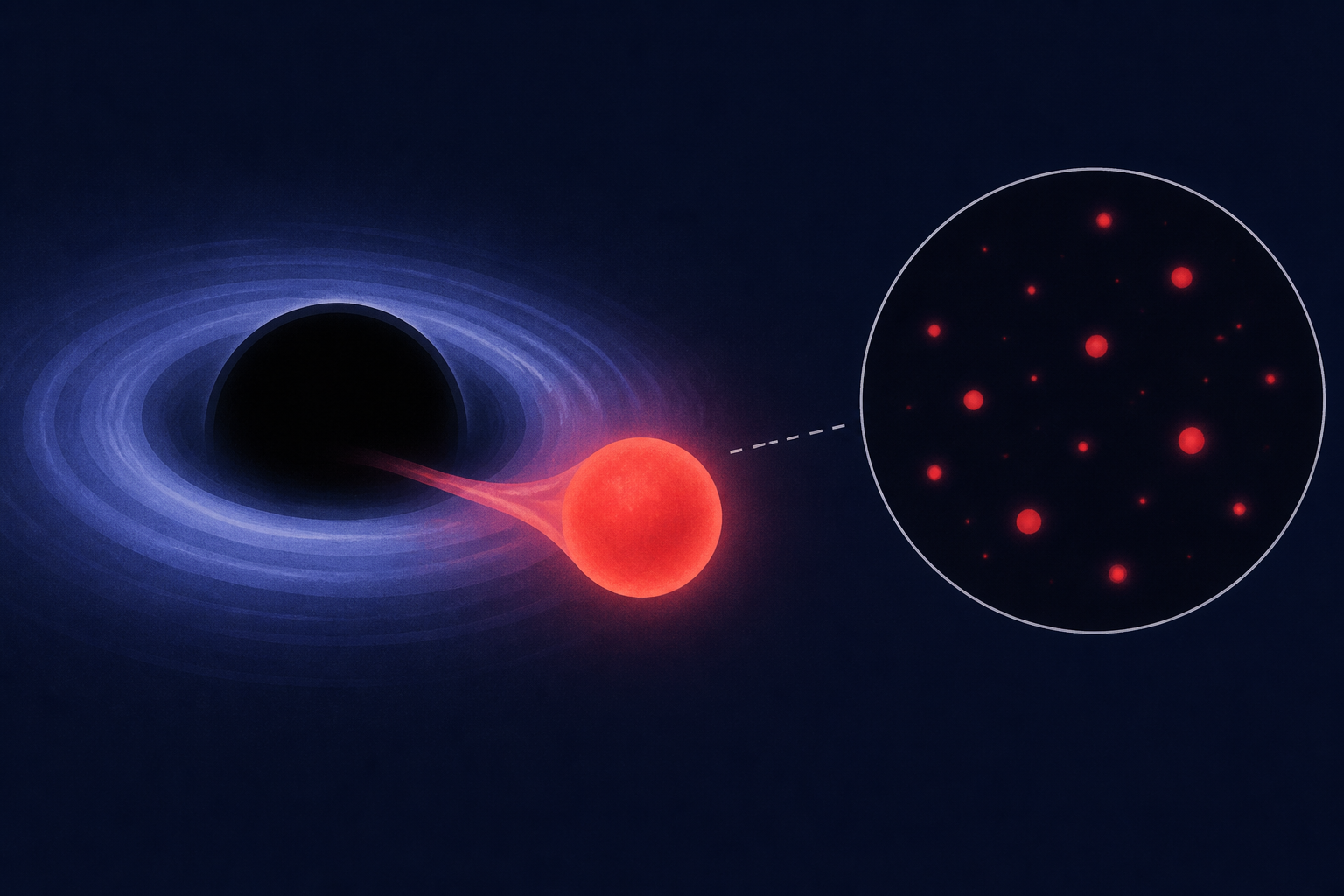
AI Generated Image
Newly discovered "black hole star" could solve mystery of strange red dots spotted in the early universe
CBS News • • general
Key Points:
- Astronomers discovered a new type of astronomical object called a "black hole star," which resembles a star the size of our solar system but emits 100 billion times more energy than typical stars, powered by a central black hole surrounded by gas.
- The black hole star, named MoM-BH*-1 and dating from 660 million years after the Big Bang, was identified by a U.S.-led team using the James Webb Space Telescope (JWST) and may explain the mysterious "little red dots" observed in the early universe.
- Analysis showed the red color of these objects is due to hydrogen gas rather than dust, and the energy output cannot be explained by nuclear fusion, supporting the black hole star model.
- Separately, JWST observations revealed dust and water surviving near the Milky Way's central supermassive black hole, Sagittarius A*, in the star IRS 3, demonstrating that stars can produce dust and materials essential for future star formation even in extreme galactic center environments.
- These findings provide new insights into early universe phenomena and the resilience of star formation processes near supermassive black holes.


