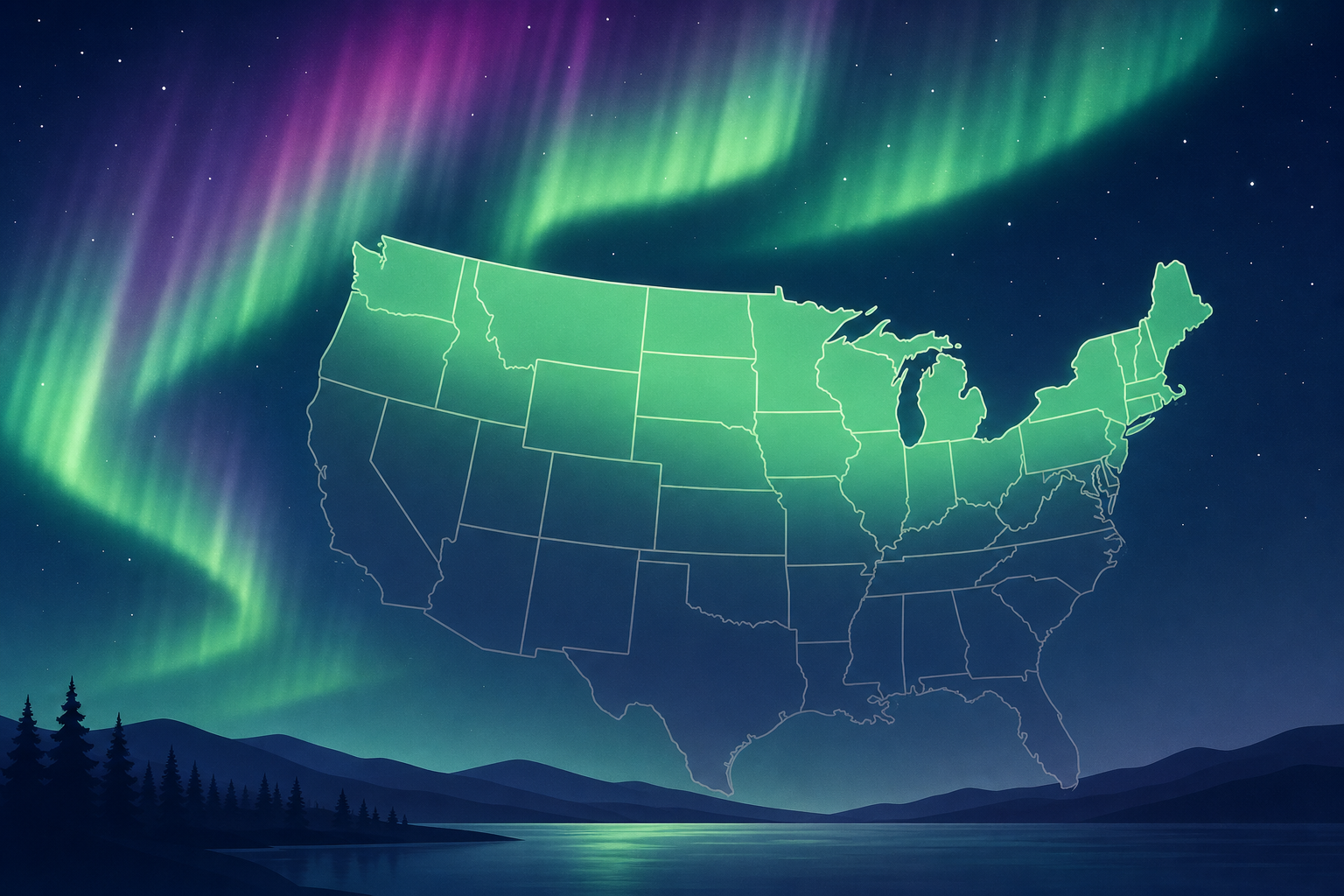
AI Generated Image
Northern Lights Forecast: Aurora Possible In 19 States On Monday Night
Forbes • • science
Key Points:
- A coronal mass ejection (CME) from the sun on June 26 is expected to arrive on Earth around June 29-30, potentially causing a G1 to G2-class geomagnetic storm and visible northern lights along the U.S.-Canadian border.
- The best viewing chances are in northern parts of Montana, North Dakota, Minnesota, and northern Wisconsin, with possible sightings in other northern states including Washington, Idaho, and Maine, though long daylight hours and the full Strawberry Moon may make auroras harder to see.
- A G1 or G2 geomagnetic storm is moderate and may produce auroras visible near the northern horizon, especially under clear, dark skies away from light pollution; cameras with long-exposure settings can help capture faint auroras.
- CMEs travel slower than solar flares but can cause geomagnetic storms when Earth-directed, with forecasts from NOAA and the UK Met Office indicating increased geomagnetic activity from June 30 into July 1, though space weather conditions can change rapidly.
- The northern lights occur when charged solar particles interact with Earth's magnetic field and atmosphere, exciting oxygen and nitrogen atoms to emit shimmering lights near the poles.


