AI Image
October skywatching guide: Hunter's Moon, Orionid meteors and more
FOX Weather • • science
Key Points:
- On October 4, Saturn will be in opposition, meaning Earth will be directly between Saturn and the Sun, making the planet visible all night starting at sunset.
- The Draconid meteor shower peaks on the evening of October 8, with a waning crescent Moon providing ideal dark skies, though the shower typically produces only a few meteors per hour.
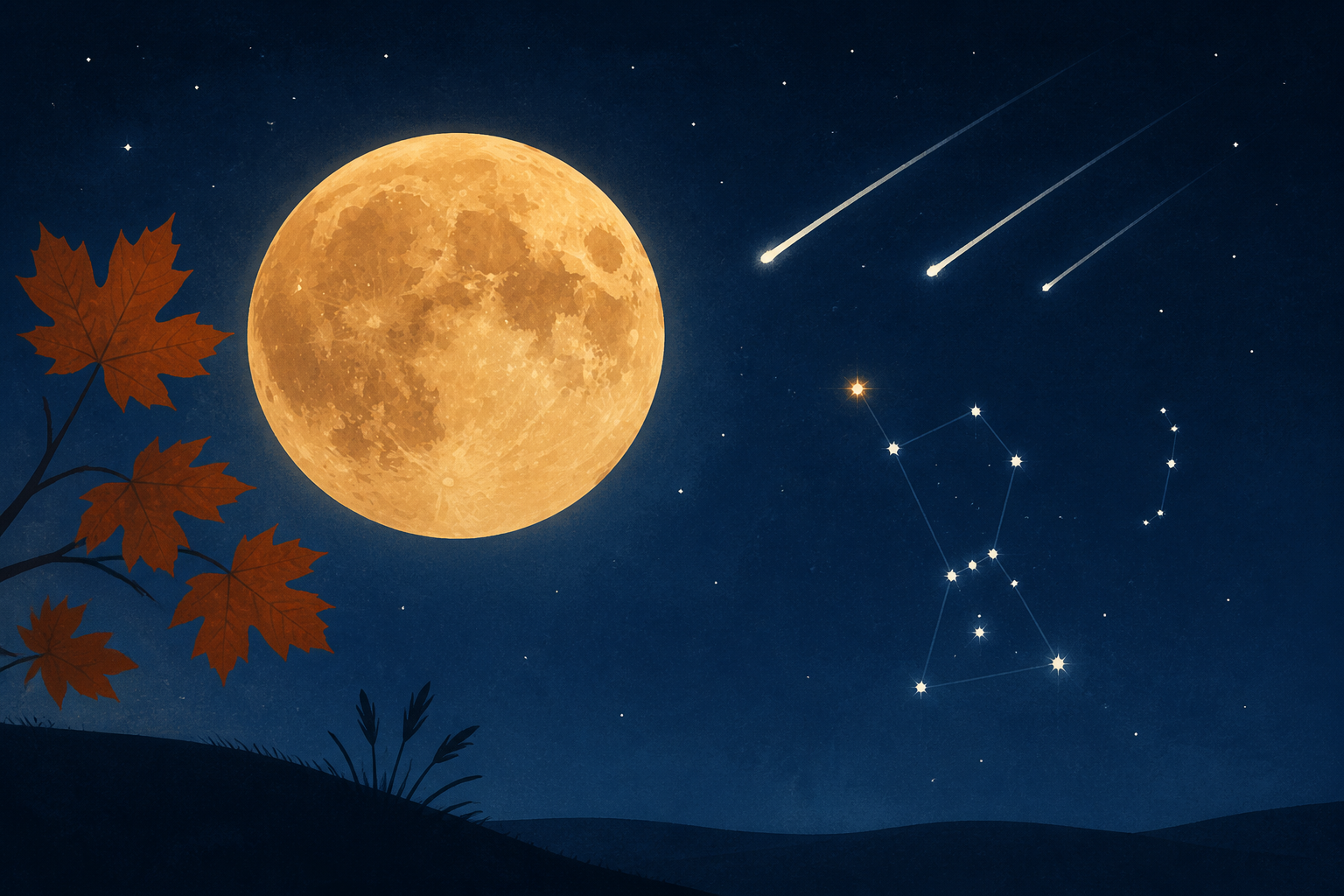
- The Orionid meteor shower reaches its peak on the night of October 21, known for bright and fast meteors, best viewed in the pre-dawn hours despite a bright waxing gibbous Moon.
- The full Hunter's Moon occurs on the night of October 25, reaching peak brightness shortly after midnight; it is traditionally linked to hunting and winter preparations.
- On October 27-28, the Moon will pass near the Pleiades star cluster, a notable celestial event visible to the naked eye, with binoculars or a telescope enhancing the view.


