AI Image
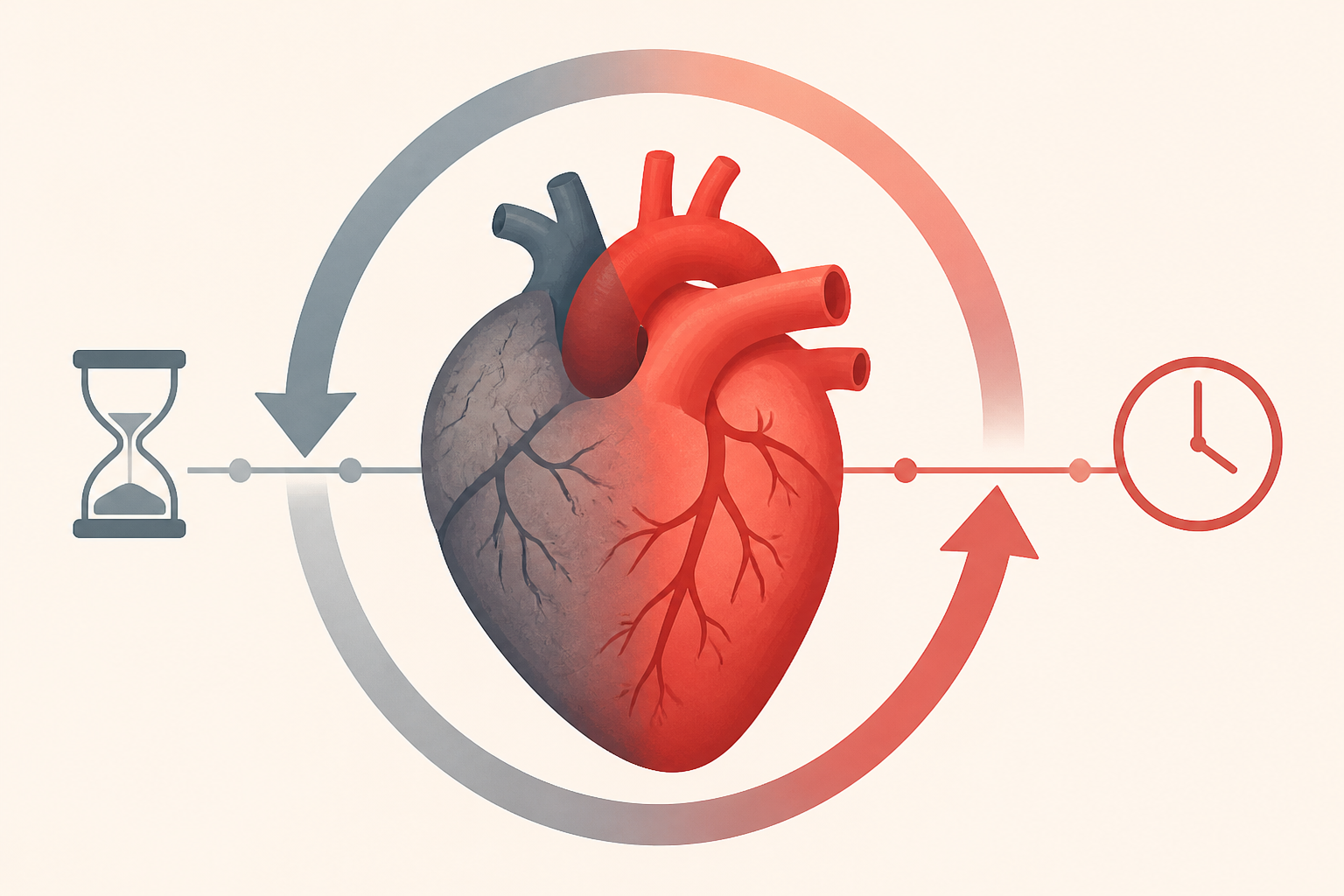
Old hearts age backwards: transplanted organs adjust to host’s biological age
Nature • • health
Key Points:
- A recent study found that transplanted hearts adapt their biological age to match that of the recipient, with young donor hearts aging rapidly in older recipients and older hearts rejuvenating in younger recipients.
- The research involved grafting hearts between mice of different ages and analyzing DNA methylation patterns linked to cellular aging, revealing that donor hearts' biological ages shifted toward the recipient's age.
- Analysis of human heart transplant biopsies confirmed similar findings, showing that transplanted hearts' biological ages corresponded with their recipients' ages, even when donor-recipient age gaps were significant.
- Functional assessments of transplanted hearts in humans indicated that some heart performance measures aligned more closely with the recipient's age rather than the donor's, suggesting partial reversibility of age-related heart changes.
- These findings suggest that older donor hearts might be more viable for transplantation than previously thought, potentially expanding the pool of available organs for patients in need.


