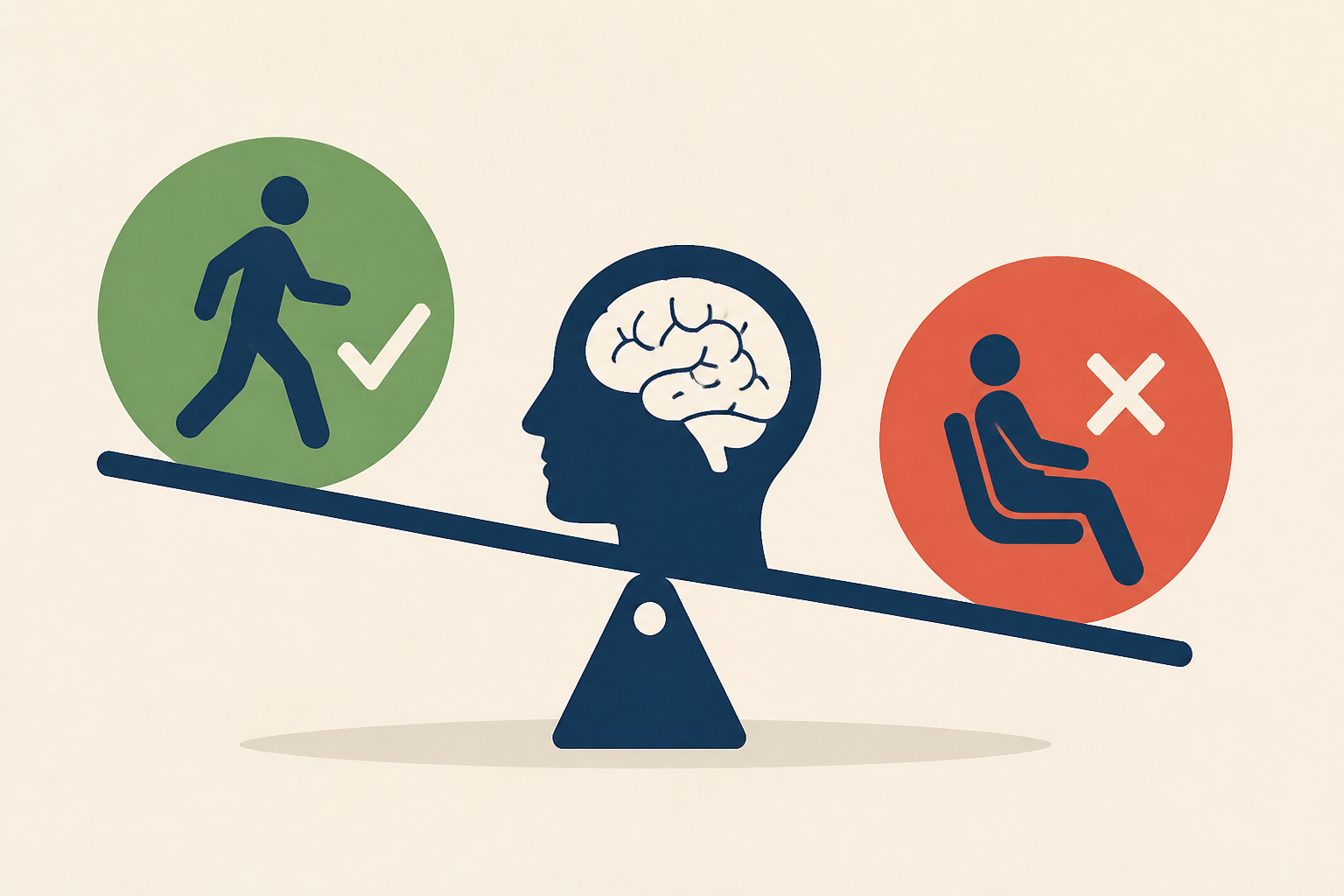
AI Generated Image
Physical activity paradox: Not all exercise is beneficial, as a new dementia study reiterates
PhillyVoice • • health
Key Points:
- A new study published in The Lancet Public Health challenges the idea that all physical activity reduces dementia risk, highlighting the "physical activity paradox" where exercise during leisure time benefits brain health, but work-related physical activity may increase dementia risk.
- The study analyzed data from 74 studies involving 4.2 million people aged 45 to 93 across 30 countries, finding that leisure-time physical activity was linked to a 24% lower risk of dementia, while occupational physical activity was associated with a 20% higher risk.
- Researchers suggest that work-related physical activity often occurs in less healthy environments with factors like air pollution and psychosocial stress, and may involve repetitive or strenuous movements that harm the body, potentially increasing dementia risk.
- The study also notes that physically demanding jobs might reduce the energy available for beneficial leisure-time activities, which could contribute to the increased dementia risk observed in those with high occupational physical activity.
- These findings challenge the common belief that all movement equally benefits brain health and suggest that the context and type of physical activity are important factors in dementia risk.


