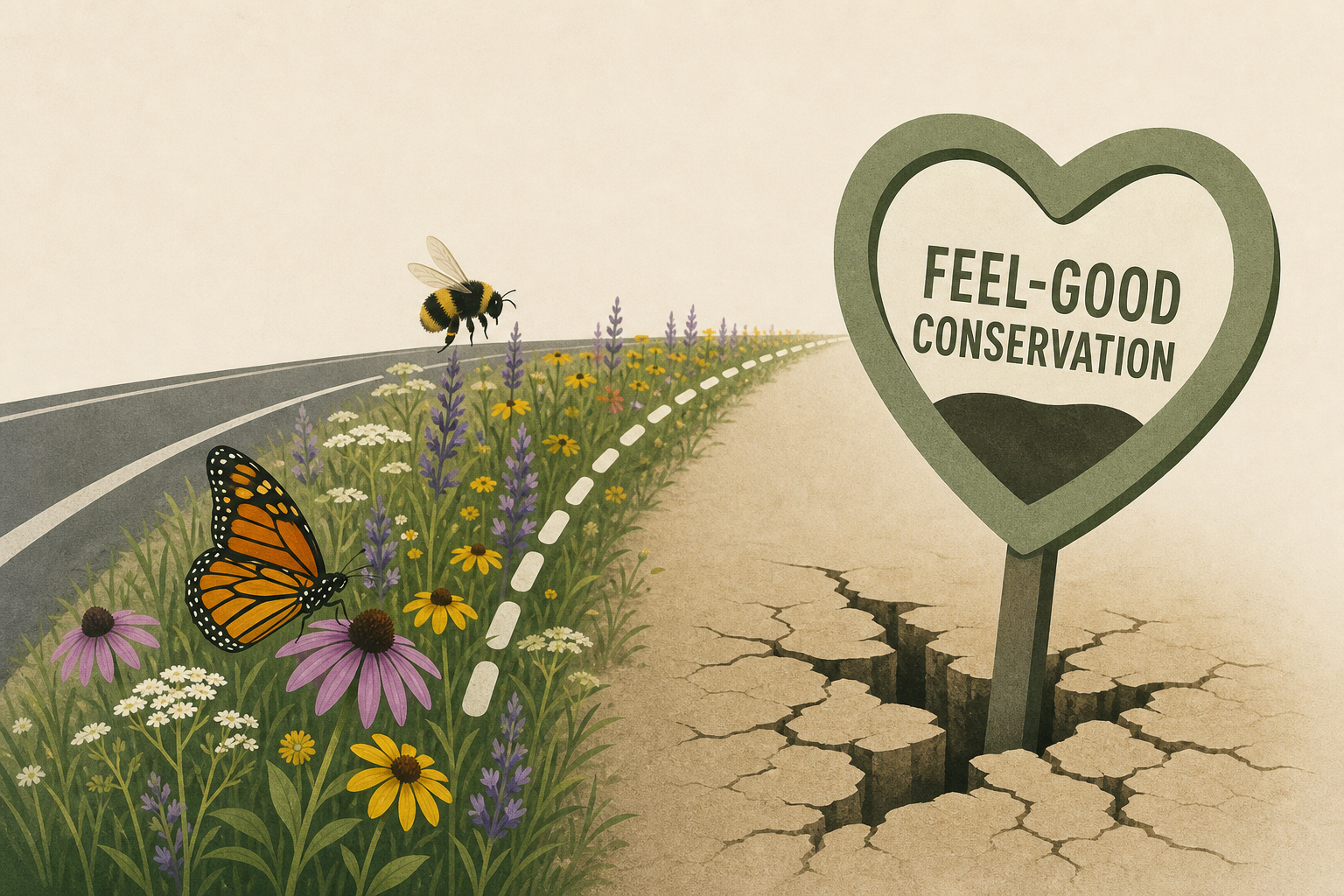
AI Generated Image
Roadside Pollinator Corridors and the Danger of Feel-Good Conservation
Sierra Club • • science
Key Points:
- Roadside habitats planted with native flowers offer crucial refuges for pollinators like monarch butterflies amid widespread habitat loss due to agriculture and urban development, but these areas also expose insects to significant risks from vehicle collisions, pollution, and noise stress.
- Studies indicate that roadside environments can act as ecological traps where pollinators are attracted but suffer reduced survival and reproduction because of contaminants from tires, brake pads, and road runoff, as well as physiological stress caused by traffic noise.
- The effectiveness of roadside pollinator habitats varies widely depending on factors such as traffic intensity, pollution levels, and management practices, with quieter rural roads providing better refuges than busy highways.
- Maintenance practices like mowing and chemical use often conflict with conservation goals, potentially destroying pollinator habitat at critical life stages, and transportation agencies may lack awareness or training in pollinator-friendly management.
- While roadside conservation efforts can contribute positively if carefully designed and managed, experts emphasize that addressing broader threats like pesticide use, industrial agriculture, and habitat destruction at larger landscape scales is essential for meaningful pollinator recovery.


