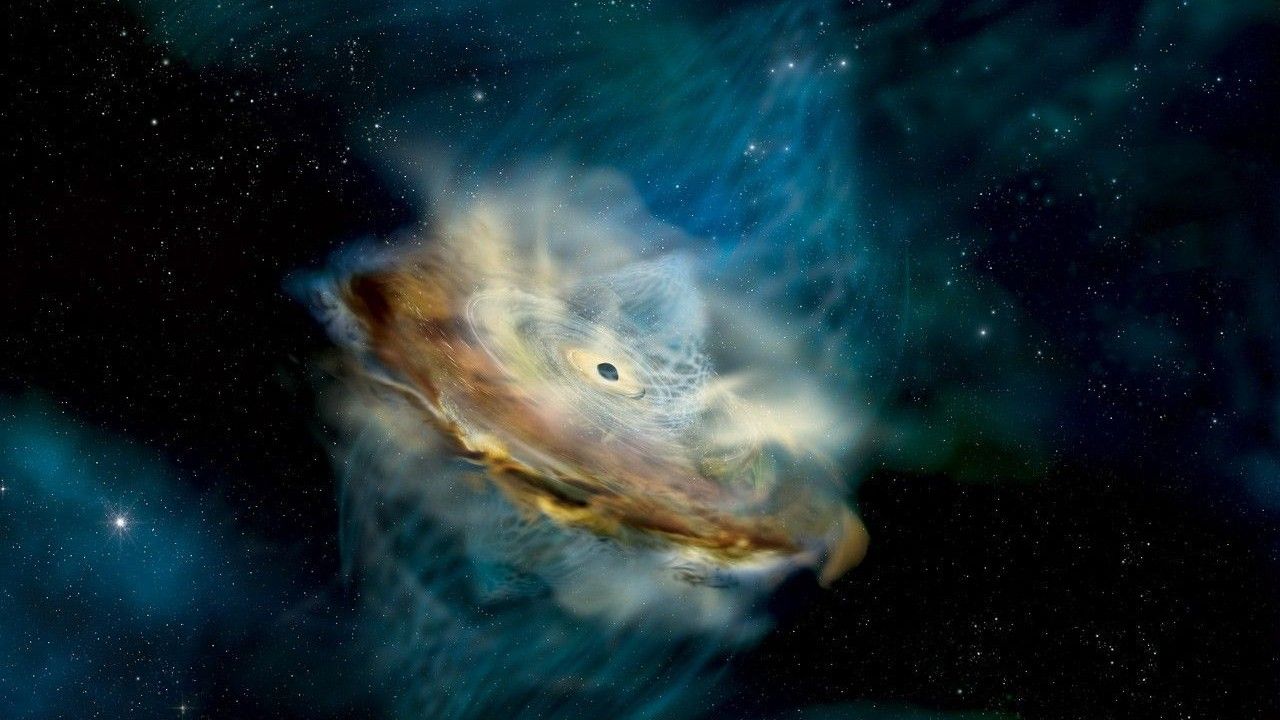
Rule-breaking black hole found growing at 13 times the cosmic 'speed limit,' challenging theories
Live Science • • general
Key Points:
- The quasar ID830, a supermassive black hole from 12 billion years ago, is breaking two major astrophysical rules by exceeding the Eddington limit for black hole growth and simultaneously emitting intense X-ray and radio waves, phenomena not predicted to coexist.
- ID830's mass was already 440 million solar masses when the universe was about 15% of its current age, making it over 100 times more massive than the Milky Way's central black hole, Sagittarius A*.
- Researchers suggest ID830 is undergoing a brief super-Eddington accretion phase, consuming matter at about 13 times the normal limit, possibly triggered by shredding a giant star or gas cloud, a process expected to last around 300


