AI Generated Image
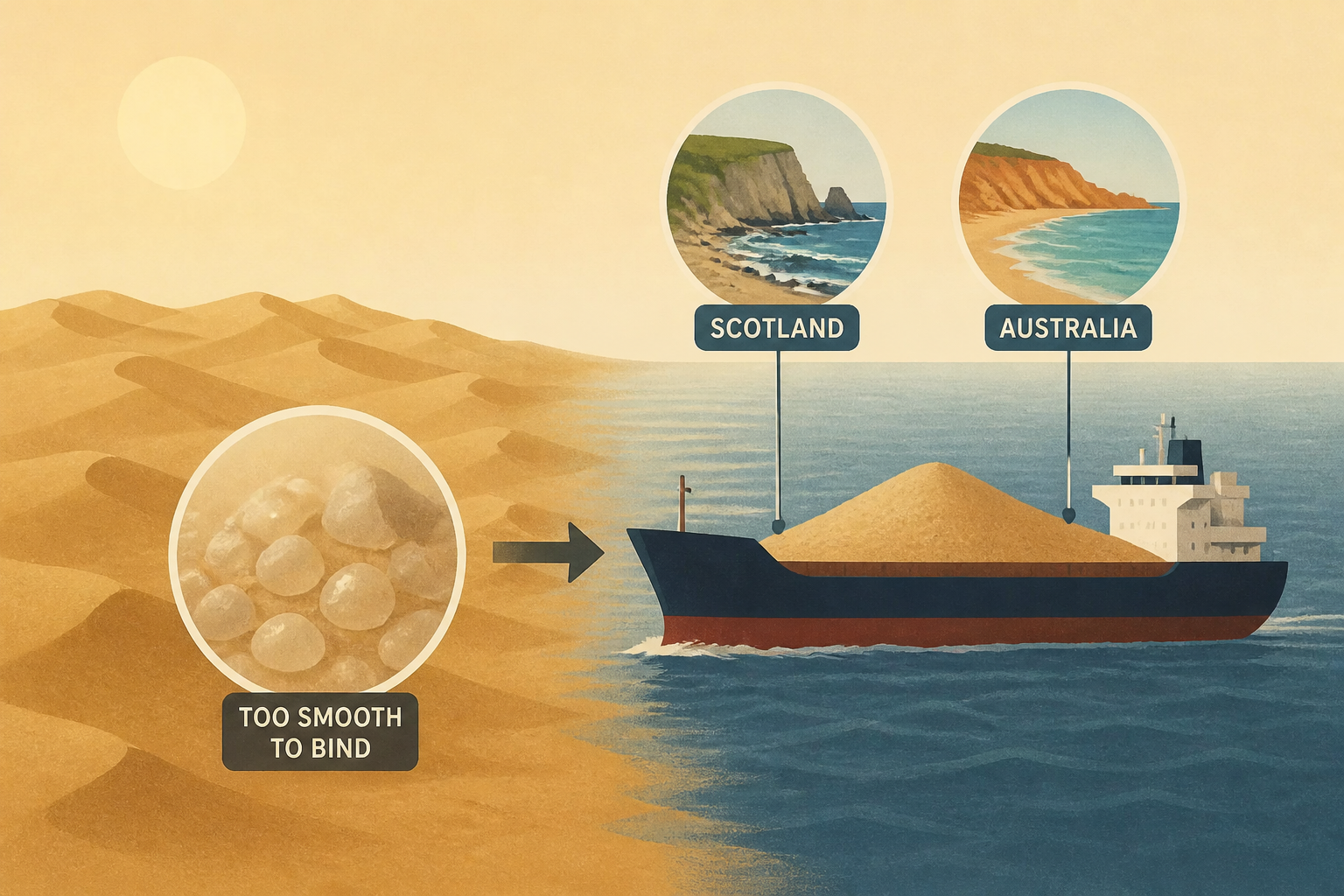
Saudi Arabia sits on the world's largest sand desert and yet imports sand by the shipload from Australia and Scotland, because the wind-rounded grains of the Empty Quarter are too smooth to bind in co
Space Daily • • world
Key Points:
- Saudi Arabia imports construction sand from countries like Australia despite sitting on the vast Rub’ al Khali desert because its desert sand grains are too smooth and rounded to bond properly in concrete.
- Desert sand grains are polished by wind over millennia, making them near-spherical and unable to interlock in concrete mixtures, unlike the angular grains of river or crushed quarry sand which provide structural strength.
- Salt content in desert and coastal sands also causes corrosion risks for steel reinforcement, further limiting their use in load-bearing concrete structures.
- Major Gulf construction projects, including Dubai’s Palm Jumeirah and the Burj Khalifa, rely on imported sand dredged from seabeds or sourced internationally to meet the quality requirements for concrete.
- Global demand for construction sand is rapidly increasing, causing ecological damage from extensive river and coastal sand mining, while innovative alternatives like wood-lignin binding of desert sand remain unscaled and expensive.


