AI Image
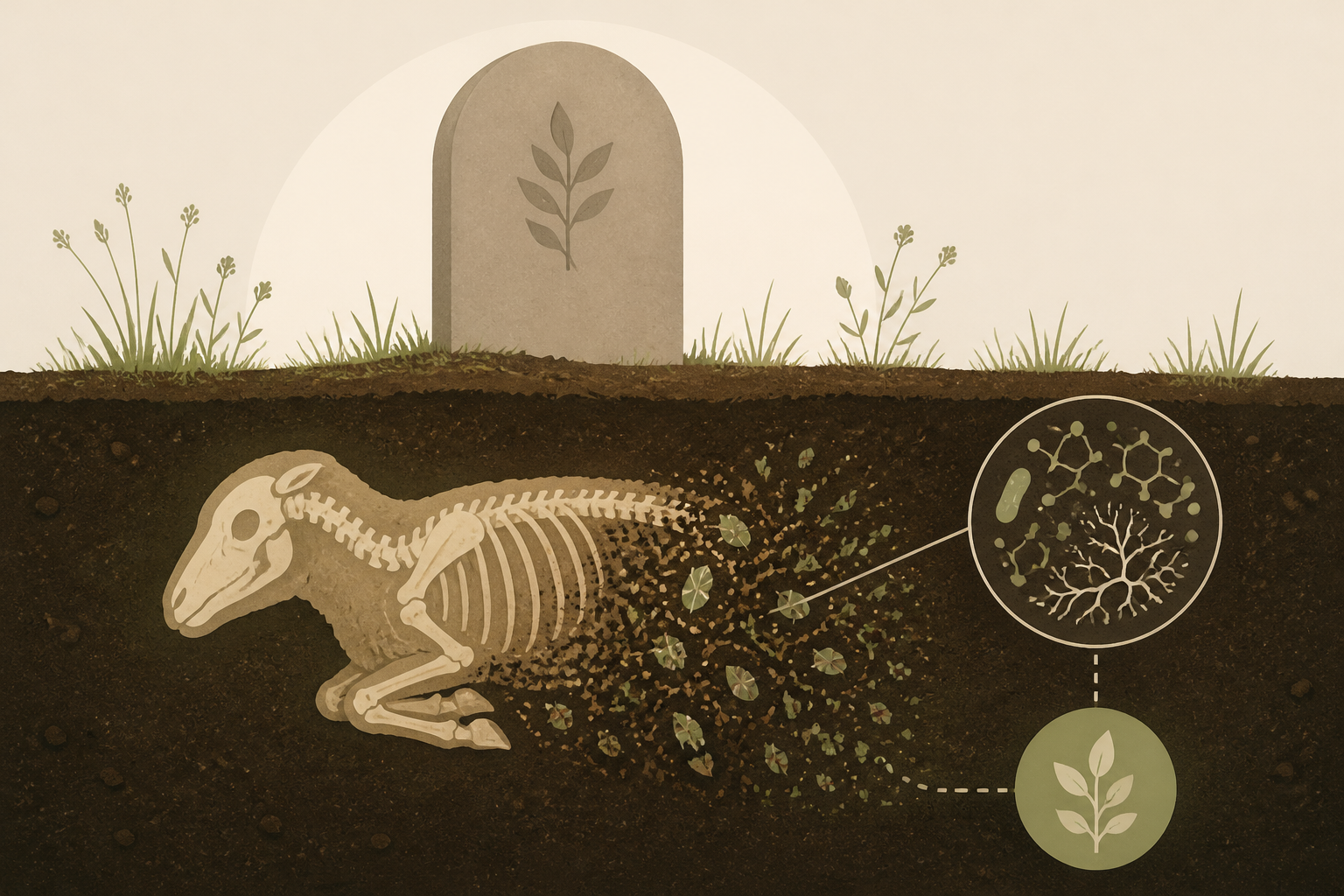
Scientists Buried Sheep in a French Cemetery for a Year. What They Dug Up Could Change How We Bury Humans.
Yahoo • • science
Key Points:
- Terramation, or human composting, is an eco-friendly burial method that accelerates decomposition by creating microbial environments, reducing decomposition time to about a month without harmful chemicals or emissions.
- This practice is currently legal in a dozen U.S. states, parts of Germany, and New South Wales, Australia, with France considering legalization following promising research involving sheep burials showing effective decomposition and soil enrichment.
- Compared to traditional cremation, which has a significant carbon footprint, terramation reduces environmental impact by avoiding emissions and preventing chemicals from entering the soil, while also addressing concerns about limited cemetery space.
- The process transforms human remains into nutrient-rich soil, offering a sustainable and spiritually appealing alternative that returns the body to the earth in a beneficial way.
- Amid technological attempts to extend life or digitally preserve the dead, terramation presents a modest but meaningful approach that prioritizes ecological responsibility in end-of-life practices.


