AI Generated Image
Scientists detect signals of hydrogen from billions of years ago. Could this help us map out the universe?
Yahoo • • science
Key Points:
- Astronomers have successfully used the MeerKAT radio telescope in South Africa to detect hydrogen gas from 4 to 5 billion years ago, providing a new method for mapping the universe's large-scale structure through hydrogen intensity mapping.
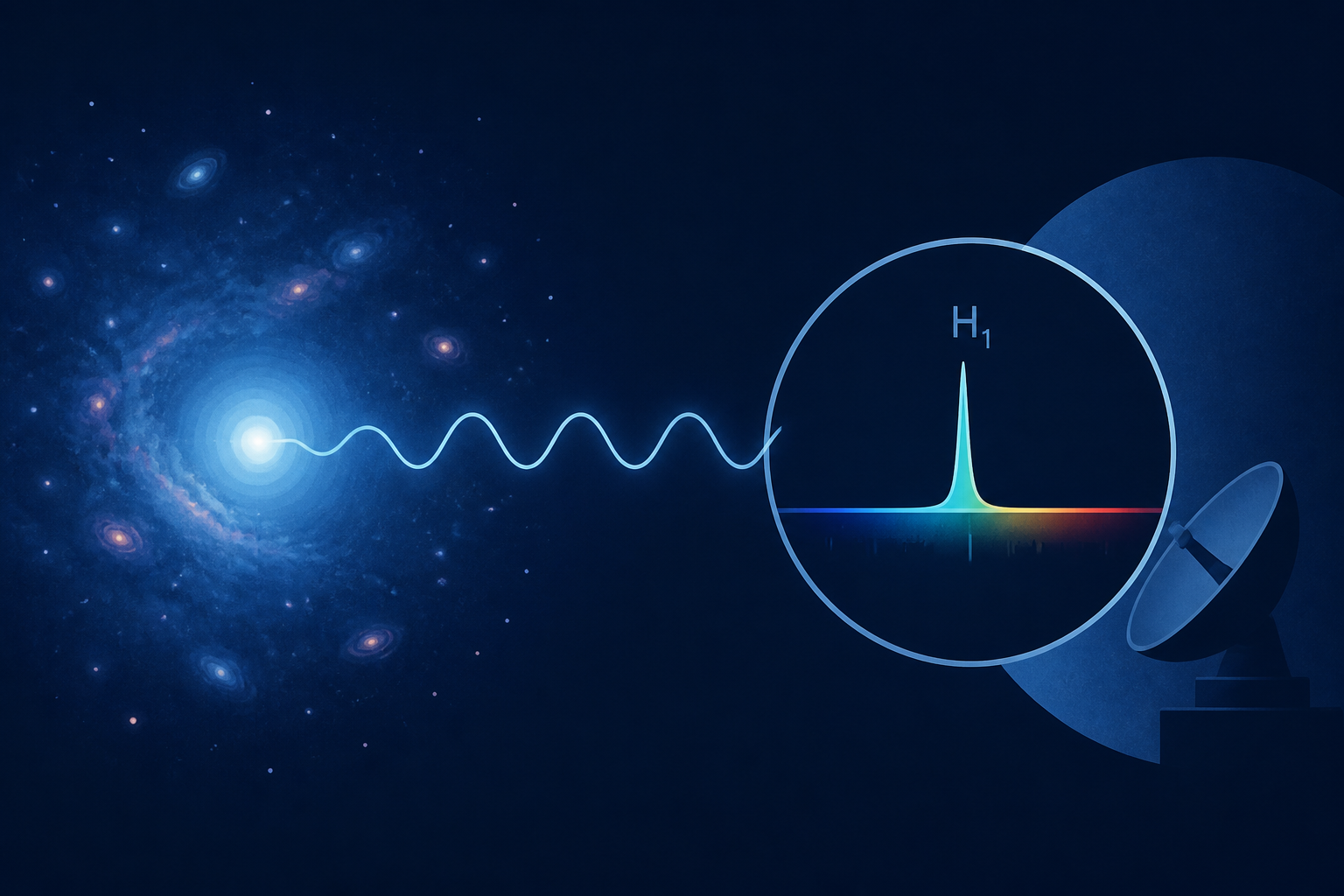
- This technique relies on detecting the faint 21-centimeter radio signal emitted by neutral hydrogen, which is redshifted due to cosmic expansion, allowing scientists to trace the distribution of hydrogen across vast cosmic distances.
- Unlike previous methods that combined radio and visible light observations, this research demonstrates hydrogen intensity mapping using only radio waves from MeerKAT, marking a practical advancement for cosmology.
- The findings enable the study of galaxy formation and evolution by measuring the collective hydrogen signal over large cosmic volumes without needing to detect individual galaxies.
- Future surveys, especially with the upcoming Square Kilometre Array Observatory (SKAO), will benefit from this technique, and the team plans to expand observations to create more detailed hydrogen maps to better understand cosmic structure formation.


