AI Image
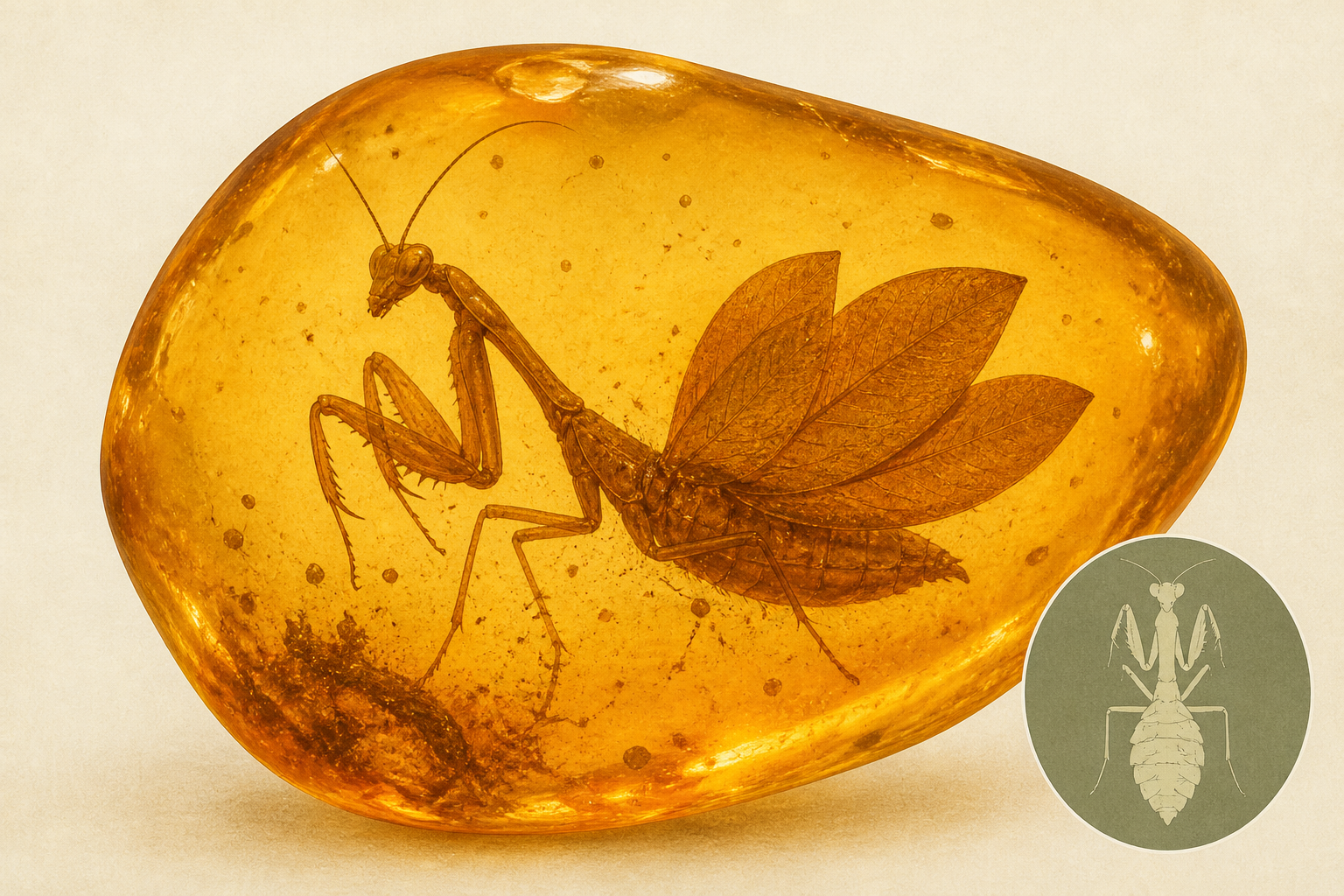
Scientists Discover a 98-Million-Year-Old Mantis With 'Leaves' on Its Abdomen, Trapped in Amber
Yahoo • • science
Key Points:
- A 98-million-year-old praying mantis fossil from Myanmar, named Folimantis hyalinala, provides the earliest clear evidence of plant leaf mimicry in mantises, with its abdomen resembling the extinct plant Selaginella grimaldii.
- This discovery shows that mantis mimicry of plants evolved before flowering plants dominated, suggesting early mantises adapted to look like leaves to better catch prey and avoid predators.
- Unlike modern mantises that exhibit leaf-like features on multiple body parts, F. hyalinala only had leaf mimicry on its abdomen, hinting that plant mimicry may have initially evolved in this specific body region.
- The fossil was found in Kachin amber, which is linked to controversial mining practices amid Myanmar's sociopolitical conflicts, leading to calls for moratoriums on publishing amber fossils from the region.
- The research highlights the long evolutionary relationship between insects and plants, with plant mimicry evolving in various insect groups as both lineages diversified on land over millions of years.


