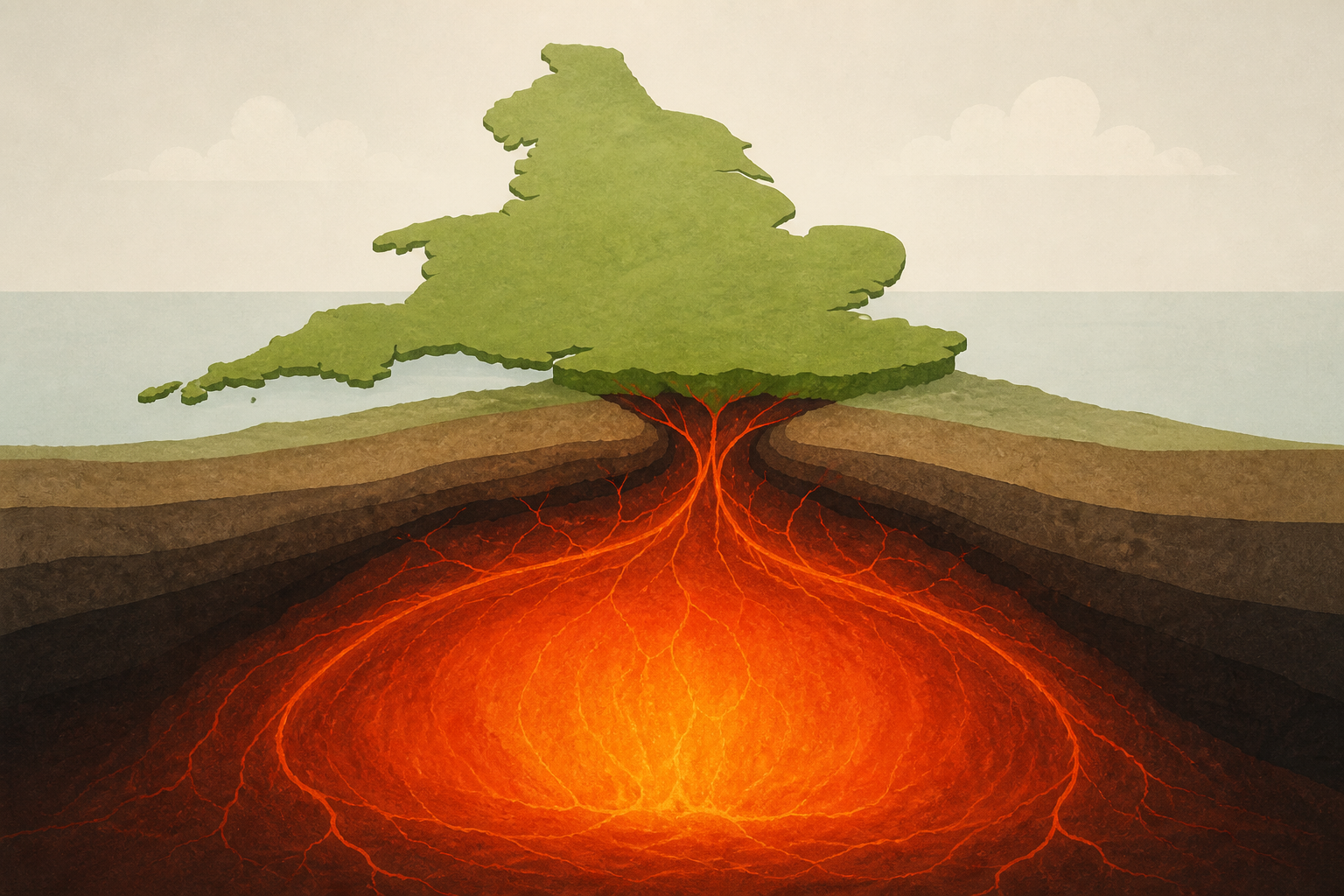
AI Generated Image
Scientists Discover a Hidden Supervolcano Buried Beneath England
AOL.com • • science
Key Points:
- A hidden supervolcano buried beneath the Wash estuary off England’s east coast has been identified, resolving a decades-old mystery about the origin of the Kinnekulle tephra ash layer spread across northern Europe.
- Researchers dated zircon crystals from boreholes in Lincolnshire and Norfolk to approximately 454 million years ago, linking them to a massive ancient eruption that occurred long before the dinosaurs.
- The eruption expelled hundreds to a thousand cubic kilometers of volcanic material into the stratosphere, with a force comparable to thousands of hydrogen bombs, though the volcano itself is now deeply buried and not visible on the surface.
- The supervolcano is part of a larger caldera system named the “Wash Igneous Complex,” which underlies one of England’s flattest regions and offers new insights into the country’s geological past.
- This discovery highlights the potential for further significant geological findings in the subsurface areas of eastern England as research continues.


