AI Image
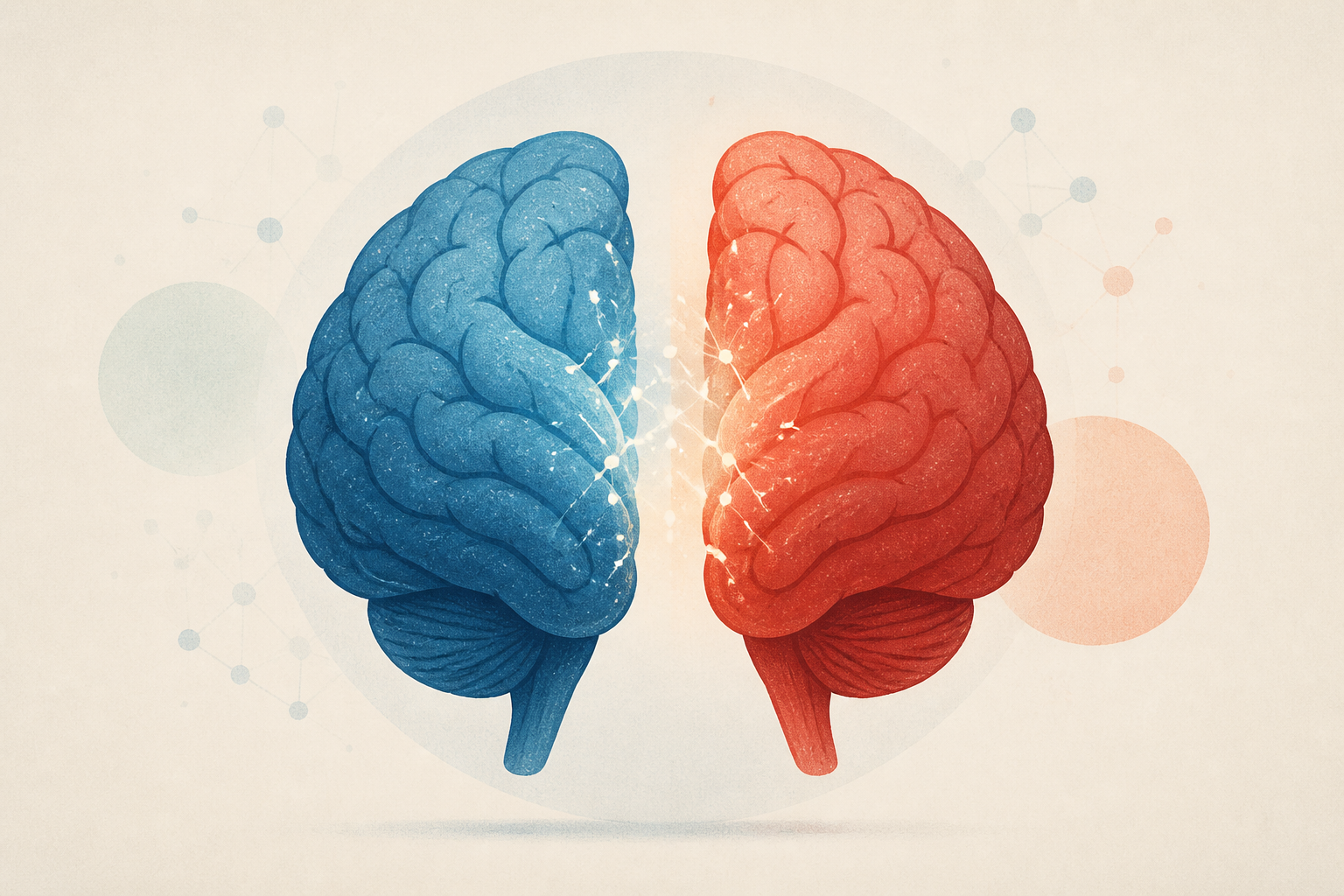
Scientists discover brain is actually two separate organs
Yahoo • • science
Key Points:
- New research from Stanford Medicine reveals that the human brain is composed of two distinct organs that evolved independently, challenging the previous belief that it developed from a single cell.
- The forebrain and midbrain originate from one type of progenitor cell and are responsible for higher-level functions like language, consciousness, and abstract reasoning, while the hindbrain arises from a different progenitor cell and controls essential automatic functions such as breathing and heartbeat regulation.
- This discovery enabled scientists to generate hindbrain neurons in the lab for the first time, overcoming previous challenges and opening new avenues for studying brain stem diseases.
- Evolutionary analysis showed that this two-origin brain pattern exists in species as diverse as chickens, zebrafish, and acorn worms, suggesting that two ancient neural systems were spatially combined over 550 million years ago.
- Researchers highlight that although having a single brain organ might be more efficient, the brain’s dual-origin structure has been preserved through evolution, resulting in two nearly integrated but distinct neural systems.


