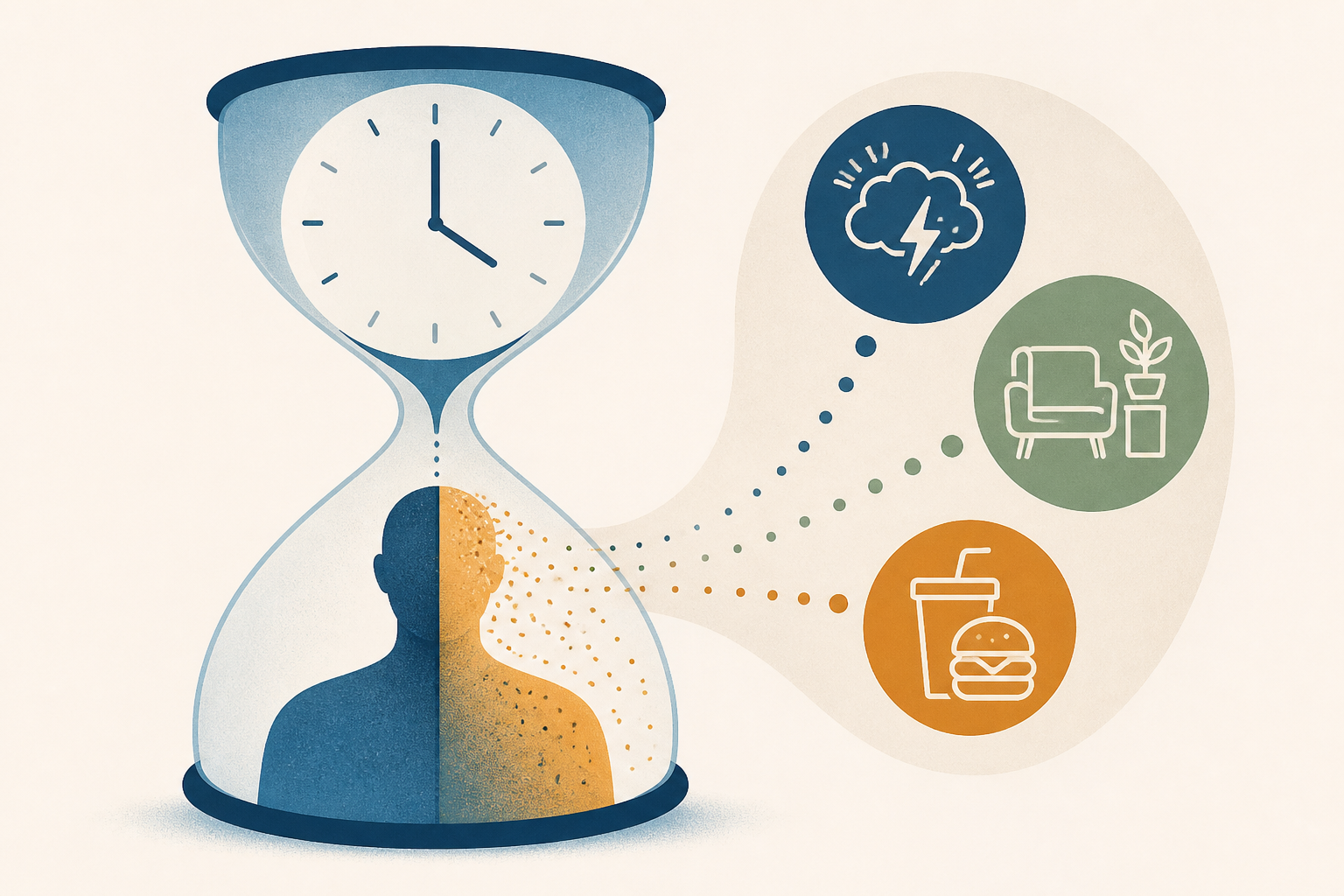
AI Generated Image
Scientists Say These Factors are What Really Age You-and They’re Probably Not What You Think
Women's Health • • health
Key Points:
- A recent study analyzing data from nearly 500,000 UK Biobank participants found that environmental and lifestyle factors have a greater impact on biological aging than genetics, with environment explaining 17% of death risk variation versus less than 2% for genetics.
- Key environmental factors influencing aging include household income, socioeconomic status, home ownership, employment status, and living with a partner, while major lifestyle contributors are smoking, physical activity, sleep duration, and regular gym attendance.
- Although genetics still play a role, particularly in diseases like dementia and certain cancers, lifestyle and environmental influences are more significant overall in determining the pace of cellular aging and disease risk.
- Disease can accelerate cellular aging through inflammation and cellular damage, and factors like smoking and air pollution contribute to the development of age-related illnesses such as cardiovascular disease and cancer.
- While biological aging cannot be completely reversed, adopting healthy habits—such as getting sufficient sleep, eating a plant-forward diet, exercising regularly, avoiding smoking, and managing stress—can slow aging and reduce disease risk.


