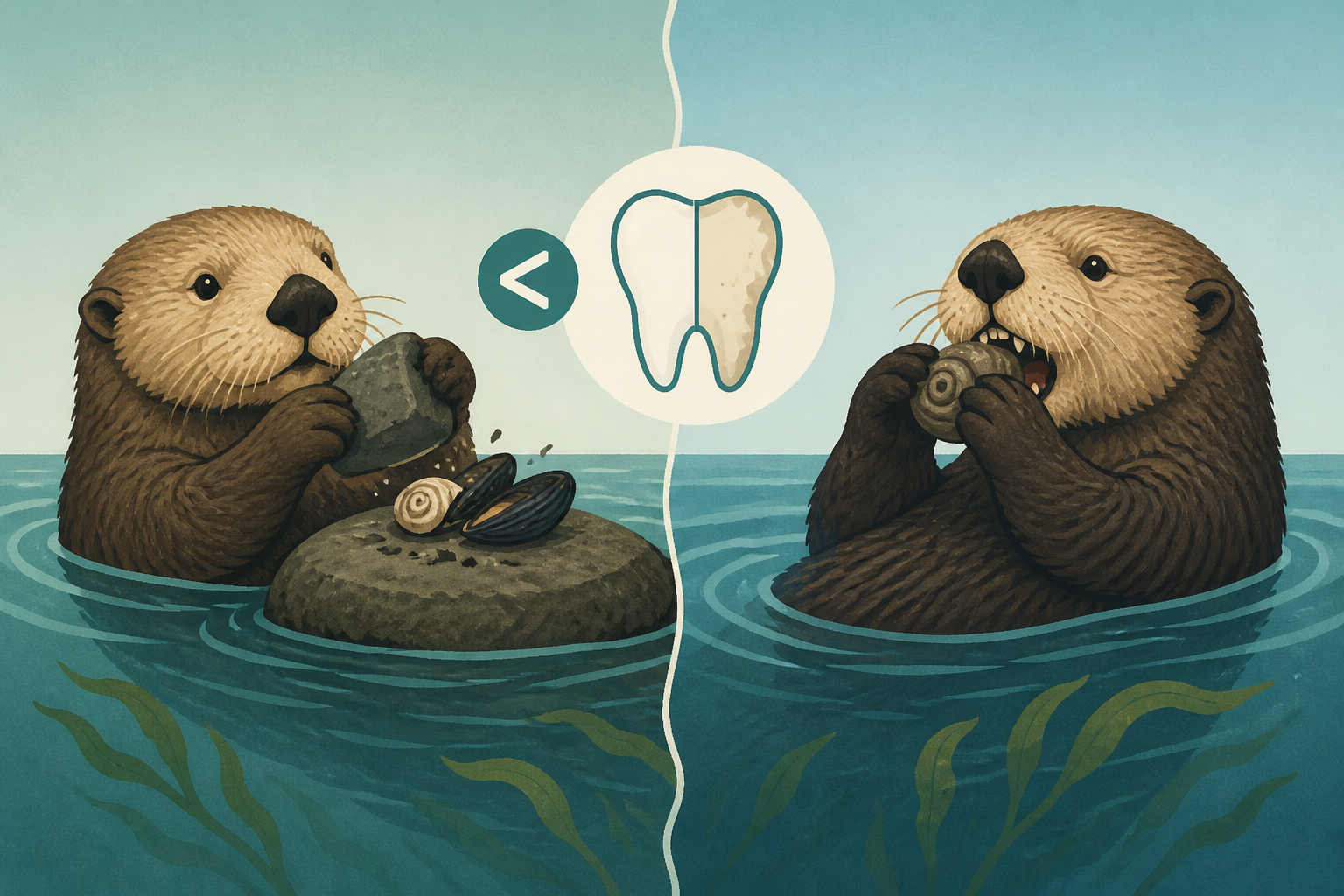
AI Generated Image
Sea otters along California's central coast that habitually use rocks to crack open snails and mussels show measurably less tooth damage than otters that bite prey directly, a difference biologists do
spacewar.com • • science
Key Points:
- A 2024 study tracking 196 southern sea otters in central California found that otters using stones as tools to crack open shellfish have healthier teeth than those biting prey directly, reducing tooth damage that can be fatal due to their high caloric needs.
- Female otters use tools more frequently than males, allowing them to consume harder-shelled prey despite smaller size and weaker bites; this behavior is culturally transmitted from mother to pup during months of close contact.
- The shift in otter diets from softer prey like sea urchins and abalone to harder-shelled snails and mussels is driven by ecological changes such as kelp forest decline and prey collapse, making tool use essential for survival.
- Otters store preferred stones in loose skin folds under their forearms and sometimes use alternative anvils like fixed rocks or human debris, demonstrating behavioral adaptation to environmental challenges.
- This tool use not only supports otter survival but also maintains their role as keystone predators protecting kelp forests, highlighting the importance of learned behaviors in species resilience amid rapid oceanic changes.


