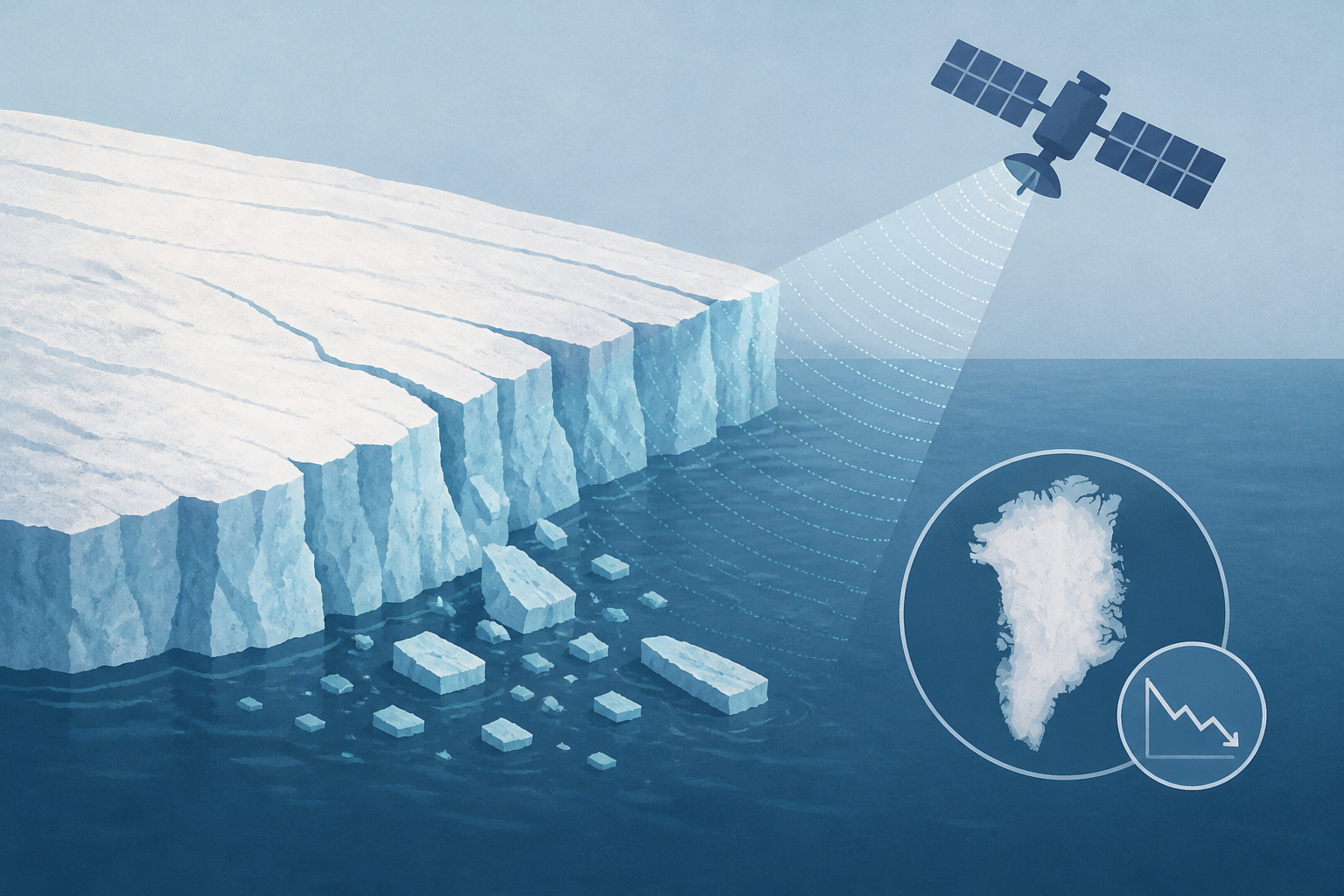
AI Generated Image
Sentinel-1 captures major ice loss from Greenland glacier
European Space Agency • • science
Key Points:
- On 4 August 2026, a 76 sq km section of Petermann Glacier’s floating ice tongue in northwest Greenland broke away, marking the largest ice loss since 2012 and the most significant Arctic calving event since 2020.
- Sentinel-1 radar imagery enabled near-real-time monitoring of the glacier’s rapid deterioration and fracture growth, highlighting the glacier’s instability and the value of frequent satellite observations in polar regions.
- The calving event is part of Petermann Glacier's history of major ice losses, with two additional large ice islands potentially detaching soon due to ongoing rift propagation.
- Researchers from multiple international institutions are studying the event to better understand Arctic ice island dynamics, glacier behavior, and implications for sea-level rise and ocean environments.
- The calving poses practical risks for Arctic navigation and offshore operations, prompting Environment and Climate Change Canada to monitor the iceberg’s trajectory and assess hazards to shipping and infrastructure.


