AI Generated Image
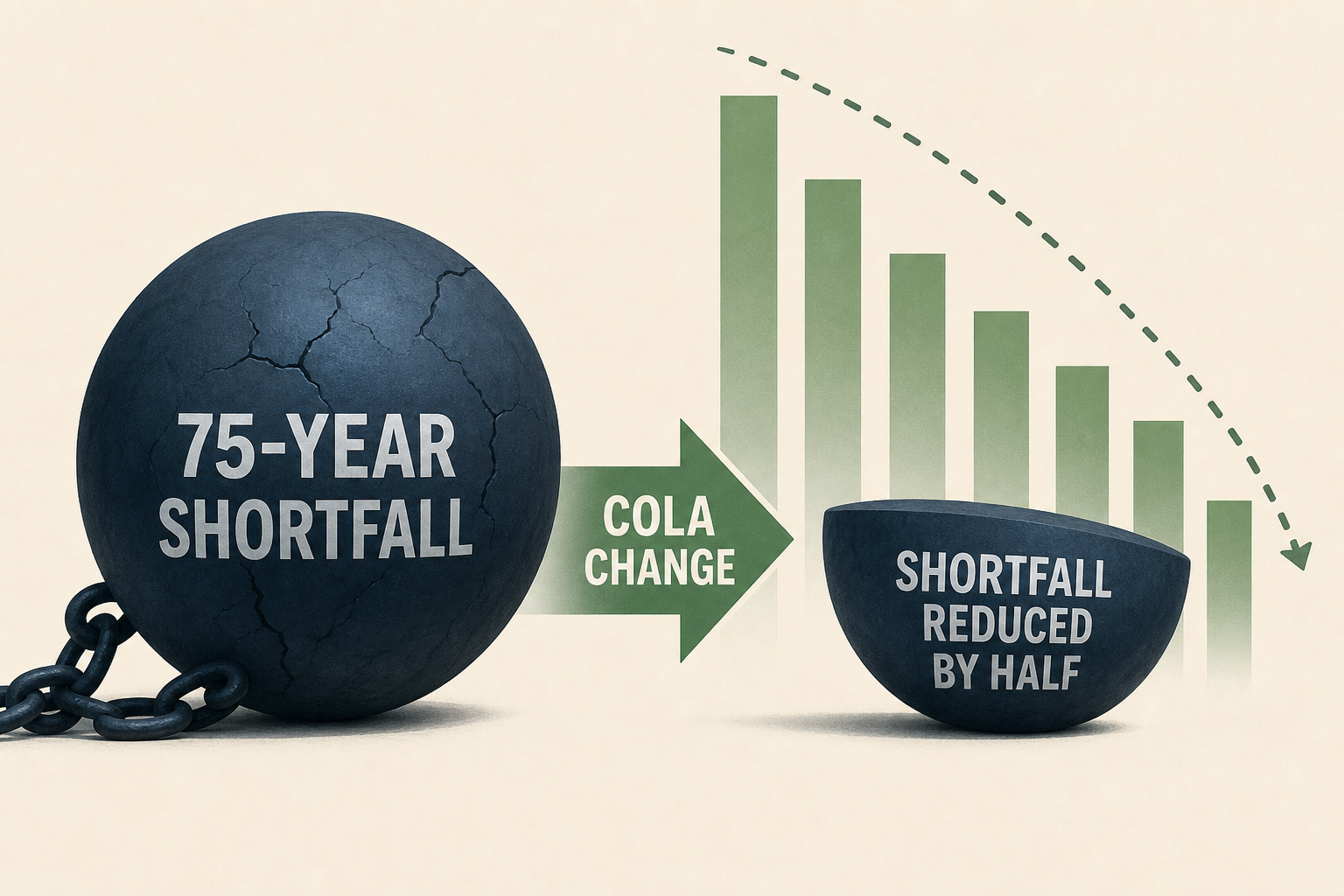
Social Security COLA change could reduce 75-year shortfall by half
Fox Business • • business
Key Points:
- A proposed change to Social Security's cost-of-living adjustment (COLA) calculation, involving a flat-rate COLA set at the 20th or 30th percentile of benefits, could halve the program's 75-year fiscal shortfall and delay insolvency by about two years.
- The flat-rate COLA would be progressive, providing relatively smaller benefit increases for higher earners while maintaining or slightly boosting benefits for lower earners, potentially reducing old-age poverty.
- If implemented in 1987, this approach might have achieved 75-year solvency and delayed insolvency until 2071, covering most of the long-term funding gap and allowing time for gradual reforms.
- Social Security's trust funds are projected to become insolvent by 2032, leading to an automatic 22% benefit cut unless reforms are enacted, underscoring the urgency for policymakers to act promptly.
- The Committee for a Responsible Federal Budget emphasizes that delaying reforms reduces options for preserving Social Security and warns that combining multiple measures is necessary to avoid abrupt benefit reductions.


