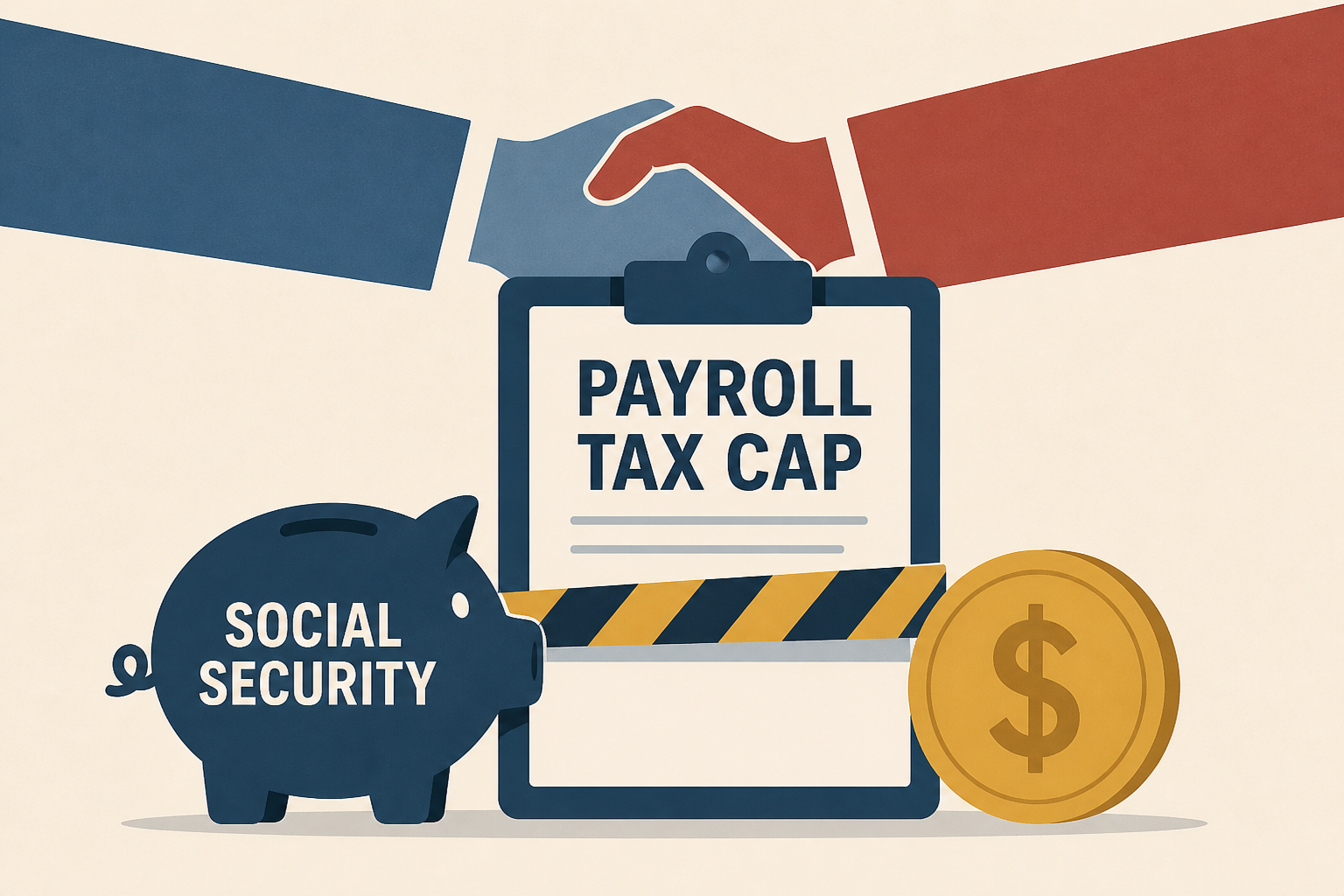
AI Generated Image
Social Security payroll tax cap gets bipartisan attention
CNBC • • business
Key Points:
- Lawmakers from both parties, including Republicans Sen. Bernie Moreno and Reps. Tom Cole and Lloyd Smucker, are increasingly supporting raising or eliminating the Social Security payroll tax cap to address the program's funding shortfall projected by 2032-2034.
- Eliminating the payroll tax cap entirely could cover up to 67% of Social Security's 75-year solvency gap, while partial increases or setting the cap at 90% of earnings would cover a smaller portion, according to research by the Roosevelt Institute.
- A 2024 survey showed strong public support for eliminating the payroll tax cap on earnings above $400,000 and for raising the payroll tax rate, with advocacy groups backing these measures as key to shoring up Social Security.
- Critics warn that removing the payroll tax cap would represent the largest tax increase since 1982, potentially reducing jobs and GDP, and could have significant economic repercussions, especially since high earners already pay higher marginal tax rates.
- The debate occurs amid Medicare's own funding challenges and a national debt exceeding $40 trillion, with concerns that large payroll tax hikes might limit future tax options and disrupt the link between Social Security contributions and benefits.


