AI Image
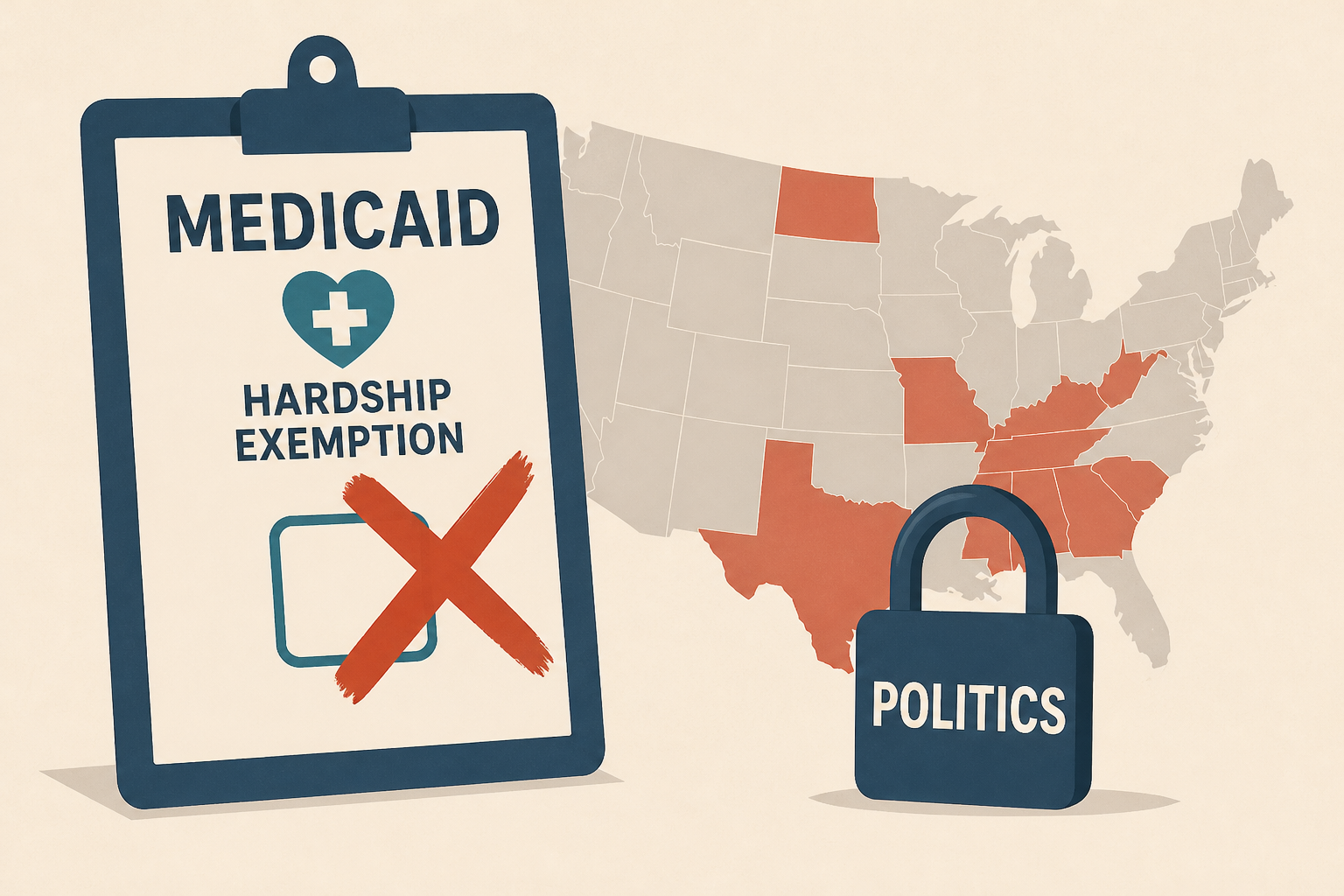
Some conservative states aren’t using Medicaid hardship exemption - for political reasons
The Guardian • • nation
Key Points:
- New federal Medicaid work requirements starting January 1 mandate adults in ACA Medicaid expansion to work, attend school, volunteer, or engage in qualifying activities 80 hours monthly to maintain coverage, with federal exemptions for hardship cases like hospitalization or high unemployment.
- Some conservative states like Missouri and Iowa are choosing not to adopt the high-unemployment hardship exemption despite qualifying counties, likely due to political ideology opposing exemptions and concerns about administrative burdens.
- Experts highlight that states rejecting exemptions tend to align with the view that health insurance should be tied to employment, resulting in a patchwork of Medicaid implementation where some states minimize coverage losses while others risk more people losing coverage.
- Critics argue that avoiding hardship exemptions is counterproductive, as many Medicaid recipients would prefer to complete exemption paperwork rather than lose healthcare, and previous Medicaid work requirements have led to significant coverage losses without increasing employment.
- Researchers warn that the new requirements may cause millions to lose coverage due to administrative hurdles and paperwork, with experts urging states to mitigate these losses and provide better support to help beneficiaries navigate the process.


