AI Image
Ultra-processed foods linked to stroke and brain damage, study finds
Fox News • • health
Key Points:
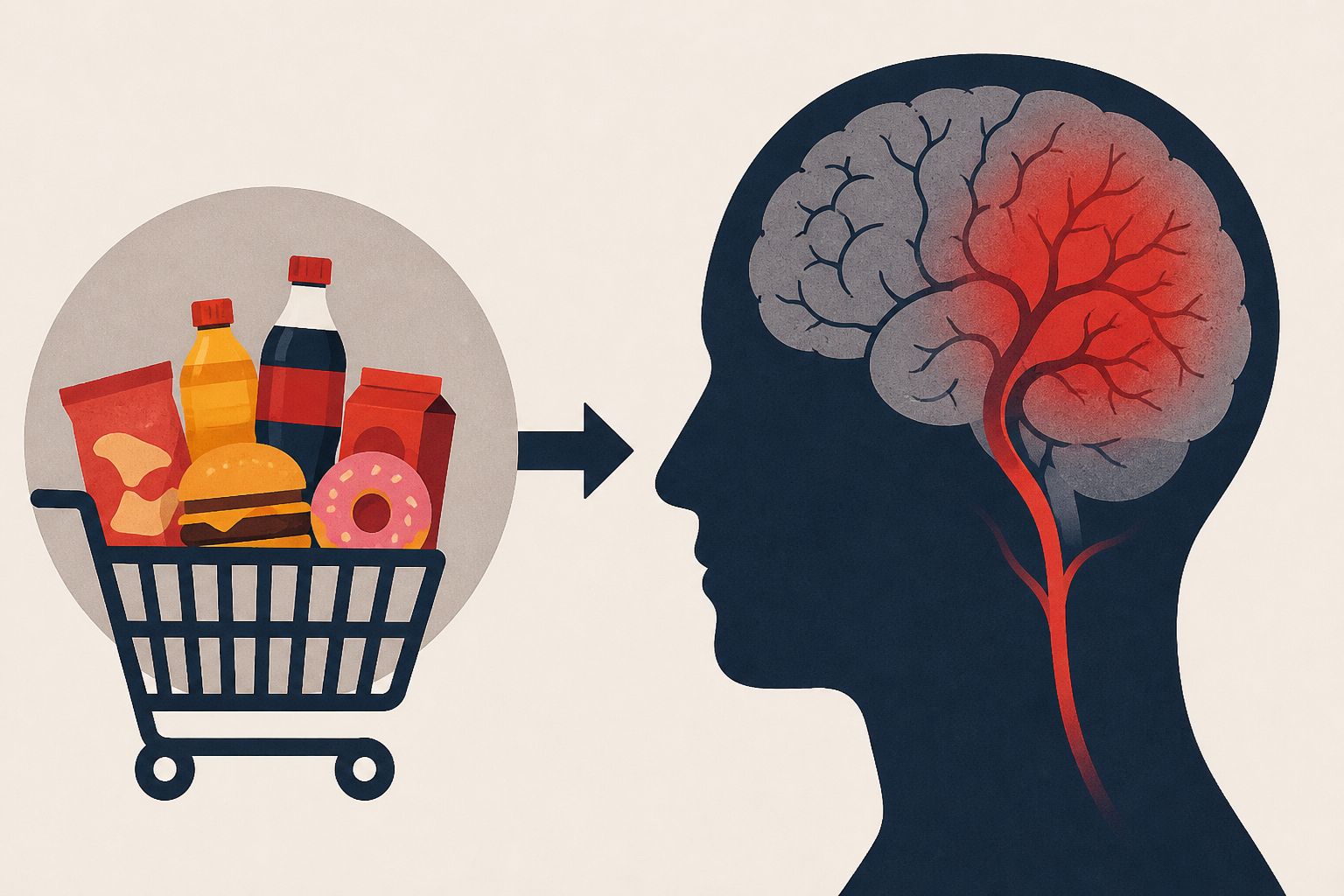
- A Canadian study using MRI scans found that high consumption of ultra-processed foods is linked to small areas of brain damage in healthy adults aged 35 to 69, which may precede stroke and memory problems.
- Participants with the highest intake of ultra-processed foods, such as soft drinks and packaged snacks, were 40% more likely to show brain changes, with women showing nearly twice the likelihood compared to those with the lowest intake.
- The study also found that higher consumption of ultra-processed foods correlated with increased body fat and decreased intake of nutrient-dense whole foods like fruits and vegetables.
- Researchers emphasized that these brain changes can be early warning signs before symptoms appear, but causation could not be confirmed due to the study’s cross-sectional design; longer-term studies are planned.
- Ultra-processed foods, which are high in sodium, saturated fats, and added sugars but low in essential nutrients, accounted for about 25% of daily intake among study participants, reflecting concerns about widespread consumption and potential health risks.


