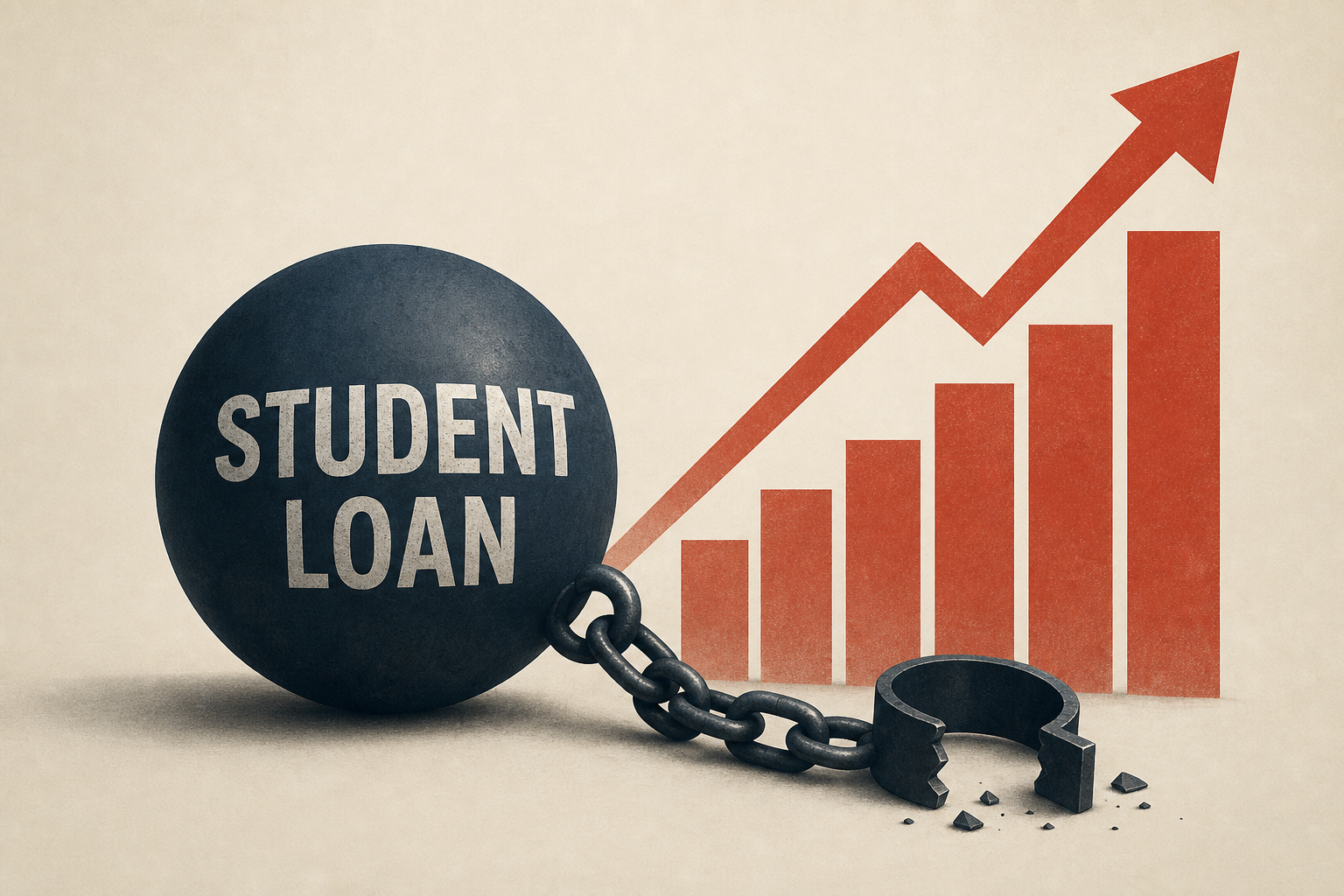
AI Generated Image
Student loan defaults hit record highs in wake of COVID-tied payments pause expiration
CBS News • • business
Key Points:
- Student loan defaults in the U.S. have surged to a record 9.5 million borrowers, or one in five federal student loan holders, following the end of a pandemic-related payment pause and a one-year buffer period that ended in fall 2024.
- Defaulting on loans, defined as being more than nine months behind on payments, can lead to serious consequences such as wage garnishment, though involuntary collections have been temporarily suspended.
- The Trump administration’s elimination of the most generous income-driven repayment plan, SAVE, has increased monthly payment burdens, potentially driving further defaults as new borrowers face fewer repayment options.
- States in the South, including Mississippi with the highest default rate at 28.3%, and Puerto Rico, with a 30.9% default rate, have the highest concentrations of defaulted borrowers, many of whom are working-class individuals struggling with rising living costs.
- Borrowers from for-profit colleges face higher default risks, with 33% at least 90 days behind on payments, leading industry groups to launch initiatives emphasizing the importance of loan repayment amid ongoing confusion about loan forgiveness programs.


