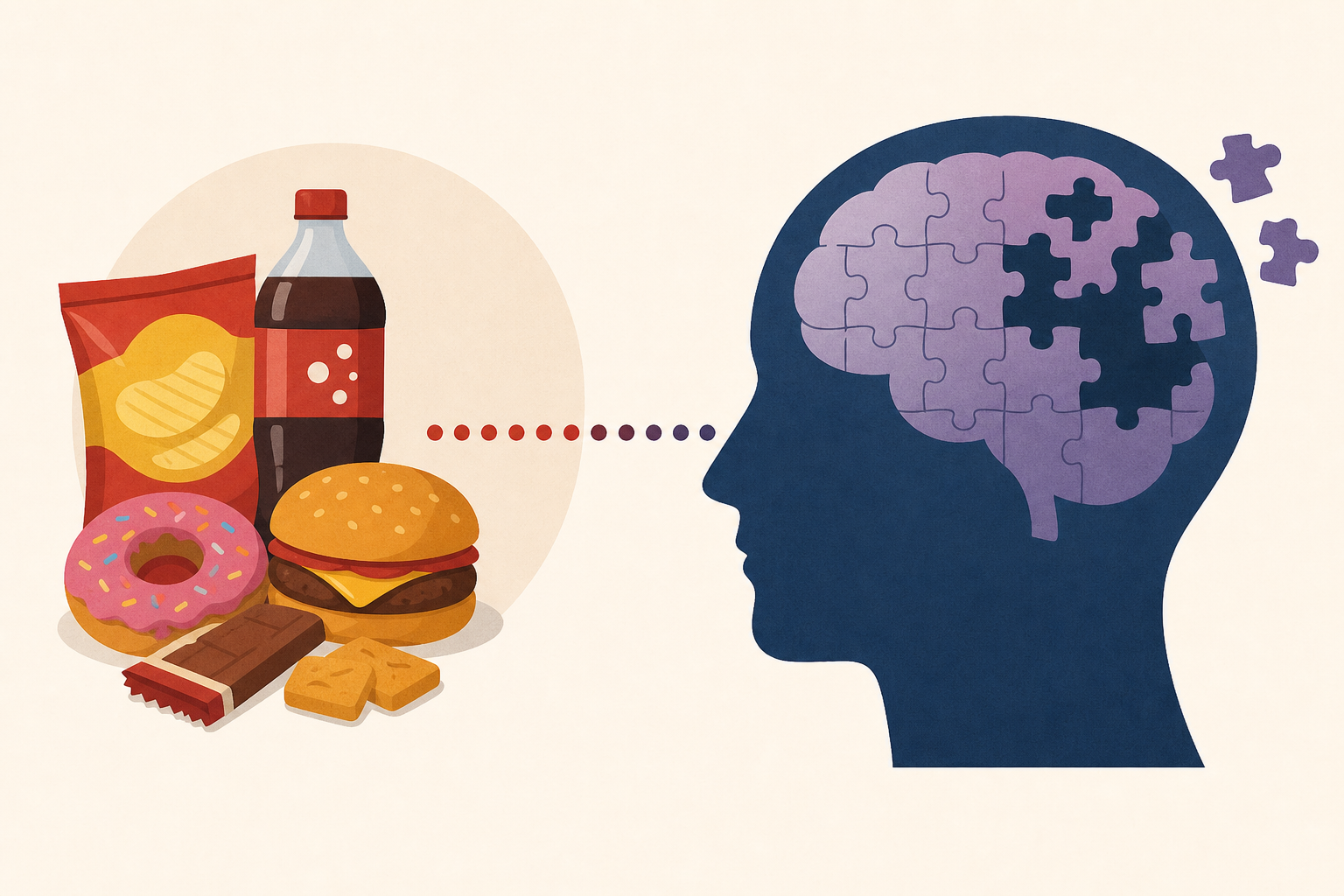
AI Generated Image
Study Highlights Dementia Risk Linked To Ultra-Processed Foods
HuffPost • • health
Key Points:
- A new study published in Alzheimer’s & Dementia links higher consumption of ultra-processed foods to declines in attention and mental processing speed, even among people who otherwise follow healthy diets.
- Ultra-processed foods, which include packaged snacks and ready-made meals, often contain additives and chemicals that may contribute to inflammation, metabolic dysfunction, and vascular injury, all of which are risk factors for cognitive decline and dementia.
- The study analyzed over 2,100 middle-aged and older Australians and found that every 10% increase in ultra-processed food intake corresponded with measurable cognitive decline and increased dementia risk factors.
- Experts emphasize that diet quality matters for brain health, recommending whole-food diets like the Mediterranean or MIND diets, while cautioning that healthy foods may not fully offset the negative effects of high ultra-processed food consumption.
- Attention deficits linked to ultra-processed foods are significant because attention is a foundational brain function influencing memory and learning, and persistent changes in attention should prompt medical evaluation.


![Apple Store is down: 'We’re making updates,' Apple says [Update: Back online]](https://media-cdn.cashwalklabs.io/https%3A%2F%2Fs3.us-west-2.amazonaws.com%2Fimages.cashwalklabs.io%2F0_admin%2Fnews-ai-images%2F019eff50-b84d-74e8-b323-fd285ceebf72.webp?format=webp&w=120&h=80)


