AI Generated Image
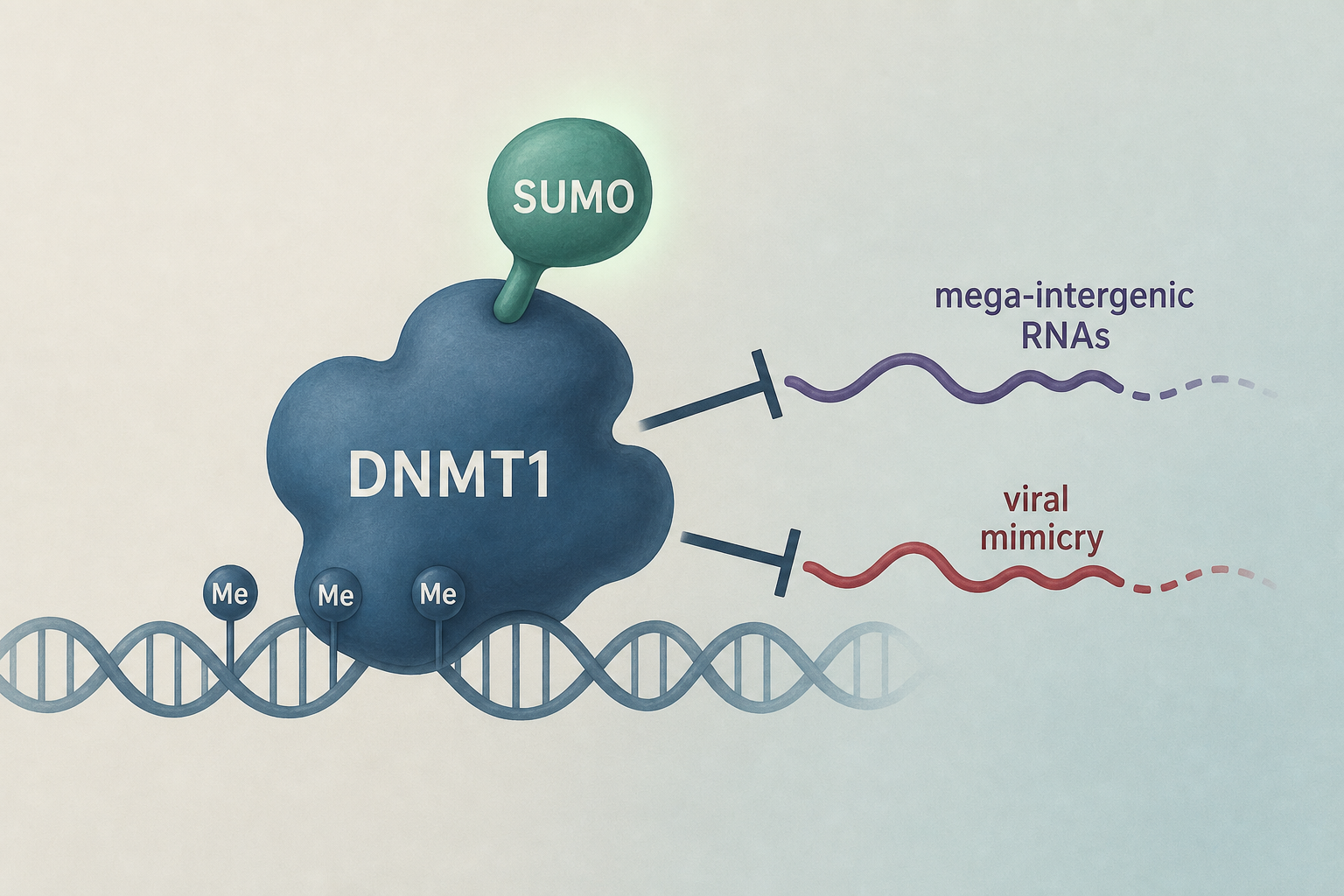
SUMOylation enhances DNMT1 function to repress mega-intergenic RNAs and viral mimicry
Nature • • health
Key Points:
- UHRF1 is critical for maintaining DNA methylation in mammalian cells, highlighting its role in epigenetic regulation (Bostick et al., 2007).
- DNA hypomethylating agents show promise in cancer therapy by reactivating silenced genes and inducing viral mimicry, which can stimulate immune responses against tumors (Sato et al., 2017; Chiappinelli et al., 2015; Roulois et al., 2015).
- Recent discoveries include DNMT1-selective inhibitors with improved efficacy and tolerability in acute myeloid leukemia, advancing targeted epigenetic therapies (Pappalardi et al., 2021).
- SUMOylation and ubiquitin ligases such as TOPORS and RNF4 regulate DNA methyltransferase activity and contribute to resistance mechanisms against hypomethylating agents in cancer cells (Kaito et al., 2024; Liu et al., 2024; Truong et al., 2024).
- Advances in bioinformatics tools and high-throughput sequencing methods, including CRISPR screens and RNA-seq analysis pipelines, have enhanced the study of epigenetic modifications and gene regulation in health and disease (Li et al., 2014; Dobin et al., 2013; Law et al., 2014).


