AI Image
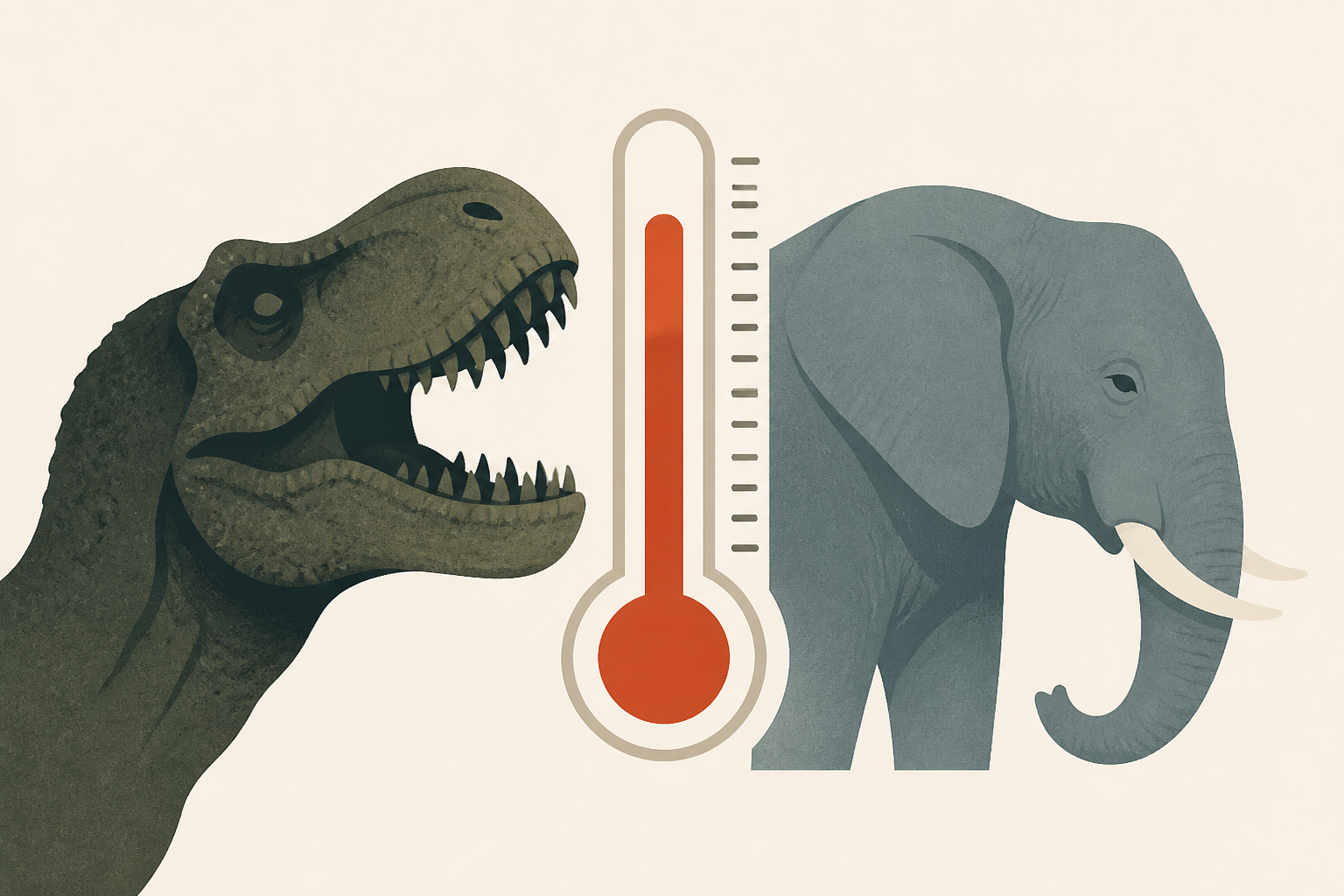
T. rex teeth indicate it ran as warm as an elephant
Ars Technica • • general
Key Points:
- Researchers from UCLA led by Randon J. Flores and Robert A. Eagle measured T. rex body temperature using clumped isotope thermometry on fossilized teeth, finding an average temperature around 36.3°C, similar to modern elephants and large flightless birds.
- The study overcame previous challenges by focusing on enamel chemistry, which remains stable over millions of years, allowing accurate reconstruction of body temperature independent of water composition in the animal's body.
- Comparison with contemporaneous crocodilian teeth and climate models showed T. rex maintained a consistently warmer body temperature than its environment, suggesting it was likely a homeothermic endotherm rather than cold-blooded.
- Climate and habitat modeling indicated T. rex could thrive across most of late Cretaceous North America, including colder northern regions, aligning with fossil finds in Alaska and Texas and supporting physiological flexibility.
- While the sample size was limited and seasonal growth bias cannot be fully ruled out, the findings support the view of T. rex as an active, warm-bodied predator and pave the way for further research into dinosaur metabolism and evolution using this method.


