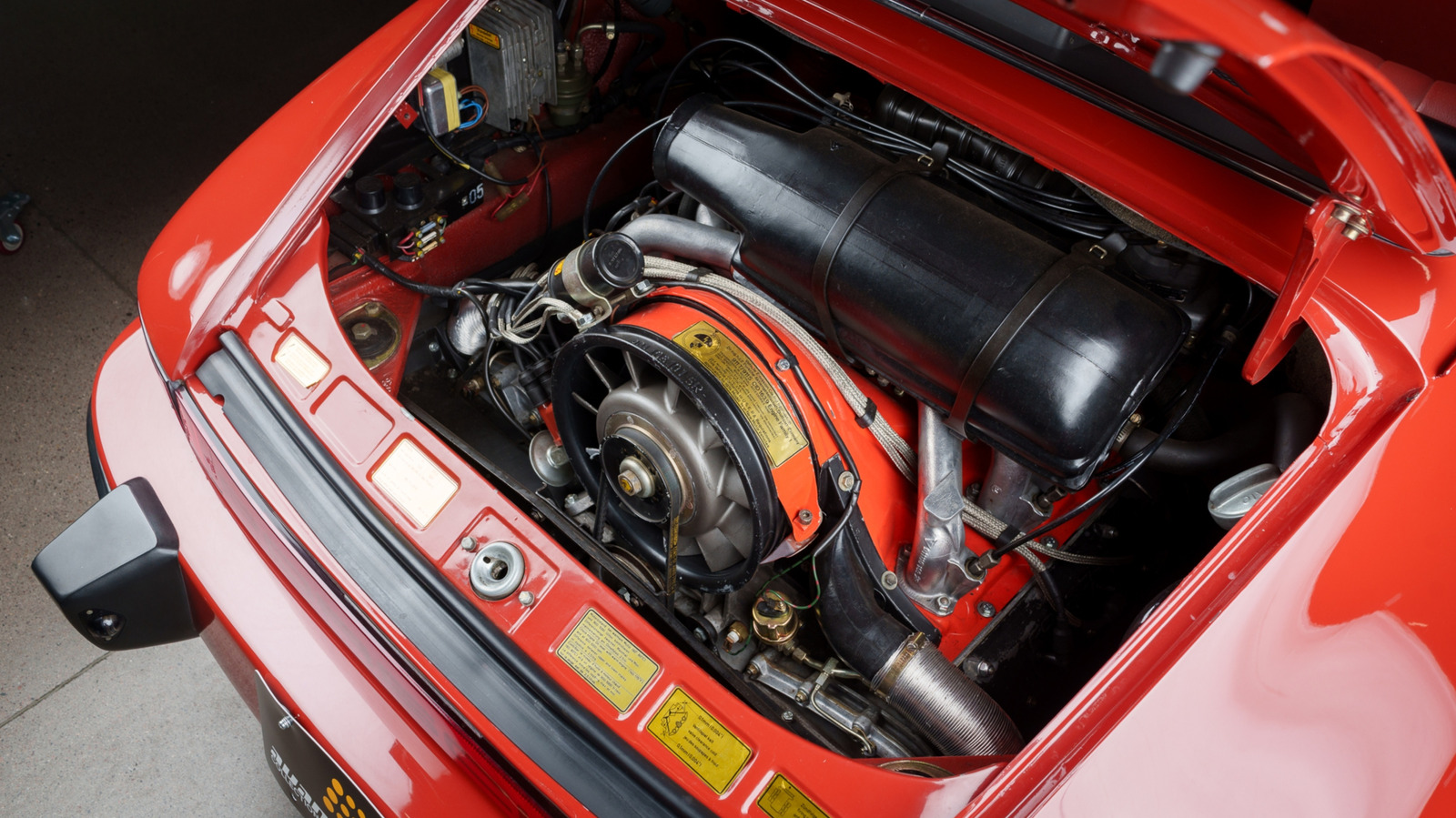
That Air-Cooled Porsche Engine Isn't Just Cooled By Air, You Know
Jalopnik • • technology
Key Points:
- The Porsche 911's vintage air-cooled engines actually use a combination of air and oil cooling, with air cooling via a large fan and finned cylinders, and oil cooling through engine-mounted or front-mounted oil coolers.
- Early 911 models (1965-1973) rarely had front-mounted oil coolers, which were optional, but these became standard from 1978 onward, evolving from passive loop coolers to active, fan-assisted aluminum coolers by 1987-1989.
- The main air-cooling fan's speed depends on engine RPM, which limited cooling efficiency at low speeds or idle, prompting Porsche to add oil coolers with fans to better manage engine temperatures.
- Air-cooled engines warmed up slowly and faced challenges meeting emissions regulations, and as 911 power increased, the air-cooling system struggled to keep pace, leading Porsche to transition to liquid cooling after the 993 generation.
- Porsche recognized that water cooling is far more effective than air, which is why modern cars, including current Porsches, use liquid-cooled engines instead of air-cooled designs.


