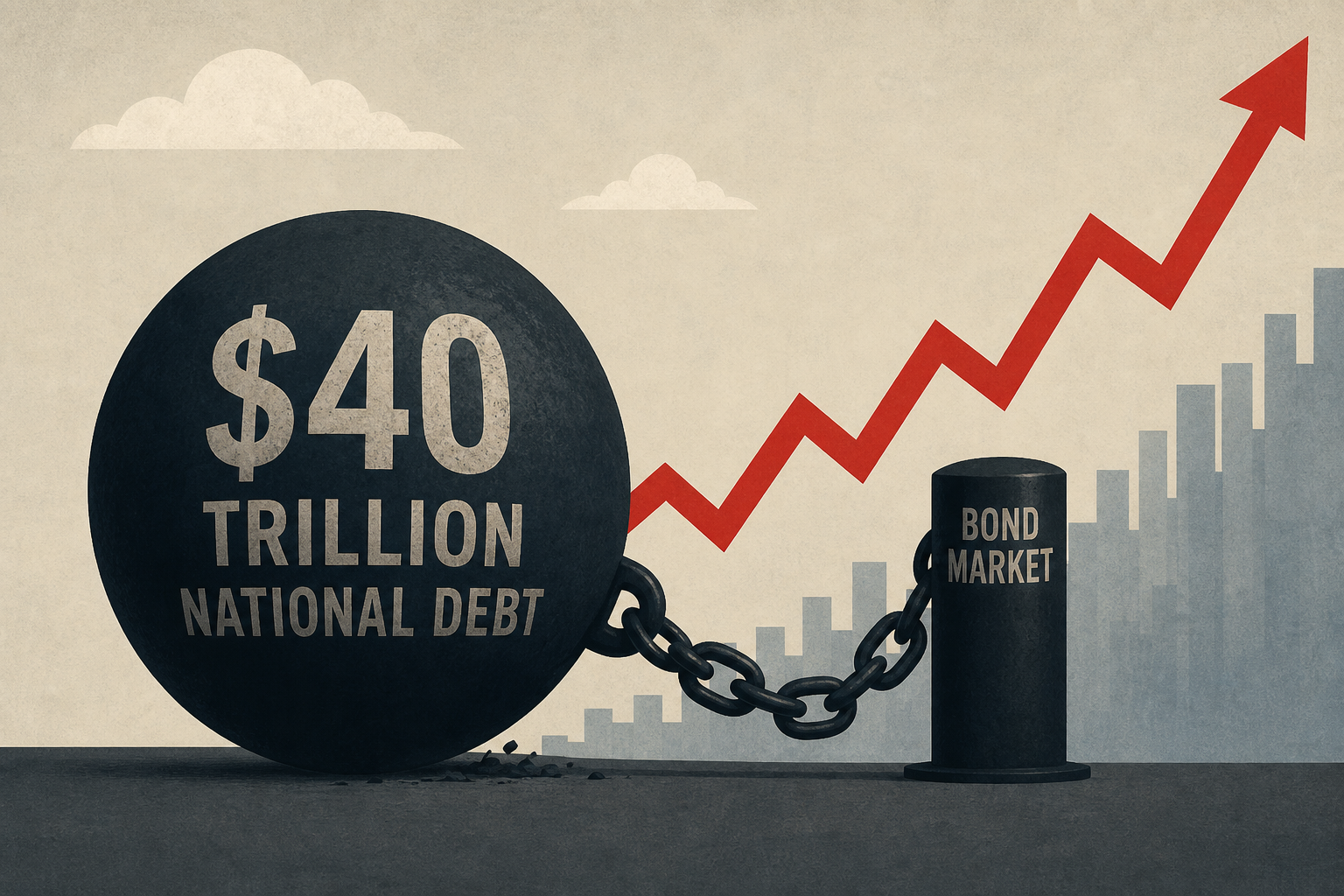
AI Generated Image
The $40 trillion national debt and the bond market's revolt: how we got into this mess
Fortune • • business
Key Points:
- U.S. federal debt has reached a historic milestone, with debt held by the public projected to hit 100.5% of GDP this fiscal year, driven by tax cuts, wars, aging population costs, and crisis spending over the past 25 years, according to J.P. Morgan’s David Kelly.
- Apollo’s Torsten Slok and Kelly agree that despite large deficits, inflation fears are minimal; instead, rising Treasury yields reflect market concerns about the volume of government debt issuance and competition from AI hyperscalers issuing bonds.
- Billionaire investor Stanley Druckenmiller publicly criticized the Treasury’s decision to double long-dated bond buybacks right after 30-year Treasury yields hit a 19-year high, arguing the move was price management rather than liquidity management and signaling market distrust.
- The Treasury market dynamics have shifted since the 1990s, with hedge funds now major holders of long-term Treasuries instead of foreign central banks, complicating the government’s borrowing environment and raising questions about fiscal discipline.
- Experts warn that while current Treasury yields near 5% are not an immediate economic crisis, they represent a significant issue requiring attention, but there is skepticism about whether Washington will respond effectively to these market signals.


