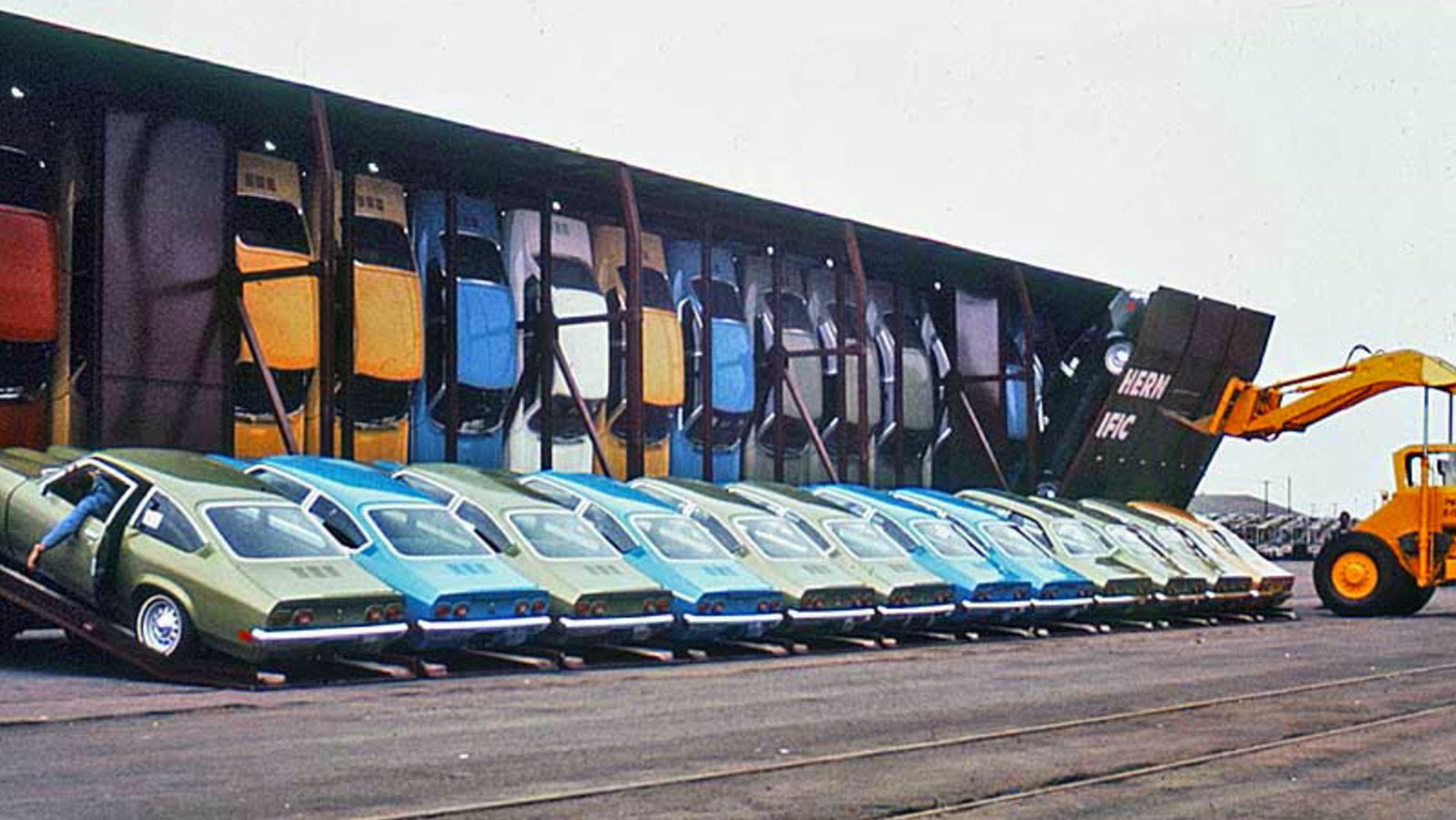
The Clever Engineering Of Shipping The Chevy Vega By Train
Jalopnik • • technology
Key Points:
- The Chevrolet Vega, launched in 1971, aimed to be a top compact car and affordable, with a target cost of $1 per pound, but it ultimately gained a poor reputation despite winning MotorTrend's 1971 Car of the Year.
- To reduce the $300 shipping cost per car, Chevrolet developed the Vert-A-Pac system, which allowed Vegas to be shipped vertically nose down in specially designed railcars, nearly doubling the number of cars per railcar and cutting shipping costs by about 40%.
- The Vert-A-Pac railcars featured individual vertical doors that protected the vehicles from theft and weather, a significant advantage over traditional open railcar transport.
- Modifications to the Vega were necessary to enable vertical shipping without fluid leaks, including relocating battery filler caps, installing oil baffles, repositioning washer fluid tanks, and adjusting the carburetor.
- The Vert-A-Pac system was discontinued along with the Vega, as it was specifically designed for the Vega and its corporate cousin, the Pontiac Astre.


