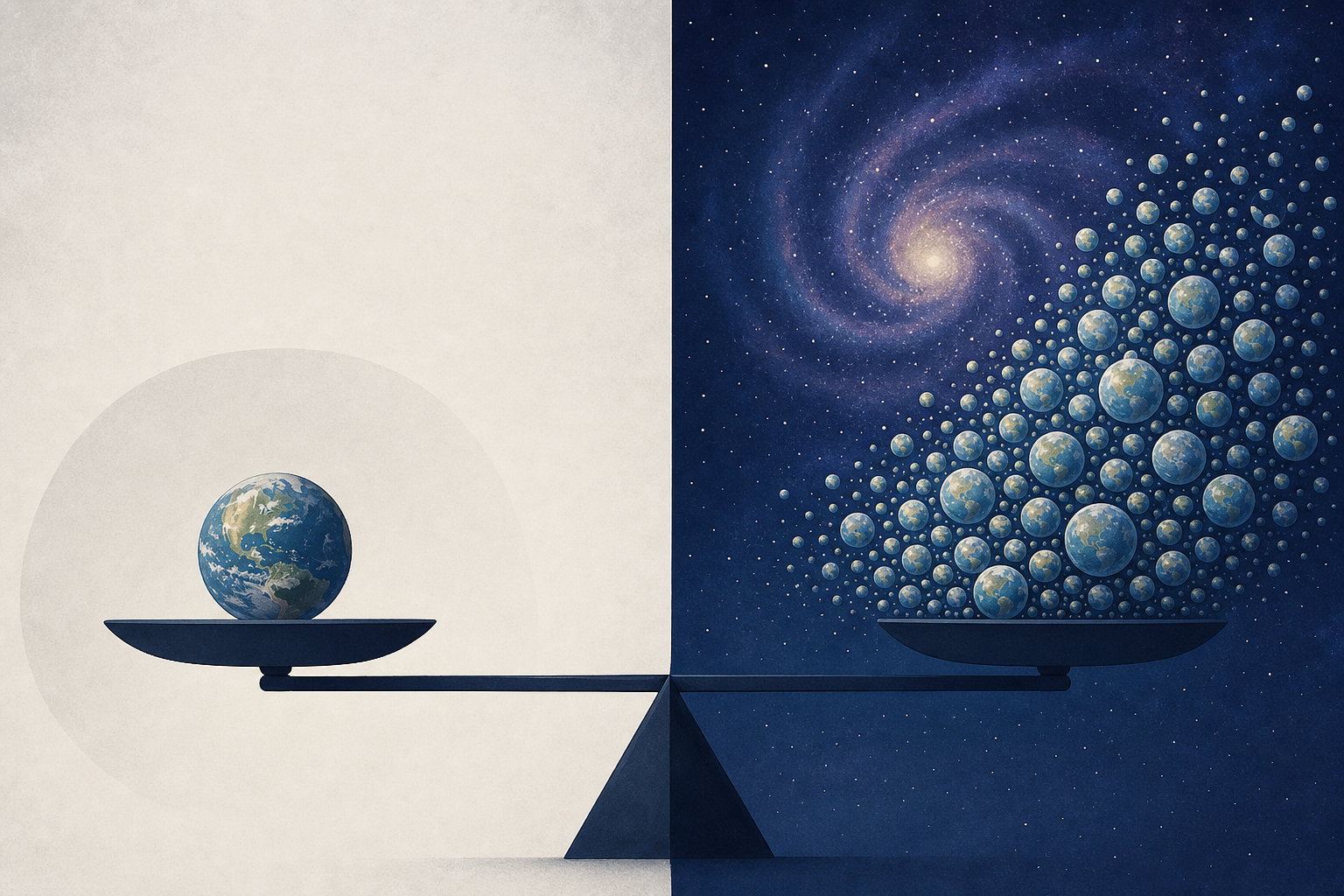
AI Generated Image
The debate over how many Earth-like planets exist has a wide range — from one, if the Rare Earth hypothesis is right, to something approaching a hundred quintillion, if Milky Way rates hold across the
Space Daily • • science
Key Points:
- Estimates of the number of Earth-like planets vary dramatically, from just one (Earth) under the Rare Earth hypothesis to around 100 quintillion across the observable universe based on extrapolations from NASA's Kepler data.
- The optimistic estimate counts Earth-sized planets in the habitable zone capable of supporting liquid water, suggesting billions in the Milky Way alone and potentially hundreds of quintillions when scaled to all galaxies.
- The Rare Earth hypothesis argues that while microbial life might be common, the complex life seen on Earth requires a rare combination of conditions, potentially making Earth unique in hosting complex biospheres.
- These differing estimates reflect distinct definitions of "Earth-like": one focuses on potential habitability, and the other on actual complex life emergence, highlighting a vast gap in current scientific understanding.
- The true number remains uncertain due to limited data, with future telescopes aiming to detect biosignatures on exoplanets, which could help clarify how common life and complex biospheres are in the universe.


