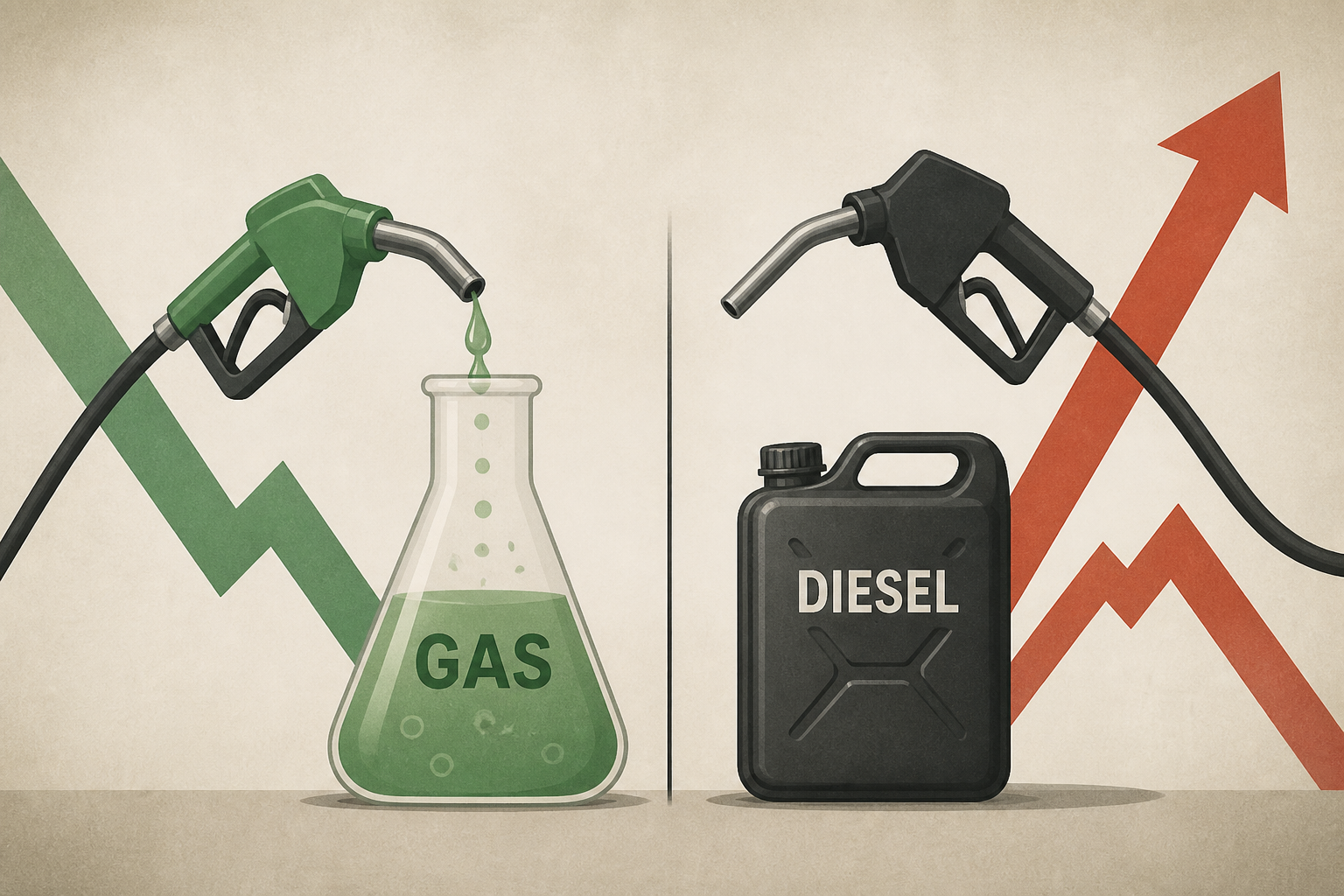
AI Generated Image
The Feds Diluted Gas to Cut Prices. Diesel Has No Such Fix
The Drive • • business
Key Points:
- Diesel fuel prices in the U.S. have surged 50% over the past year, rising from $3.70 to $5.60 per gallon, with forecasts predicting a potential rise to $6 by year-end, significantly impacting the economy.
- Diesel powers critical sectors including freight transport, agriculture, public transit, and construction, making its price hikes a widespread cost driver that businesses and municipalities must absorb, often leading to higher consumer prices.
- The price spike is largely driven by global factors such as the Russia-Ukraine conflict, which has disrupted Russian refinery output, and restrictions on shipping through the Strait of Hormuz, causing a global diesel supply shortage.
- The U.S. has not built a new refinery since the 1970s, limiting its ability to increase refining capacity quickly, and global refinery outages are currently 60% higher than usual, prolonging the supply squeeze.
- Unlike gasoline, diesel prices cannot be easily mitigated through government interventions like formula changes or blending, nor can consumers readily switch to electric alternatives for heavy-duty vehicles, making diesel price inflation a persistent economic challenge.


