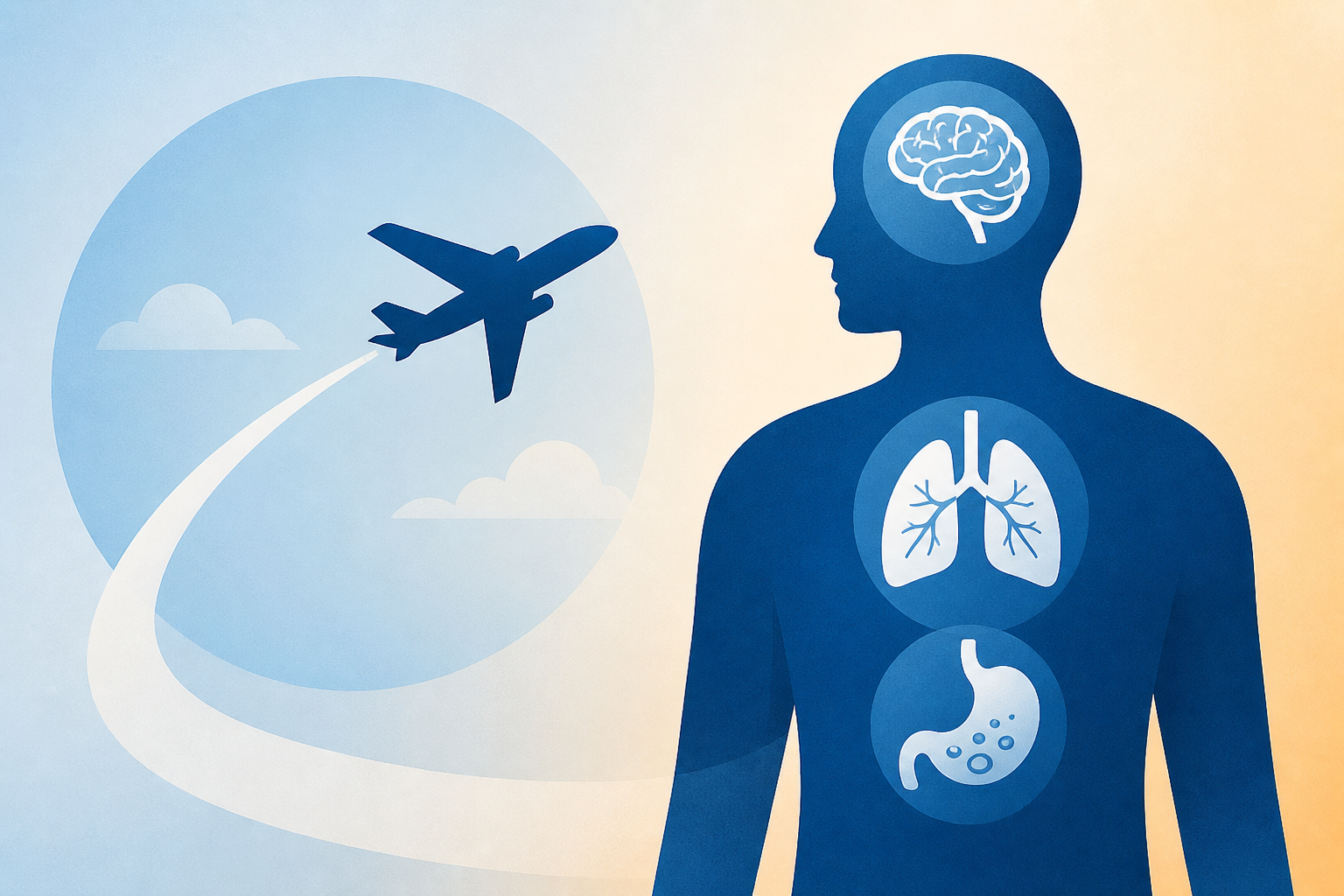
AI Generated Image
The surprising ways air travel can affect your body
The Independent • • health
Key Points:
- In-flight medical emergencies are increasing, now occurring in about one in every 212 flights compared to one in 604 flights in 2013, with issues ranging from minor injuries to serious conditions like heart attacks.
- Cabin pressure at up to 8,000 feet reduces oxygen levels to about 15%, which can strain the heart and lungs, especially in passengers with pre-existing cardiopulmonary conditions.
- Low cabin humidity causes dehydration, thickening the blood and increasing risks such as deep vein thrombosis; alcohol, salty foods, and lack of movement exacerbate these effects.
- Common in-flight issues include fainting due to postural hypotension and gastrointestinal discomfort from gas expansion, sometimes leading to flight diversions in rare cases.
- Cardiac emergencies onboard have poor outcomes due to limited medical resources and trained personnel, making prevention through hydration, medication adherence, movement, and avoiding alcohol crucial for travelers.


