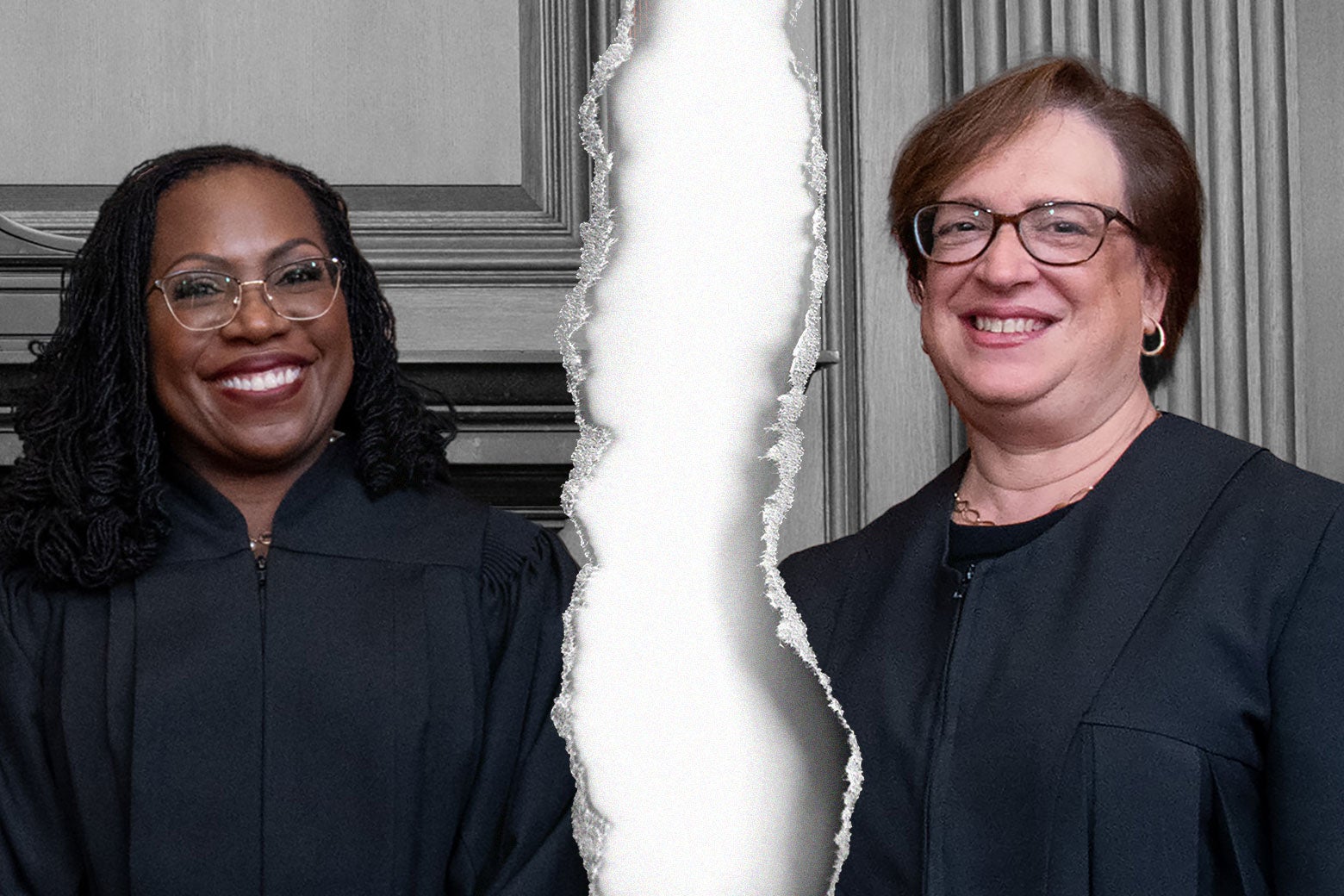
The Tariffs Ruling Reveals a Growing Rift Between Two Liberal Justices
Slate • • nation
Key Points:
- On Feb. 20, 2026, the Supreme Court ruled in Learning Resources v. Trump that President Trump's tariffs imposed under the International Emergency Economic Powers Act (IEEPA) were unlawful, marking a significant check on executive power.
- The case highlighted contrasting statutory interpretation approaches by liberal justices Elena Kagan and Ketanji Brown Jackson: Kagan employed a textualist method focusing on the statute's plain meaning, while Jackson emphasized legislative history and congressional intent.
- Kagan rejected the major-questions doctrine used by the majority, resolving the case through strict textual analysis without relying heavily on legislative history, maintaining fidelity to traditional textualism.
- Jackson, diverging from Kagan, prioritized legislative history to clarify Congress's intent, criticizing pure textual


