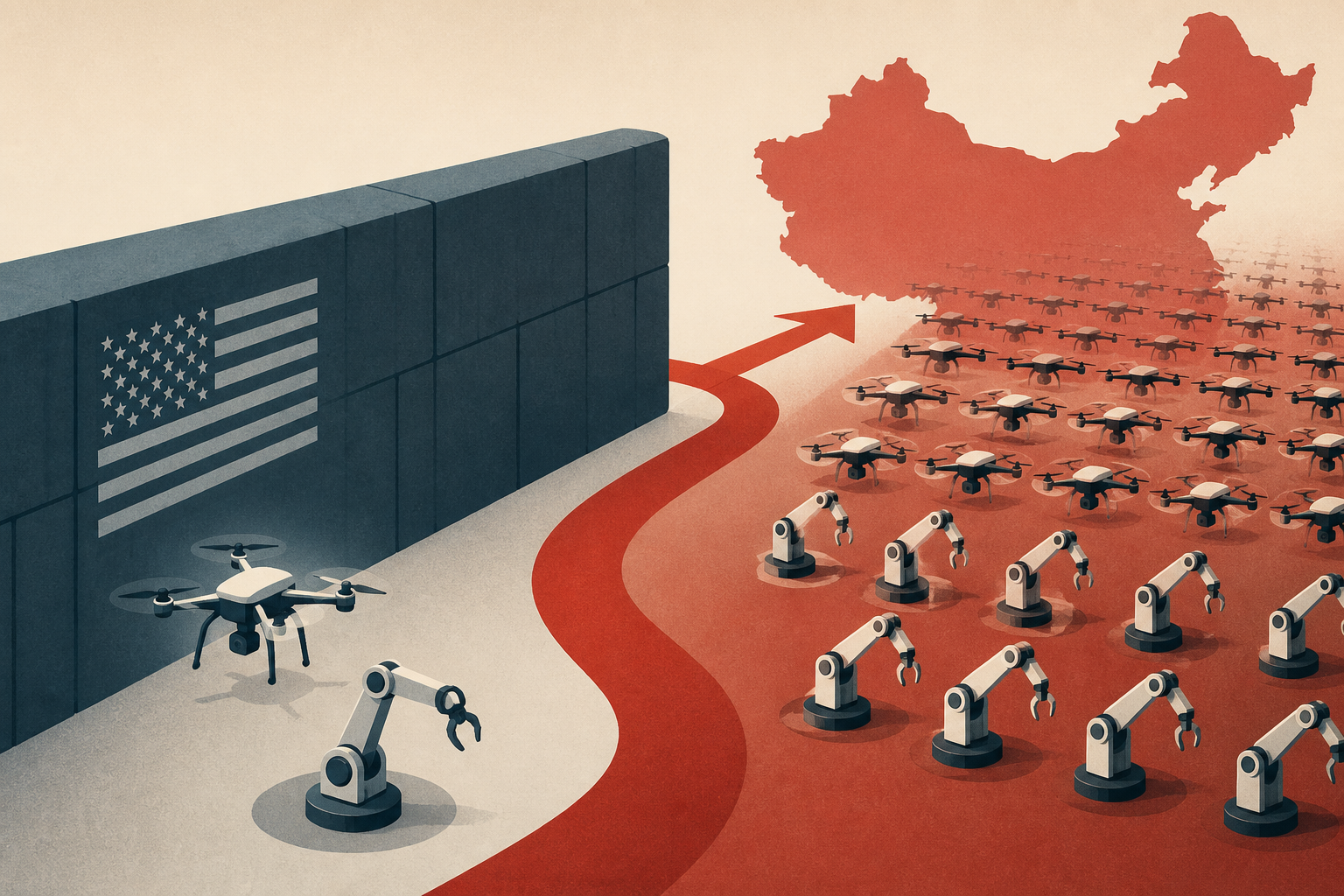
AI Generated Image
The U.S. is building barriers around drones and robots, but China has scale to get around them
TechCrunch • • business
Key Points:
- The U.S. has tightened restrictions on foreign-made advanced robotics and imposed tariffs on imported drones and components, citing national security concerns, with tariffs starting in September and additional ones in 2027.
- China dominates global humanoid robot manufacturing, accounting for 86% of shipments in early 2026, leveraging scale, supply-chain depth, and cost advantages that U.S. competitors struggle to match.
- These restrictions may fragment the global robotics market, with Chinese companies expanding in price-sensitive regions like Europe, Southeast Asia, Latin America, and the Middle East, while U.S. and allied firms focus on security-sensitive markets.
- The robotics industry is likely to become more regionalized, with Asian manufacturers such as Japan, South Korea, and Taiwan emerging as intermediaries between low-cost Chinese products and higher-priced U.S. offerings.
- Industry experts predict competition will shift from the robots themselves to the underlying technologies, such as energy and payload systems, as companies seek to overcome limitations like battery constraints.


