AI Generated Image
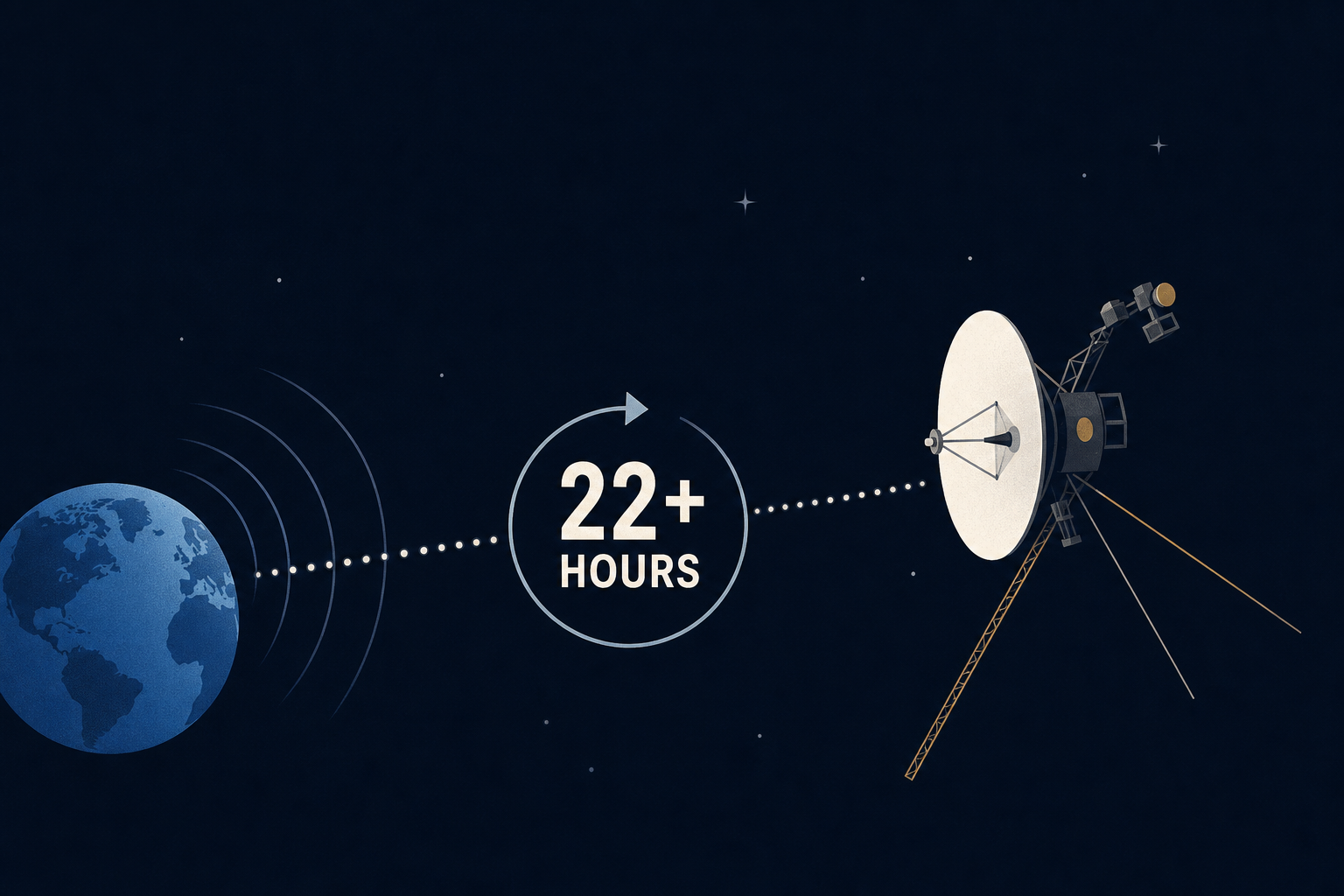
The Voyager 1 probe, launched in 1977, is now so far from Earth that a radio signal travelling at the speed of light takes over 22 hours to reach it, and it is still sending data back from interstella
Space Daily • • general
Key Points:
- Voyager 1, launched in 1977, is now about 25 billion kilometers from Earth, making radio signals take over 22 hours one way to reach it, with a nearly two-day round trip for communication.
- In 2012, Voyager 1 became the first spacecraft to enter interstellar space by crossing the heliopause and continues to send back data on plasma and magnetic fields from this region.
- The spacecraft is powered by three nuclear generators converting heat from decaying plutonium into electricity, currently producing about 230 watts, less than many household appliances, and losing roughly four watts annually.
- NASA manages the declining power by shutting down non-essential systems to extend the mission, with expectations that basic data transmission could continue into the 2030s.
- Voyager 1 is approaching a milestone of being one light-day away from Earth, expected around November 2026, marking the farthest distance any human-made object has reached, with its longevity dependent on the diminishing nuclear power supply.


