AI Generated Image
Their “rotted” teeth reveal shocking drug use going back 25,000 years
Futura, le média qui explore le monde • • world
Key Points:
- Archaeological evidence reveals that humans have used psychoactive substances like alcohol, tobacco, cannabis, and opium for thousands of years, though their exact purposes—whether medicinal, spiritual, social, or recreational—remain uncertain.
- A groundbreaking discovery in a 17th-century Milanese crypt found psychoactive cannabis molecules in centuries-old skeletons, suggesting drug use dates back further than previously documented.
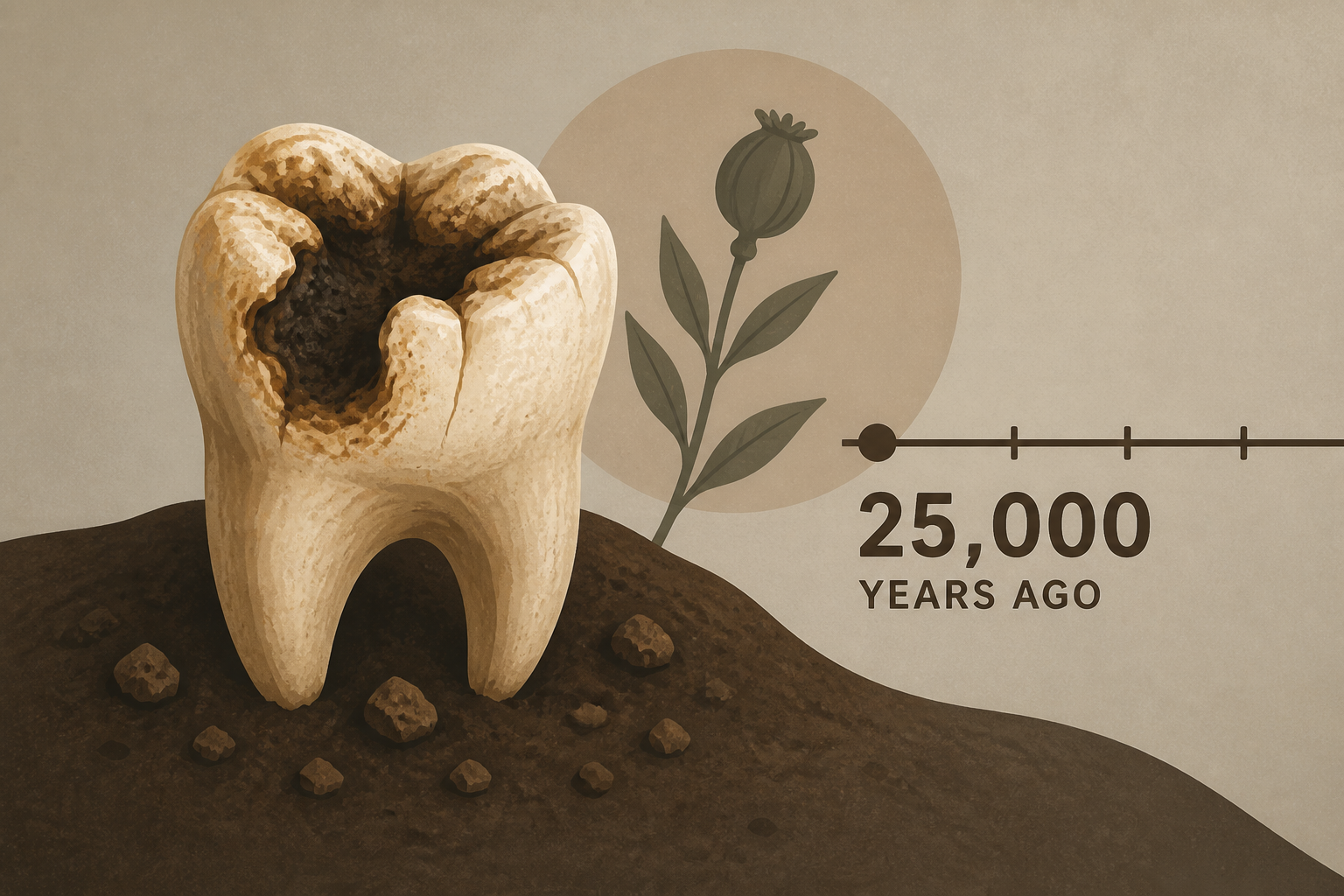
- Research on prehistoric hunter-gatherers from Sulawesi, Indonesia, uncovered dental wear and biochemical traces indicating betel nut chewing as far back as 25,000 years ago, predating the advent of agriculture.
- Betel nut, containing the psychoactive compound arecoline, was likely used for its stimulating and pain-relieving effects, possibly to alleviate toothaches despite its abrasive damage to teeth and links to oral cancer.
- These findings suggest that the human exploration of psychoactive substances is an ancient practice deeply embedded in our history, though the precise motivations behind early use remain elusive.


