AI Image
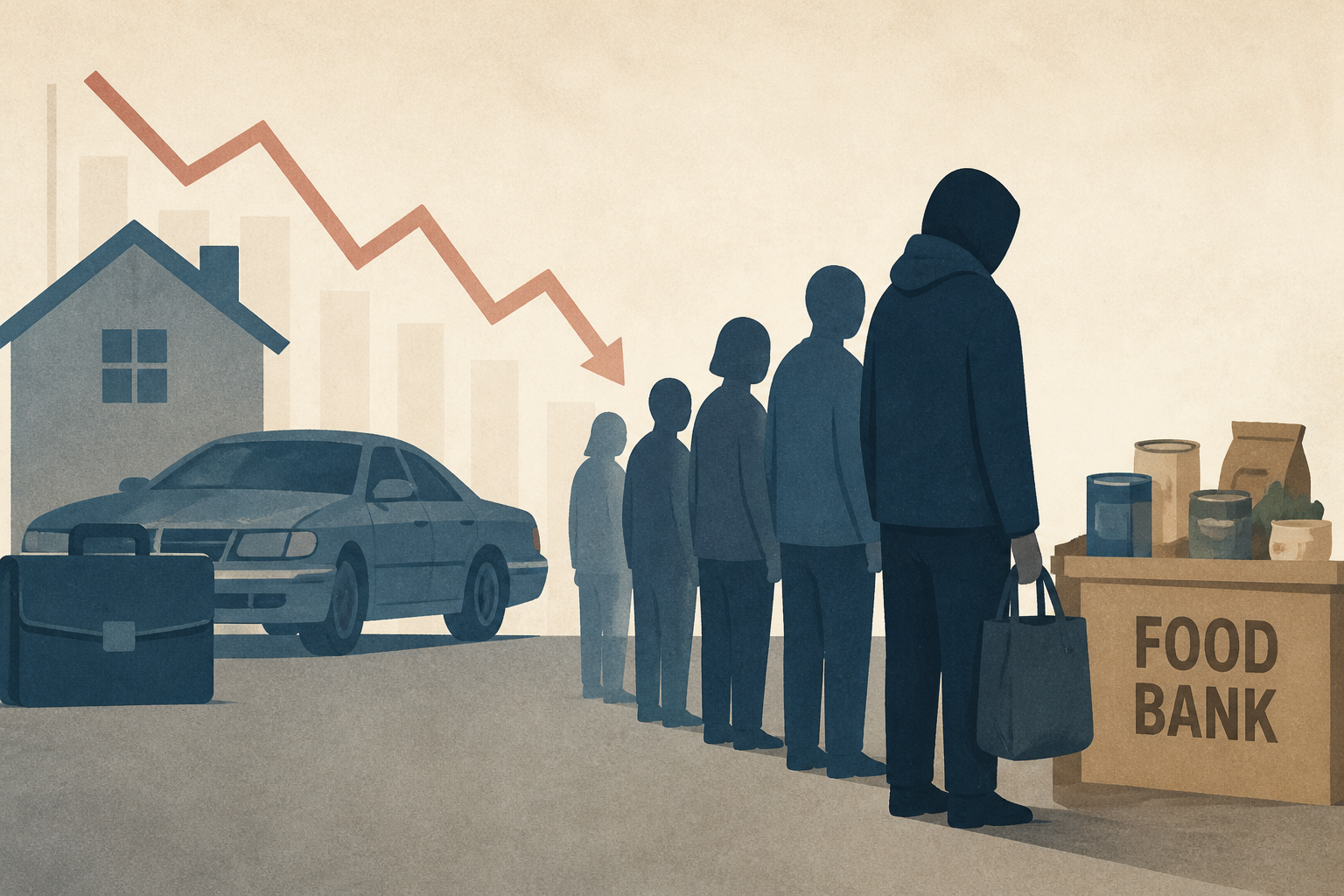
They had jobs, homes and cars. Now they're in line at the food bank
USA Today • • business
Key Points:
- Rising living costs, job instability, and mounting debt have driven many middle-income Americans, like Dave Poniatowski from Colorado, to rely on food pantries, a trend highlighted by increased food insecurity reports among this demographic.
- Food banks nationwide report a significant rise in demand, with about half noting a 15% year-over-year increase in people served, including households above the poverty line facing financial setbacks.
- Experts emphasize that food budgets are often the first to be cut in tight household finances, leading families to depend on charitable food assistance even as stigma and logistical barriers delay or prevent seeking help.
- Personal stories, such as those of Cara Arnold and Kristin Brandenburg, illustrate how unexpected job losses and medical expenses push formerly self-sufficient individuals to food pantries, underscoring the expanding reach of food insecurity.
- Despite the broader demographic impact, research indicates that food pantry users remain predominantly low-income, with increased visits mainly from those already vulnerable, while higher-income households typically exhaust other coping strategies before seeking charity food.


