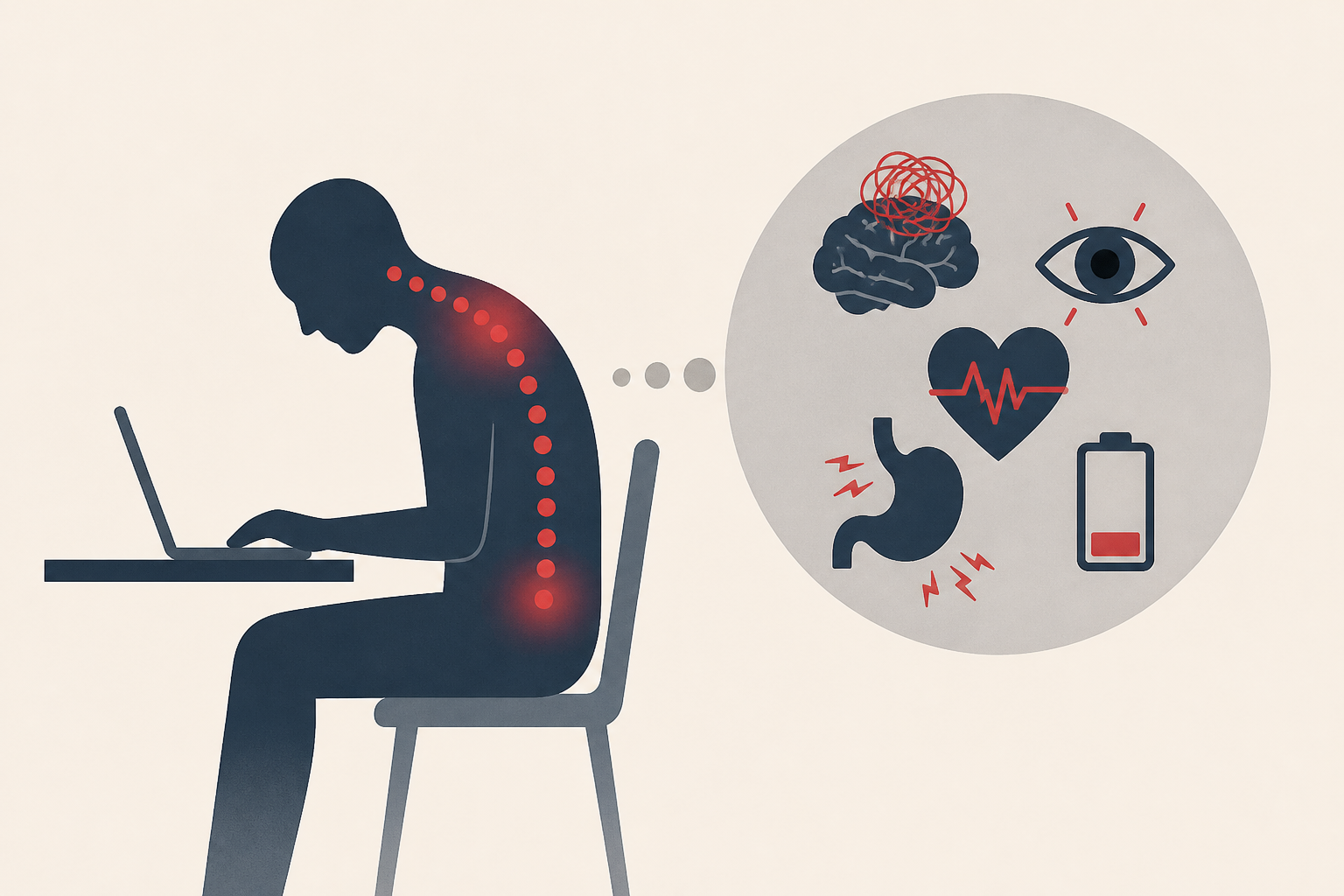
AI Generated Image
Think Bad Posture Only Hurts Your Back? The Shocking Truth You’re Ignoring
Futura, le média qui explore le monde • • world
Key Points:
- A Canadian study published in the British Journal of Psychology found that sitting upright while working on a computer can positively influence self-confidence and improve job-related decision-making strategies.
- Unlike previous "power pose" research, this study covertly encouraged participants to adopt specific postures using adjustable desks and tablet stands, measuring neck tilt to assess posture without bias.
- Participants who maintained an upright posture demonstrated more effective risk-taking strategies and reported stronger feelings of pride, indicating a link between posture, mood, and cognitive performance.
- While prolonged sitting can cause muscle tension and blood pooling in the legs, standing desks are not a guaranteed solution for cardiovascular health, as recent large-scale research has questioned their overall benefits.
- The study suggests that even subtle physical posture changes at work can continuously influence mood and strategic decision-making, highlighting the importance of ergonomics for workplace performance.


