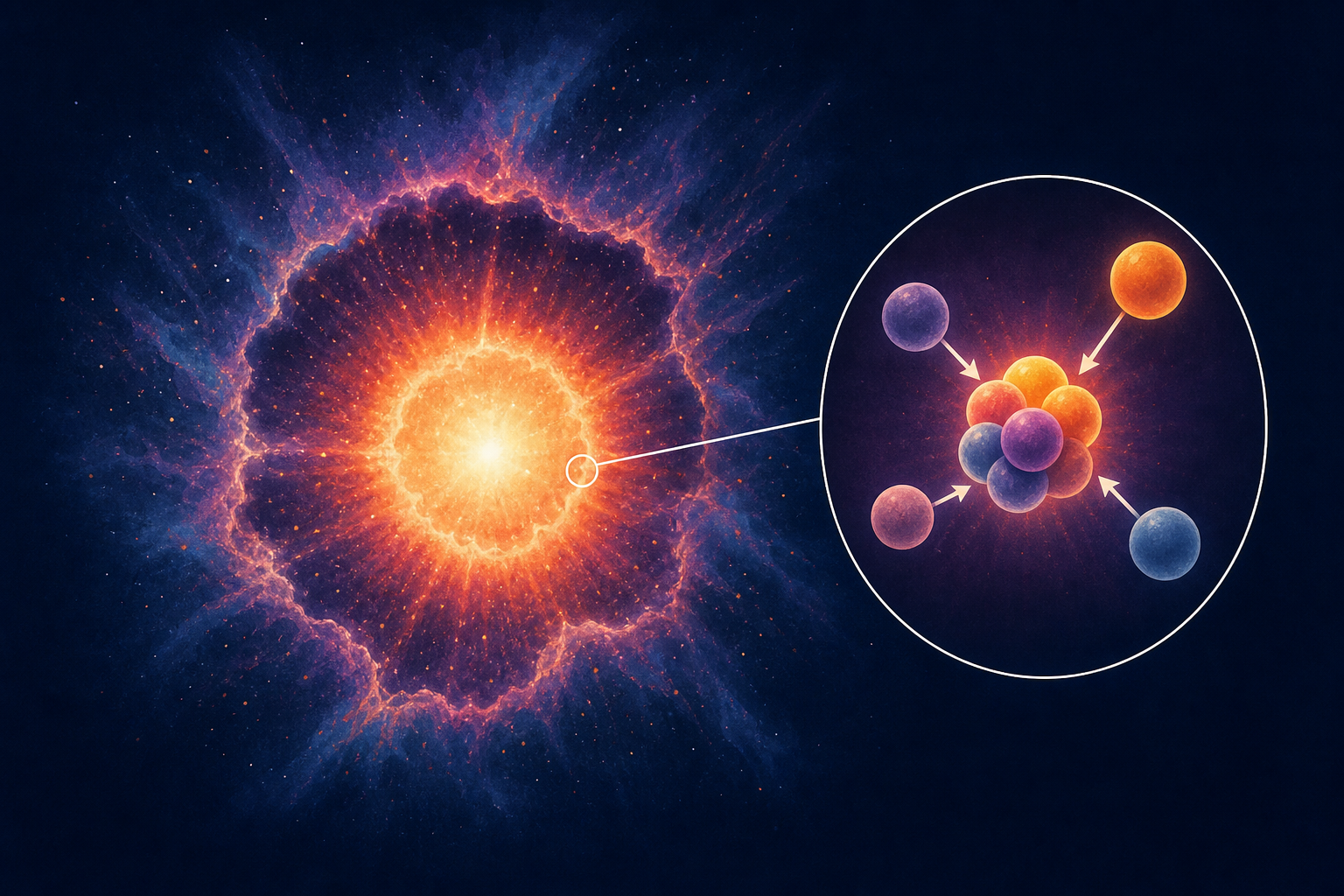
AI Generated Image
Top Comments: Unusual Supernova Reveals Fusion Process of Heavier Elements
Daily Kos • • science
Key Points:
- Stars produce energy through nuclear fusion, starting with hydrogen fusion and progressing to heavier elements like helium, carbon, oxygen, and eventually iron, with each stage producing less energy and lasting a shorter time.
- As fusion progresses, a star develops layered structures of different elements, with lighter elements like hydrogen and helium in outer layers and heavier elements like silicon and sulfur closer to the core.
- When a star exhausts silicon and sulfur, fusion stops because iron fusion consumes energy rather than producing it; low-mass stars become inert cinders, while massive stars undergo supernovae, collapsing into neutron stars or black holes.
- A 2021 supernova (SN2021yfj) revealed an unusually stripped star, with all layers down to silicon and sulfur expelled before explosion, challenging existing theories since typical stellar winds cannot remove such deep layers.
- The cause of this extreme stripping remains unclear, posing a significant puzzle for astrophysicists studying stellar evolution and supernova mechanisms.


