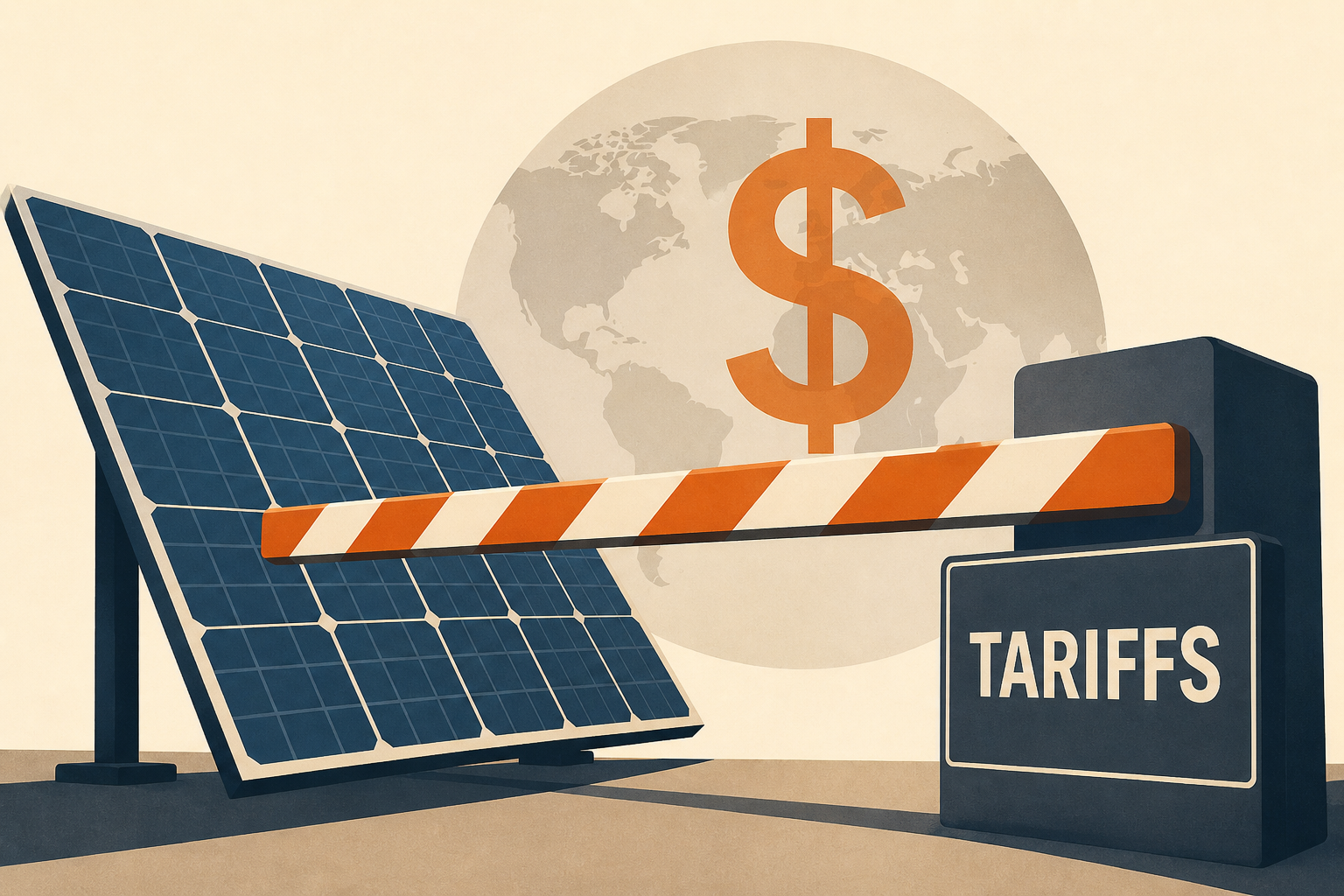
AI Generated Image
Trump launched big new solar tariffs. Here's what it…
Canary Media • • business
Key Points:
- The U.S. government will impose new tariffs starting December 4 on imported polysilicon and related solar products, including silicon-based panels, cells, ingots, and wafers, to protect domestic solar manufacturing and address national security concerns under Section 232 of the Trade Expansion Act.
- These tariffs set minimum prices significantly higher than current market rates, which is expected to raise the cost of building new solar farms in the U.S., potentially slowing the growth of the country's largest source of new electricity amid already rising power bills.
- The tariffs aim to bolster domestic solar manufacturing, benefiting companies like Qcells and First Solar, and may curb Chinese manufacturers' practice of shifting production to third countries to evade previous U.S. tariffs.
- While the tariffs have a strong legal basis and are designed to support the fledgling U.S. solar supply chain, they also risk increasing prices due to limited domestic capacity for key inputs like polysilicon, wafers, and cells, which the U.S. still largely imports.
- Tariff exemptions are available for companies that commit to building domestic factories by January 20, 2029, potentially helping to mitigate price increases as the U.S. solar manufacturing industry expands its production capabilities.


