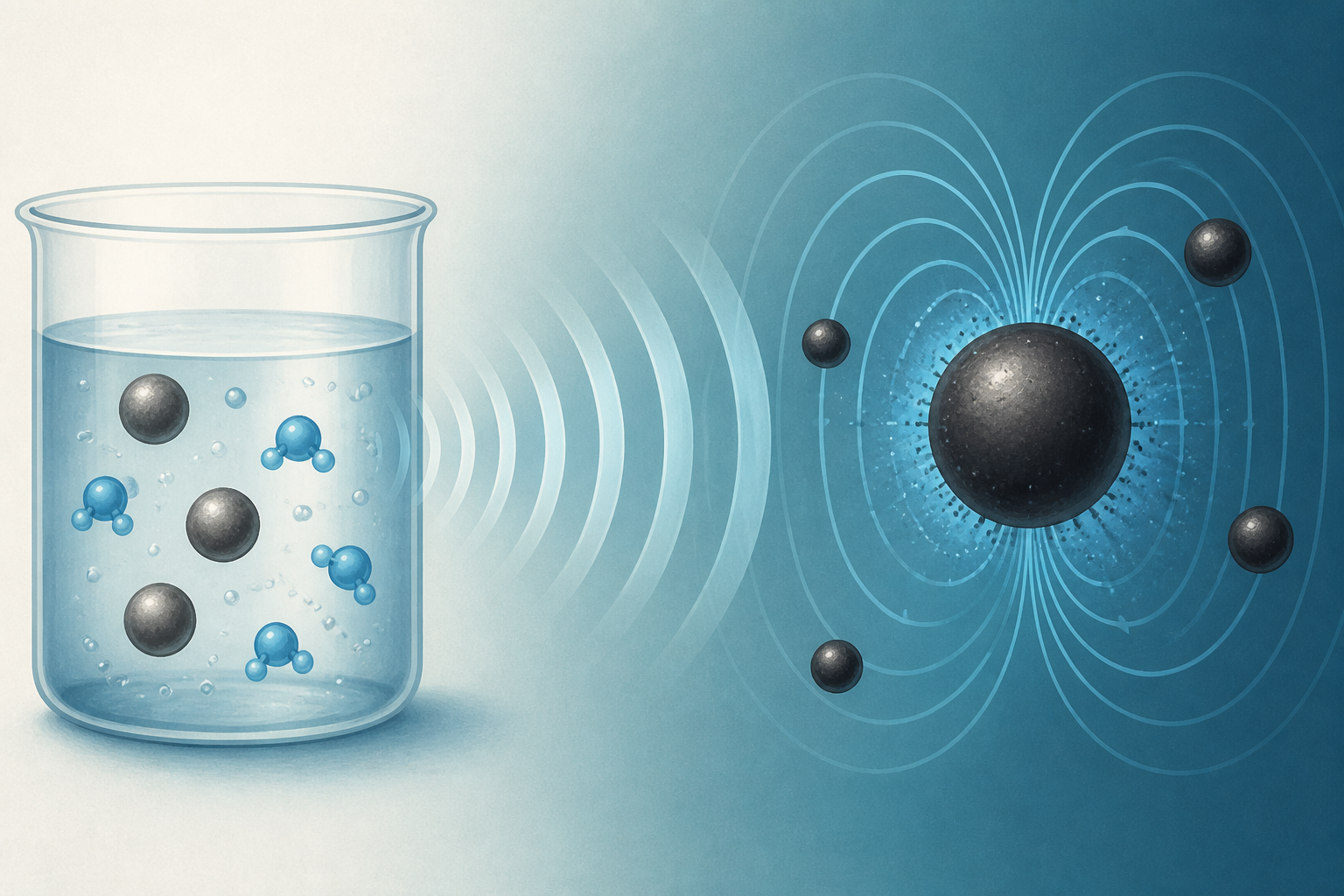
AI Image
Using sound waves to turn iron and water into magnetic nanoparticles
phys.org • • science
Key Points:
- Researchers at Tohoku University have developed a method to rapidly synthesize spinel-type iron oxide nanoparticles from iron powder and water using ultrasound, reducing the oxidation process from months or years to mere hours.
- The ultrasound treatment at 43 kHz significantly enhances iron oxidation, achieving up to 68.5% conversion at 40°C within 24 hours, producing nanoparticles around 32 nm in size with strong magnetic properties.
- Acoustic cavitation caused by ultrasound generates microjets and shock waves that renew the iron surface and create localized high temperature and pressure zones, accelerating the solid-liquid transformation from metal to oxide without chemical reagents.
- This reagent-free process eliminates the need for soluble iron salts, precipitation agents, and washing steps, potentially enabling cost-effective conversion of iron powders or scrap into valuable oxide materials and possibly extending to other metals.
- Future research will focus on elucidating the reaction mechanism, optimizing production parameters, and scaling up the process for larger-scale nanoparticle manufacturing.


