AI Generated Image
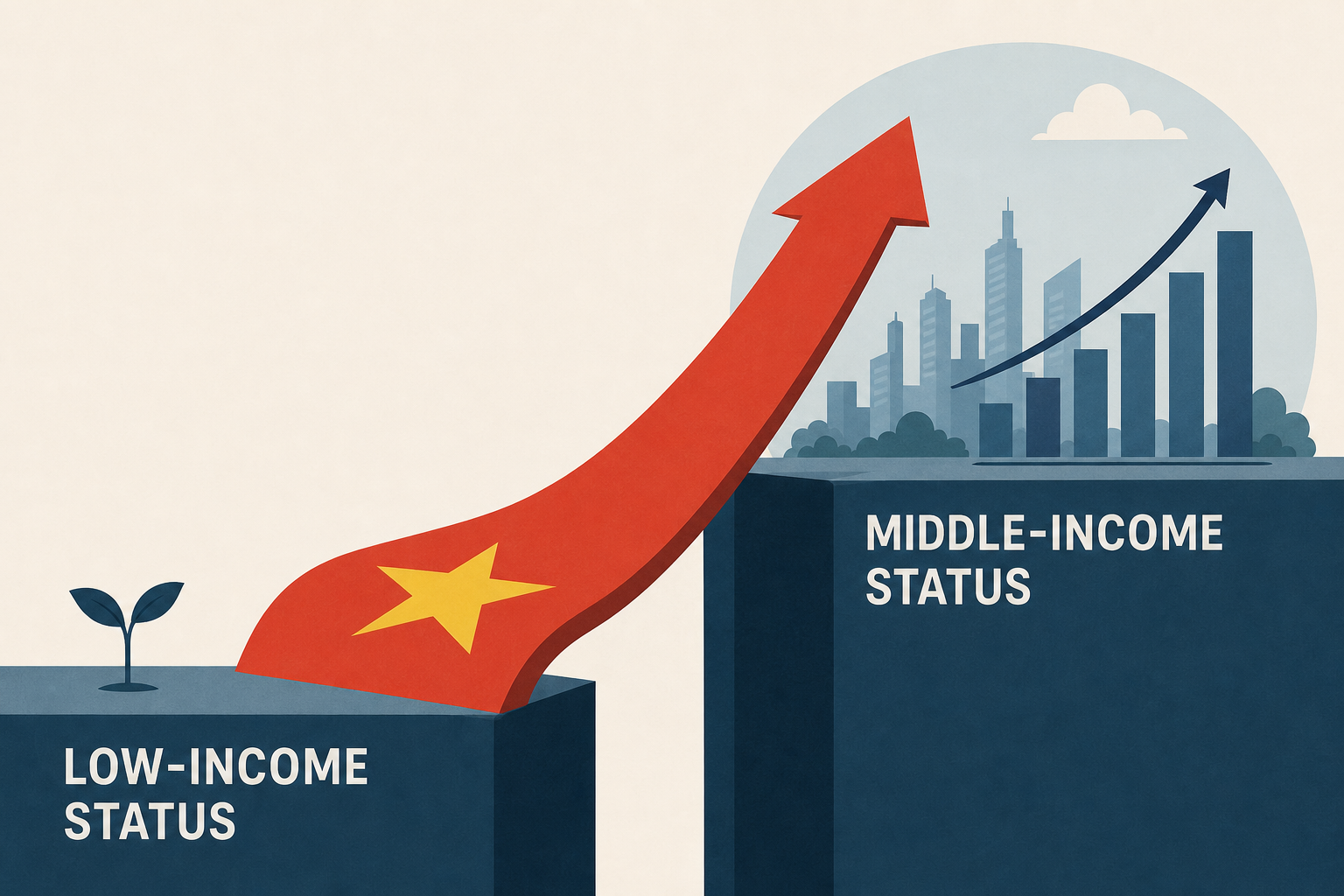
Vietnam's economy is one of the fastest-growing in the world. Can it make the leap into the ranks of middle-income countries?
Fortune • • business
Key Points:
- Vietnam's economy is rapidly growing, with an 8% growth rate last year, nearly double the Southeast Asian average, fueled by expanding manufacturing, real estate, infrastructure, and tourism sectors.
- The government aims for 10% annual growth by 2030 and high-income status by 2045, backed by reforms like Resolution 68 prioritizing the private sector and major infrastructure investments including a $67 billion high-speed railway.
- Despite strong foreign direct investment, especially from Chinese and Taiwanese firms, challenges remain in securing sufficient capital, addressing labor shortages, and managing rising costs and energy constraints.
- Vietnam maintains a delicate geopolitical balance with the U.S., China, and Russia, while also facing trade tensions and the need to develop financial infrastructure to attract and retain foreign investment.
- Long-term obstacles include demographic shifts leading to an aging population, a talent gap in management, and the necessity for sustainable growth strategies amid rising inflation and global economic uncertainties.


