AI Image
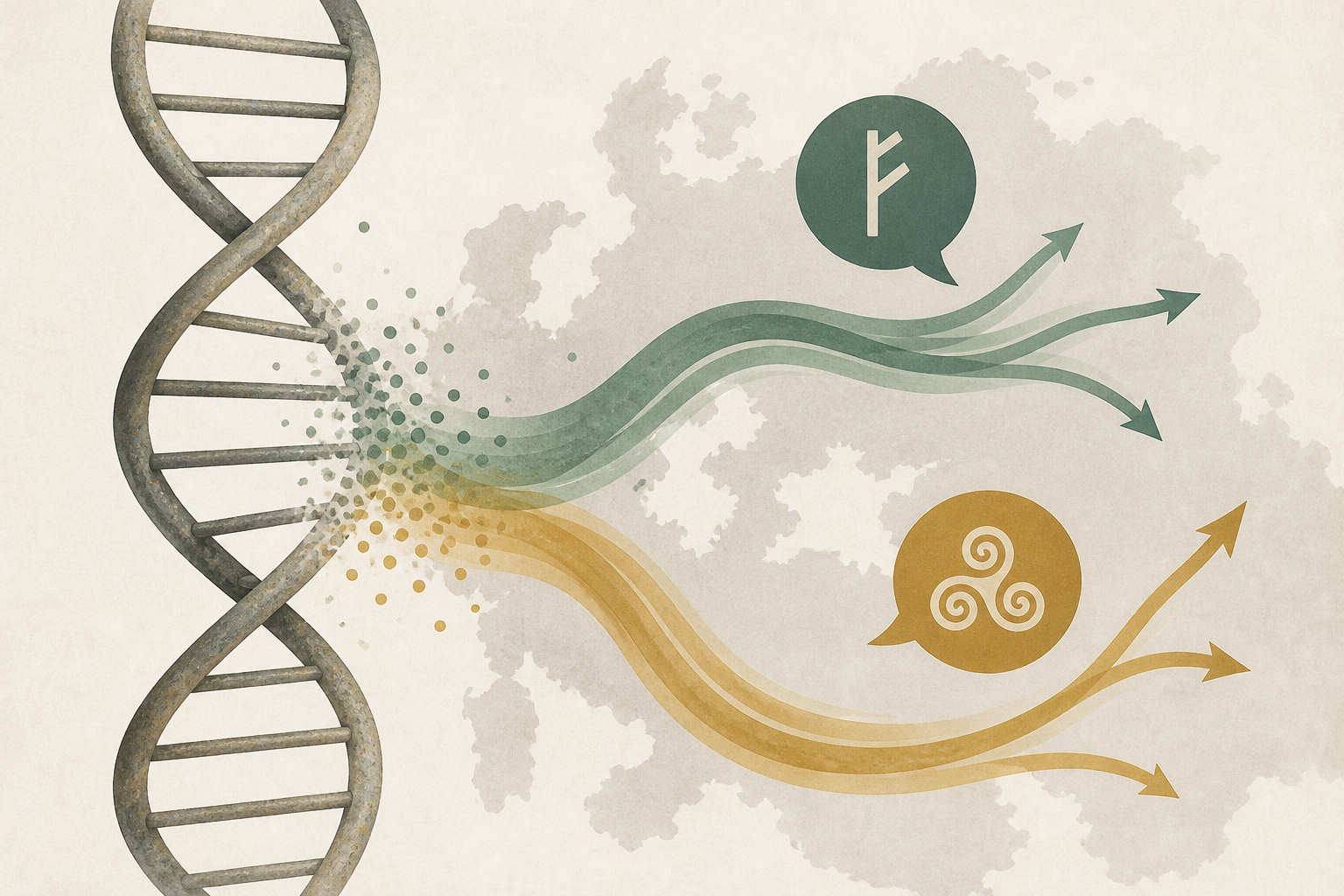
We used ancient DNA to track the origins and spread of the Germanic and Celtic languages - new research
The Conversation • • world
Key Points:
- Two new studies analyzing DNA from thousands of ancient Europeans provide fresh insights into the prehistoric dispersal of Germanic and Celtic languages across Europe.
- Contrary to previous beliefs, the precursor of Germanic languages likely arrived in Scandinavia around 4,000 years ago with a second migration from the Eastern European steppes, rather than 4,800 years ago with the first steppe migrants.
- Genetic evidence shows that migrations from Scandinavia into northern Germany and back influenced the development of Old Norse and cultural exchanges, linking Anglo-Saxons and Vikings through shared ancestry and cultural traits.
- Celtic languages likely originated in Central Europe, spreading westward during the Bronze Age Urnfield culture period, though some evidence supports earlier Atlantic migrations contributing to Celtic language complexity.
- These findings highlight a complex history of repeated migrations and cultural interactions shaping Europe's linguistic landscape, with ancient DNA providing unprecedented precision in testing language dispersal theories.


