AI Generated Image
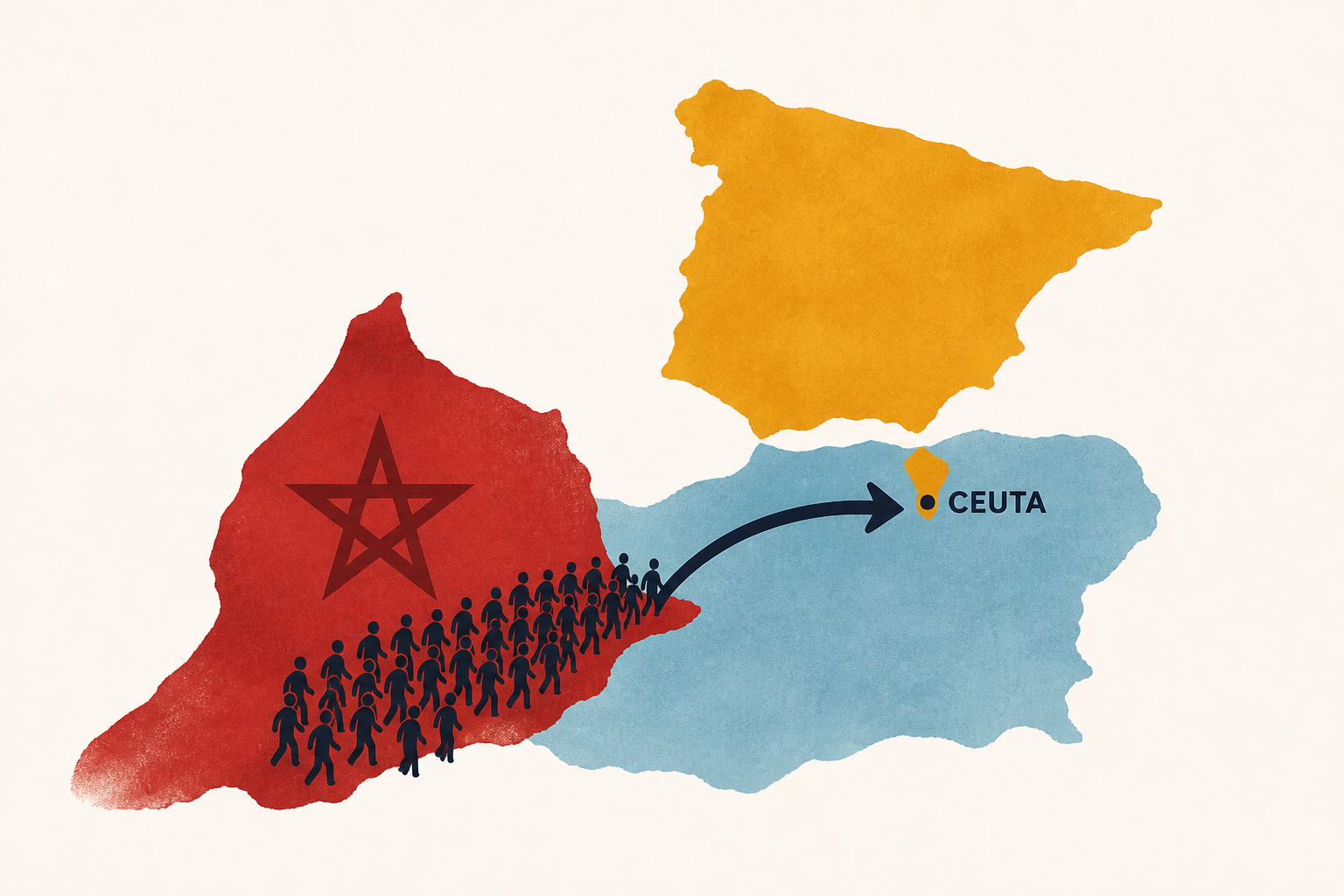
Why Did 60,000 Migrants Cross from Morocco into Spain’s Ceuta? Moroccan Dutch Professor Explains
Democracy Now! • • general
Key Points:
- At least 86 migrants died during a deadly border rush from Morocco into the Spanish enclave of Ceuta, with causes including drowning and being crushed on the border fence breakwater; about 60,000 crossed since Thursday, but most have now returned voluntarily.
- Ceuta, a Spanish city of 86,000 people on the North African coast bordering Morocco, saw migrants struggle with food and shelter shortages; Spain installed a 1,600-foot floating sea barrier to reinforce the border.
- The surge in migration is attributed to multiple factors including increased inequality and repression in Morocco, ambiguous postcolonial border realities, and Spain’s recent policy to legalize many migrants, which encouraged attempts to cross.
- Moroccan border controls were temporarily relaxed last week, possibly as geopolitical leverage, which combined with social media misinformation and economic pressures, led to a brief window when migrants tried to cross en masse before being violently pushed back.
- Expert Miriyam Aouragh emphasized the complexity of the situation, criticizing simplistic conspiracy theories and highlighting the roles of European Union border policies, economic austerity demands, and Morocco’s internal social unrest in driving migration.


