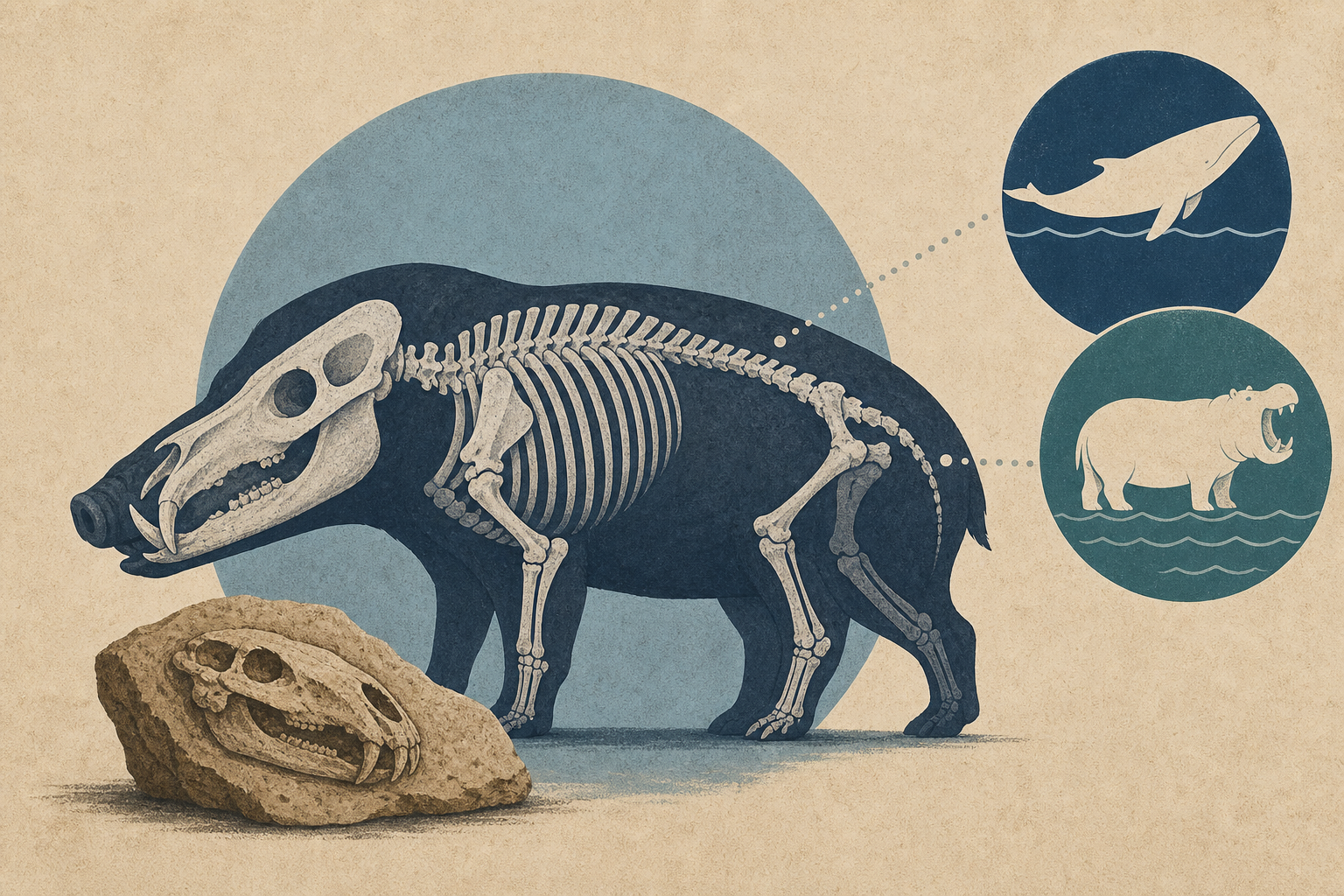
AI Generated Image
Wyoming's Prehistoric Hell Pigs Looked Like Pigs But Were More Like Whales And Hippos
Cowboy State Daily • • science
Key Points:
- New research by Vanderbilt Ph.D. candidate Brynn Wooten reveals that prehistoric Wyoming hell pigs (Archaeotherium) had diets varying by size, with larger individuals consuming a wider range of foods including harder items like bones, while smaller ones ate primarily flesh.
- Wooten’s study used dental microwear texture analysis on 53 fossilized hell pig teeth from multiple museum collections, comparing wear patterns to those of modern animals to infer diet, uncovering an unusual size-driven diet partitioning uncommon in modern mammals.
- The research suggests smaller hell pig species may have been active hunters eating softer, flesh-based diets, while larger species scavenged and consumed harder materials, possibly engaging in kleptoparasitism by stealing kills from smaller individuals.
- Wooten plans to complement her microwear findings with stable isotope analysis to better understand the precise dietary habits and ecological roles of hell pigs, aiming to build a comprehensive picture of their paleoecology and adaptation over 17 million years.
- As one of the first detailed studies on hell pig paleoecology, Wooten’s work sheds new light on these archaic, extinct mammals that were significant North American predators during the Eocene and Oligocene periods.


